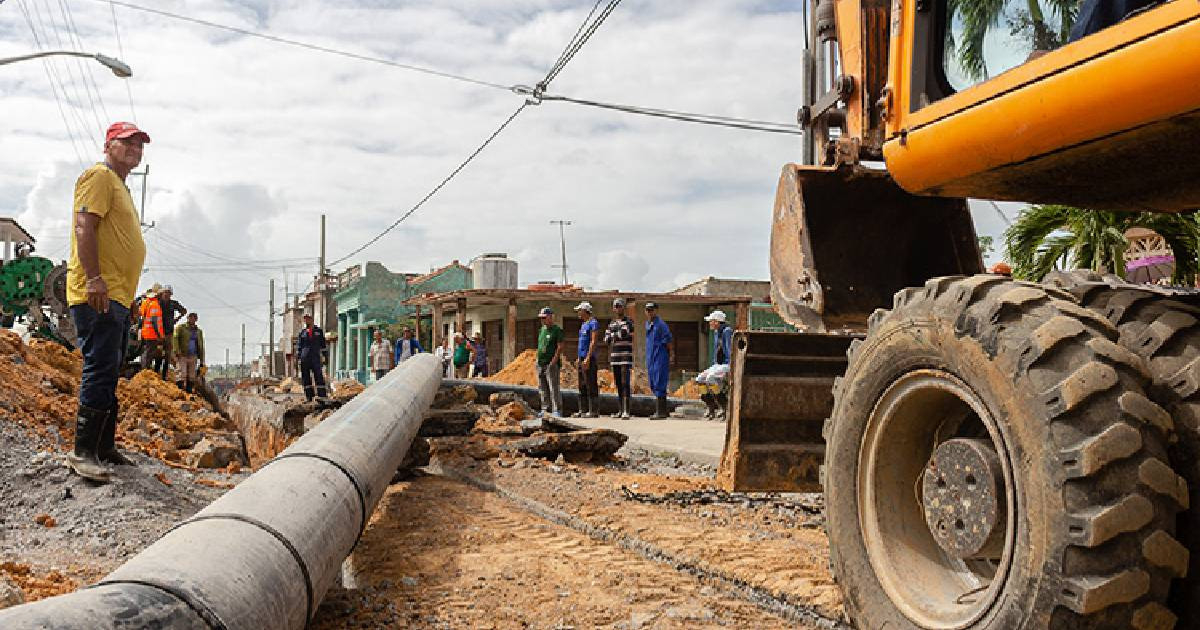
The Provincial Bureau of the Communist Party (PCC) in Pinar del Río once again analyzed the water supply crisis this Friday, after acknowledging that complaints about the service continue without any improvement for the population, emphasized the official newspaper Guerrillero.
Yamilé Ramos Cordero, the first secretary of the PCC in the province, admitted that "the criticisms made by the Bureau to this sector are recurring" and acknowledged the lack of timely information regarding supply issues, breakdowns, as well as investment and maintenance projects as a pending debt to the people of Pinar.
The director of the Aqueduct, Robert Hechevarría Ramírez, explained that the situation is becoming complicated in all municipalities due to a lack of equipment and insufficient electrical energy.
According to the official, there are areas where all pumping relies on electricity, while pump breakdowns exacerbate the instability of the service.
These difficulties are compounded by other problems that the director himself described as "subjective," including the manipulation of operations, a factor that he acknowledged negatively impacts supply stability.
Julio César Rodríguez Pimentel, delegate of Hydraulic Resources, reported that the initial investment plan for this year was 84 million pesos, but the execution has already exceeded 100 million.
Resources have been allocated to both the aqueduct system and the general hydraulic infrastructure of the region, without the spending hindering the service, which remains one of the most criticized by the people of Pinar del Río, the source noted.
Ramos indicated that priorities include the legalization of pipes, the eradication of illegal practices, and the transformation of the energy matrix of the pumping system.
He also proposed to improve the economic conditions of the Water Utility to make it a more attractive source of employment for young people.
The authorities also mentioned the 176 economic measures approved in June as a potential way to improve the company's situation, although they conditioned their benefits on first achieving effective payment for the services rendered.
The first secretary of the PCC stated that the provincial leadership and the Cuban government are closely monitoring the issue due to the population's dissatisfaction, a scrutiny that, according to the official report, has not yet led to a solution for the water crisis.
The pattern emerging from the session is not new. Entronque de Herradura, in Consolación del Sur, had been without drinking water for more than two years as of April, with its nearly 12,000 inhabitants heavily dependent on private water trucks that charged 4,000 pesos at that time. During the same period, Viñales had gone over six months without regular service.
The water crisis also brings serious health consequences. By the end of August, Pinar del Río reported three active hepatitis outbreaks —in Jagüey Cuyují, Los Palacios, and San Luis— and high levels of infestation by the Aedes aegypti mosquito, with health authorities recommending manual chlorination of drinking water due to the collapse of the purification system.
Data from the National Institute of Hydraulic Resources indicate that around three million Cubans face severe difficulties in accessing drinking water, while 87% of aqueducts depend on the National Electric System, which is currently in a deep crisis due to fuel shortages and the obsolescence of thermal power generation plants.
Related videos:
Filed under: