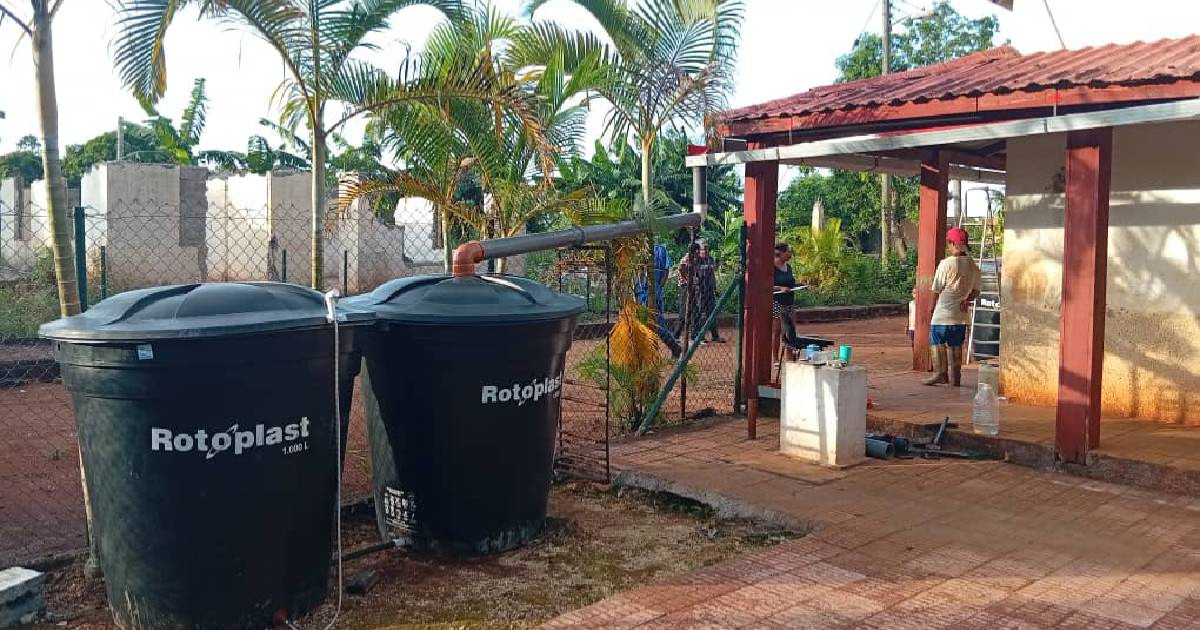
The Guantanamo-based company Witari. Comprehensive Water Services installed rainwater harvesting systems in two rural schools in Mayarí, Holguín, as part of a project by UNESCO and the Ministry of Education to address water shortages in communities in eastern Cuba.
The schools in the Pueblo Nuevo and Arroyo Seco communities were selected due to their difficulties in access and the prolonged water supply shortages.
At each school, two tanks with a capacity of 1,000 liters were installed, allowing for the collection of an average of over 200 cubic meters of water annually, based on the area's rainfall pattern, the official newspaper Venceremos highlighted on Friday.
According to Dianet Correoso Alcolea, partner and president of Witari, the volume captured meets approximately half of the minimum daily water demand for schools, based on the enrollment of each institution.
The collected water is not intended for human consumption. Its use is limited to cleaning, toilet flushing, and watering school gardens.
The company itself acknowledges that the rainfall does not allow for a complete supply to the institutions through these systems.
However, the collection allows for a reduction in the number of trucks needed during the rainy season and decreases the associated fuel expenses, Correoso explained.
Witari handles the entire installation process, from the initial diagnosis and the creation of proposals to the purchase of materials, transportation, assembly, and user training.
According to the businesswoman, the aim of the organization is to "take rainwater harvesting in Cuba to the next level as a practical and necessary alternative in the country's water policy," with the goal of generalizing the practice in both rural areas and urban spaces, using filters that enhance water quality to make it suitable for consumption in schools and hospitals.
Founded in 2023, the company positions itself as the first small and medium-sized enterprise in Cuba dedicated to the manufacture and marketing of rainwater harvesting systems.
Before intervening in Holguín, he installed similar systems in a vulnerable community in southern Guantánamo and, last February, organized the First International Workshop on Rainwater Harvesting and Treatment in that province, the source specified.
The initiative comes at a time of severe water crisis across Cuba. According to official data from May, nearly 2.7 million Cubans lacked regular access to drinking water, while several million receive it intermittently.
In Holguín, the situation is particularly severe. In May 2025, over 370,000 people were affected by the water crisis, with Mayarí being one of the most critical municipalities due to pump equipment failures and a prolonged drought.
87% of the country’s aqueducts rely on the National Electric System, which means that prolonged blackouts automatically halt the pumps and cut off the water supply.
In the absence of state solutions, many Cubans have turned to improvised rainwater collection systems or the informal market, where a water truck can cost between 18,000 and 60,000 Cuban pesos.
Related videos:
Filed under: