
Related videos:
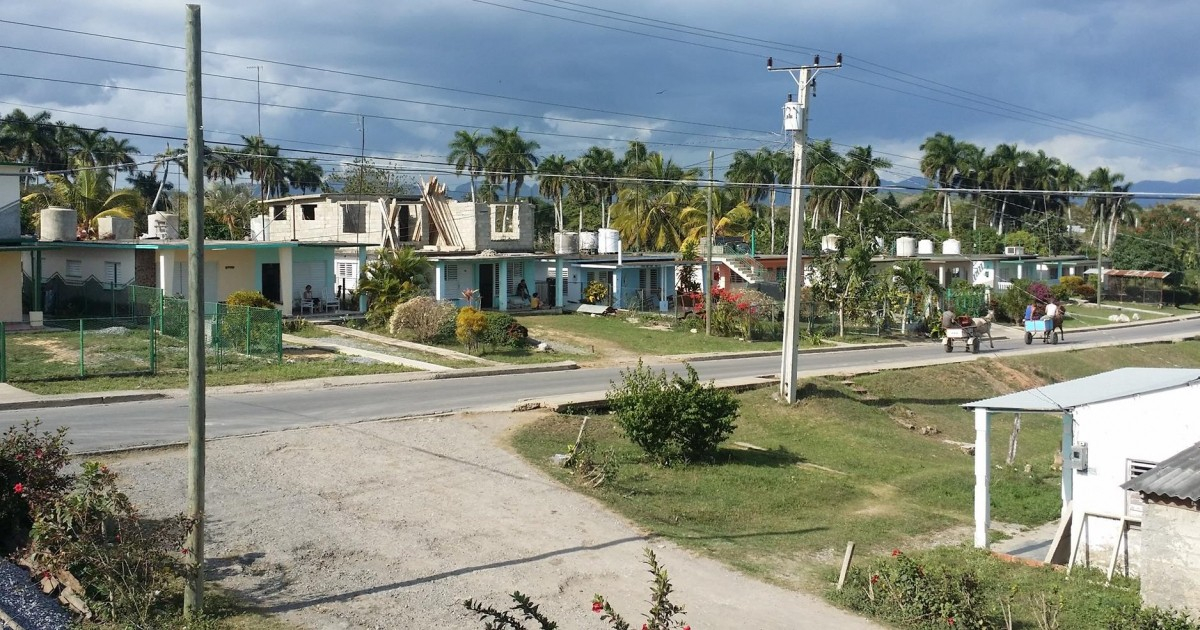
The town of Entronque de Herradura, in the municipality of Consolación del Sur, Pinar del Río, has been without regular potable water service for over two years, according to complaints from residents collected by Martí Noticias on Wednesday.
The locality, with approximately 12,000 inhabitants, relies on the El Hatillo aqueduct, whose system operates irregularly and whose network of pipes has multiple issues. According to local residents, the crisis is allegedly due to illegal diversions: connections may have been authorized for agricultural use—irrigation of crops and filling of lagoons—amid the drought, preventing water from reaching households.
The reports also indicate the existence of clandestine connections along the pipelines, even for filling private pools, while the local government and the Communist Party, informed of the situation, have not provided concrete solutions.
In the face of the water supply disruption, families are relying on private vendors who sell water at 4,000 pesos per truckload, an unaffordable amount for retirees and low-wage workers.
The activist Nilda García described the magnitude of neglect: "We have been without drinking water for more than two years. The community is facing a critical situation, and the elderly don't even have water to drink because their salaries are not enough to buy a truckload of water."
The political express and opponent Eduardo Díaz Fleitas, a resident of the area, also raised his voice: "There is no one to talk to, because there is no solution for anything. No one cares about this; the people are crossing the sea at the bottom."
The community's desperation is encapsulated in this testimony: "It’s not enough that there are no medications, no roads, and no food. (...) They solve all their problems, yet the people remain plunged in total misery. They receive their water tankers, but we, the people, have to buy a tanker of water at whatever price it may be."
The water crisis is worsening due to the blackouts lasting up to 30 continuous hours that Pinar del Río is experiencing, which hinder the operation of water pumps. The provincial Electric Company itself admitted last June that "we do not have enough megawatt availability to implement a rotation of blackouts."
Martí Noticia attempted to reach out to local authorities for a response, but the entity has no registered phone number, highlighting the level of institutional neglect that the community is subjected to.
The problem is not exclusive to Entronque de Herradura.
In April 2025, the newspaper Granma reported that farmers were illegally tapping into the four main water pipelines supplying Pinar del Río, Consolación del Sur, and Viñales to irrigate their crops, a practice that the Water Resources authorities admitted they were unable to stop.
In September of that year, entire neighborhoods in the province had been without water for more than two months and the price of a water truck was equivalent to half of the average salary.
Nationwide, 2025 was the fifth driest year in Cuba since 1901, with over 3.1 million people - 30% of the population - experiencing a total or partial lack of water.
The activists of Entronque de Herradura made an urgent call to the relevant authorities and the public to formalize complaints in order to bring attention to what is happening in this community forgotten by the regime.
Filed under: