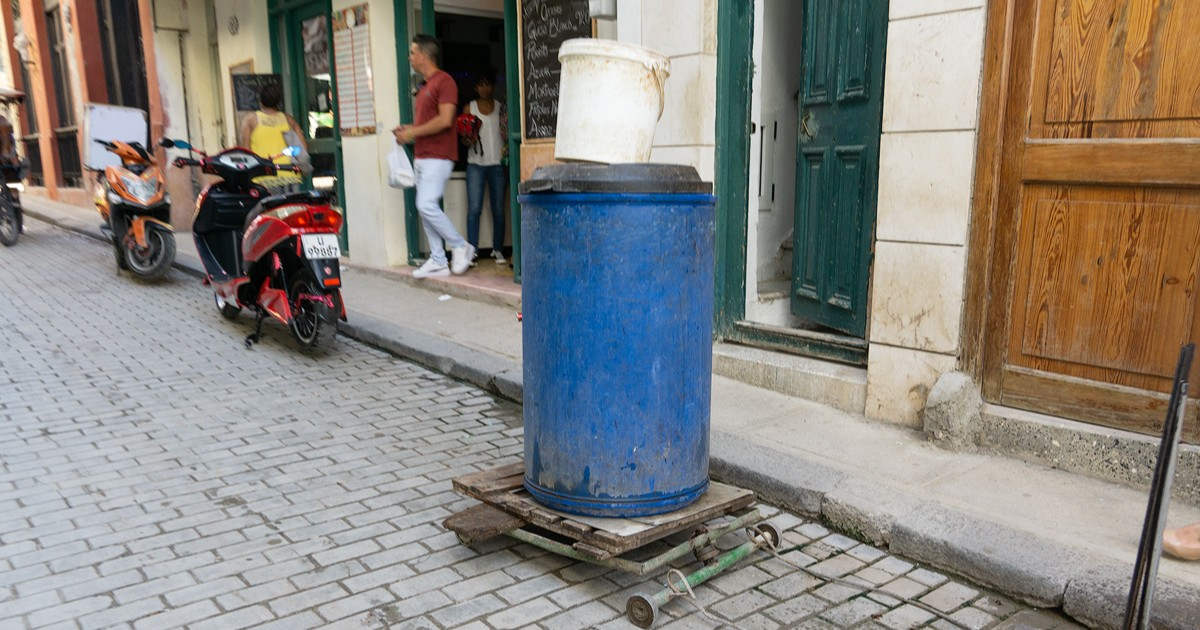
The prominent writer and translator Rodolfo Alpízar Castillo posted on Facebook on Friday a complaint regarding living conditions in his neighborhood, in La Habana, where he described more than a week without water, barely one hour and 48 minutes of electricity on Thursday afternoon, and two additional hours in the early hours of Friday, as well as a near-total communication breakdown with family members abroad.
The post began with a sarcastic remark: "And still, some people complain!" Alpízar described the stretch between Dolores and Santa Catalina, in Diez de Octubre, as a place where people, garbage, and informal vendors coexist. Among the products he saw on the street, he particularly noted the presence of eggs: "And eggs, lots of them, available to buy as many cartons as one wants... as long as you can pay 4,800 pesos per carton!"
The toughest part of the text was directed straight at the regime: "Thank you, dear rulers. Thank you, moreover, for more than a week without water, for providing 48 minutes of electricity yesterday afternoon, and for giving us two hours today at three in the morning (from 3 am to 5 am, or thereabouts). And for keeping us practically out of touch with our relatives abroad, and for neglecting landline services."
The lack of communication described is not coincidental. ETECSA admitted in June that its infrastructure cannot remain operational for more than 24 hours without a power supply, and previously reported that the outages left more than 40% of mobile radio bases and over 50% of telecommunications cabinets nationwide out of service.
The municipality of Diez de Octubre has been experiencing months of water crisis. In mid-August, a break in a 78-inch pipeline in Cuenca Sur left six capital municipalities without water, including this one. The issue is structural: Havana's sewer system was built just over a century ago for a city of around 600,000 inhabitants and now has to serve nearly two million people with outdated pipes.
In analyses derived from data from the National Institute of Hydraulic Resources, it has been estimated that about 2.7 million Cubans do not have regular access to drinking water. The electrical collapse directly exacerbates the water crisis, as more than 80% of the supply system relies on electric pumping.
Alpízar is not a marginal voice. He is a former vice president of the Section of Literary Translators of the Union of Writers and Artists of Cuba (UNEAC) and a winner of the Aurora Borealis Award from the International Federation of Translators in 2011. His criticism comes from within the very cultural system that the regime constructed, making it difficult to dismiss him as an opponent.
Throughout 2026, he has maintained a public record of denunciation. In August, he refused to participate in the International Book Fair, labeling any expense associated with the event as "a stolen cent from the well-being of the people." Days before the post on Thursday, he denounced the sewage overflow in the Santos Suárez neighborhood, also in Diez de Octubre, with the irony: "Beautiful tourist views."
The closing of the post was a direct political demand: "Hold a referendum so you can see how grateful we are and how much we love you," accompanied by the hashtags #PlebiscitoYa, #AmnistíaYa, and #Artículo56Ya. The latter refers to Article 56 of the 2019 Cuban Constitution, which recognizes the rights to assembly and demonstration for lawful and peaceful purposes, although in practice, the regime systematically represses any protest.
The demand for a plebiscite is also not new in Alpízar: in June, he had publicly demanded that it be "transparent and auditable" with international observation.
Related videos:
Filed under: