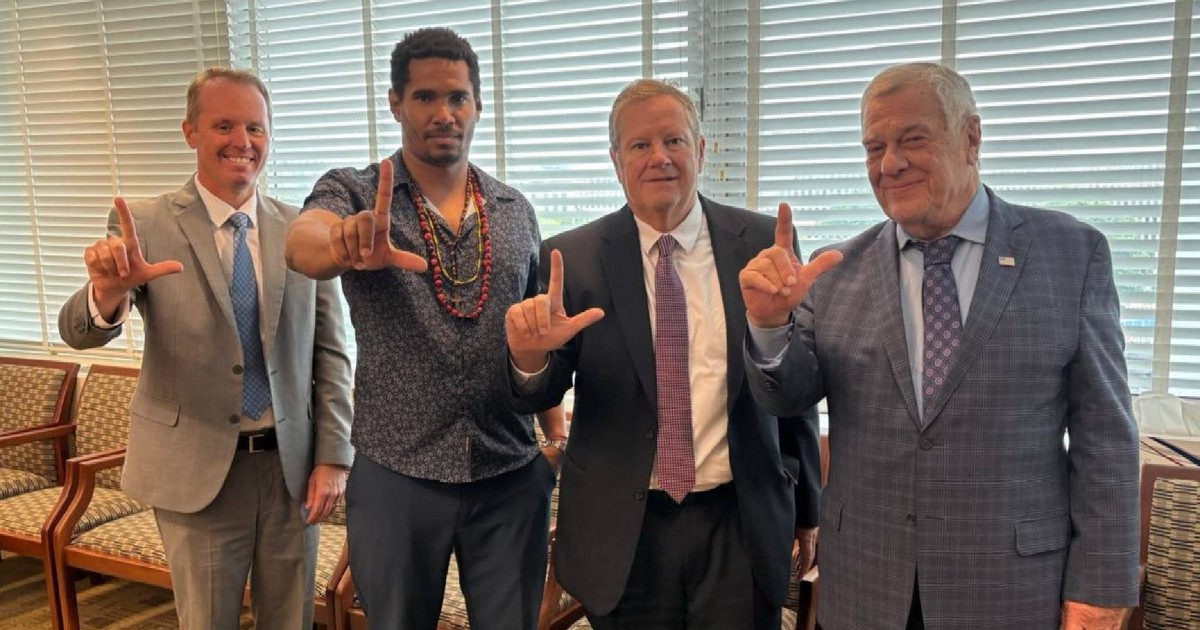
Luis Manuel Otero Alcántara, leader of the San Isidro Movement, met this Tuesday with senior officials of the U.S. government to discuss the repression of the Cuban regime and the situation of political prisoners still on the island.
The meeting was publicly announced by the Under Secretary of State for Western Hemisphere Affairs, Juan Pablo Segura, via his official account on the social network X.
According to the publication, the special advisor for the Western Hemisphere, Michael Kozak, and the chargé d'affaires of the U.S. Embassy in Cuba, Mike Hammer, participated in the meeting along with the Cuban activist.
The meeting addressed "the lack of basic freedoms in Cuba and the ongoing repression of the regime," according to Segura. The State Department took the opportunity to demand "the immediate release of more than 700 people who, like Luis Manuel, simply exercised their right to protest on July 11, 2021, and remain unjustly imprisoned."
Otero Alcántara arrived in Miami on July 18 of this year after completing five years of arbitrary detention in Cuba, having been sentenced in June 2022 to this punishment for "insulting national symbols," "disobedience," and "public disorder," charges stemming from his participation in the historic protests on July 11.
His departure from Cuba was surrounded by international alarm. On July 7, he was transferred from the Guanajay prison without notification to his family, which led Amnesty International to describe the situation as a possible enforced disappearance.
The regime released him under the condition of forced exile. From the Ermita de la Caridad in Miami, the activist was emphatic: "I was expelled from Cuba and that is not right".
Tuesday's meeting with high-level officials from the State Department represents another step in Otero Alcántara's international projection as a leading figure of Cuban dissent, and emphasizes the U.S. government's interest in maintaining pressure on Havana regarding human rights.
According to human rights organizations, in February of this year there were at least 760 political prisoners in Cuba, of which 358 were directly linked to the protests of July 11. The organization Prisoners Defenders raised that total figure to over 1,200 inmates for political reasons across the island.
Marco Rubio also welcomed Otero Alcántara when he arrived in Miami and, at that moment, demanded the release of the more than 700 prisoners from July 11, a demand that the State Department is now reiterating with renewed firmness.
Related videos:
Filed under: