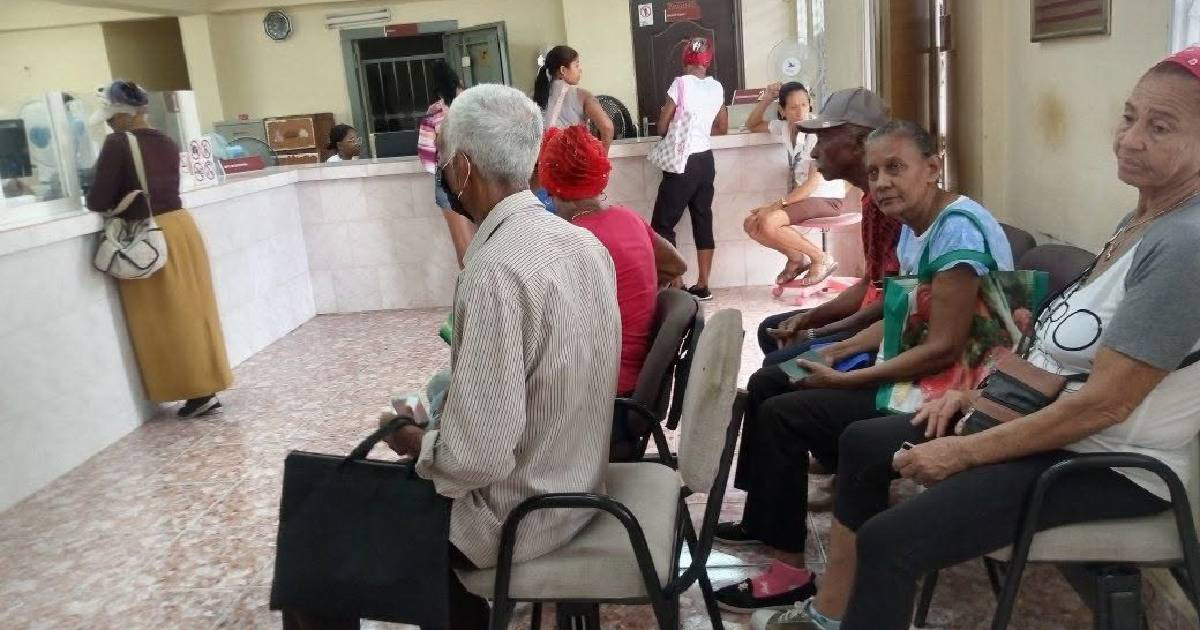
The branch of the Banco de Crédito y Comercio (Bandec) in Guantánamo collects just over 34% of the nearly 15 million pesos needed to be deposited daily, reported the official newspaper Venceremos this Friday.
The information emerged during the daily meeting on the operational and socio-economic vitality of the eastern territory, chaired by the highest authorities of the Communist Party and the provincial government.
The liquidity deficit directly affects workers in education and public health, who do not receive their salaries on time, as well as retirees who are waiting for their payment days.
The meeting, conducted via audioconference with all the municipalities, once again brought to light a crisis that the provincial government publicly acknowledged in July, which is that the banks in Guantánamo do not have enough cash to operate normally.
On that occasion, Bandec was capturing a similar proportion - just over 35% of its daily target - which shows that the situation has not improved in two months.
The cash shortage is compounded by other issues such as delays in meeting revenue targets and the refusal of both private and state vendors to accept electronic payments, which is a legal obligation currently in effect for all establishments in the country.
"All state or private establishments are required to operate with electronic payment methods, accepting transfers and enabled digital payments," it was emphasized during the meeting, while urging an increase in the actions of inspection bodies to enforce the regulations.
In August, due to the banking system's inability to guarantee pension payments, authorities announced that 113 private businesses would take over pension payments for more than 3,000 retirees, in a scheme that the deputy accounting director of Bandec, Yuder Ortiz González, made clear was not entirely voluntary.
"It is not the same for someone who becomes a financial agent, assisting the bank with the payment, as for an actor who does nothing," he stated.
Guantánamo has more than 68,000 retirees or pensioners, of which 18,000 receive cash payments through the postal system and 50,000 use a card, according to official figures.
The government set a goal for 70% of retirees in the province to receive their payments through private entities, but with only 3,000 served through this method, the objective is still far from being achieved.
On a national scale, the mandatory banking policy implemented in August 2023 has resulted in tens of thousands of fines and over two hundred establishments being closed, without reversing the trend.
In July, Venceremos itself acknowledged that the situation in Guantánamo "has ceased to be a banking difficulty and has turned into a social problem," an admission that summarizes the failure of a model that shifts responsibilities from the State to the private sector that it cannot fulfill.
Related videos:
Filed under: