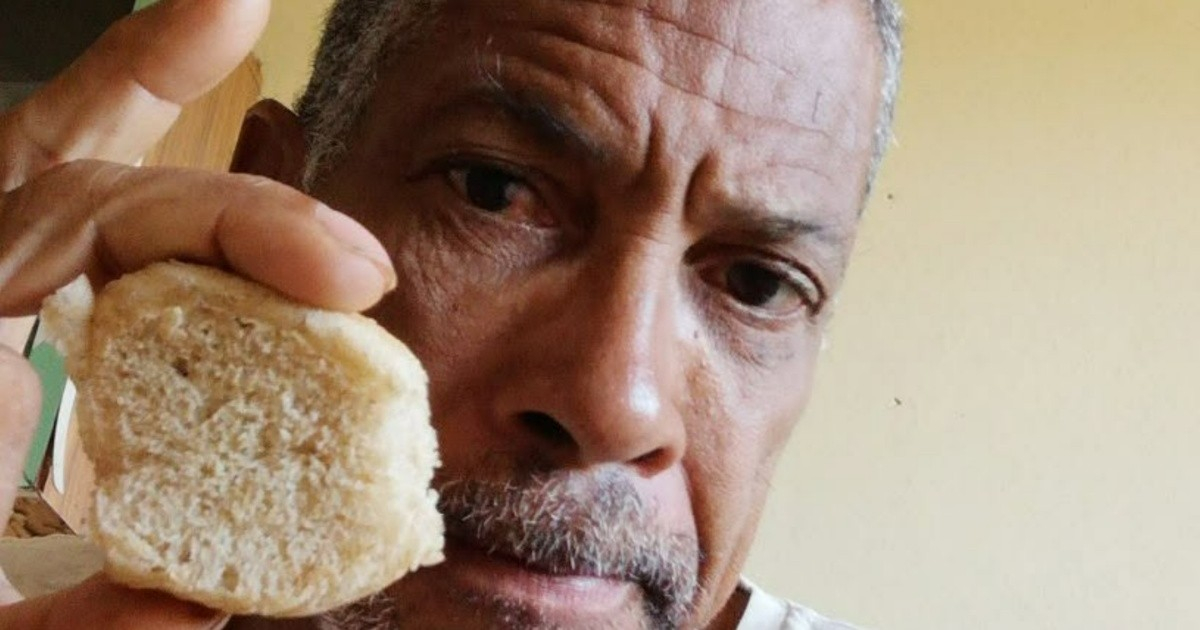
A Cuban identified as Roberto D J Morales posted on Facebook an outraged complaint about the quality of the rationed bread he receives, showing the camera a loaf that was split in half and appeared deplorable, openly questioning whether that product is suitable for human consumption.
"We truly deserve this garbage they call bread. I won't hide my face, I have nothing to hide. That is shameful," wrote Morales, who appears in the image with a disapproving expression holding the piece of bread in front of his face.
The man pointed out that the loaf of bread weighs less than 75 grams and that his salary does not allow him to access bread from the informal market, where prices range from 450 to 2,200 pesos per unit depending on the type. "If my salary allowed me to buy that every day, I would only consider buying it to feed animals: chickens, pigs, rabbits," he added.
Throughout 2026, Cubans from multiple provinces have reported that the rationed bread arrives with a lower weight than specified, poorly baked, with acidity, mold, black spots, or a sour smell.
In June, in Santiago de Cuba, bread in a state of decomposition was reported. In July, in Guantánamo, residents complained about a product with high acidity, lacking fat and salt, and with dark spots shortly after it was made. In August, new images of the store-bought bread in Santiago once again sparked outrage on social media.
Behind the crisis lie structural causes that the regime has failed to address. Cuba needs approximately 20,000 tons per month of wheat flour to ensure the bread from the ration book, but by June 2026, only one of six contracted vessels for the year had arrived, according to a diagnosis on the flour shortage. Blackouts, lack of fuel, and the use of alternative flours such as cassava, sweet potato, or corn complete the picture.
The standardized weight of bread had already been officially reduced from 80 to 60 grams per unit since September 2024, citing a shortage of flour. In 2026, in some provinces, the portion dropped to as low as 40 grams.
The private market offers an alternative, but at prices that most cannot afford. Since July 2026, the Cuban Bread Company has officially set rates in Havana of 110 Cuban pesos for 100 grams and 550 pesos for half a kilo. In private bakeries, a bag of six loaves can consume an entire minimum monthly salary, which has been fixed at 3,210 pesos since July 2026.
In Santiago de Cuba, reports have indicated that bags of bread have reached up to 700 pesos, while in February, Cubans were already complaining that the regulated roll was "almost the size of an egg" and accused theft in the production process.
The situation is further exacerbated by hoarding: this month, there have been reports of resellers hoarding subsidized bread to sell it at inflated prices, depriving the most vulnerable of the only subsidized food they still had access to every day.
Related videos:
Filed under: