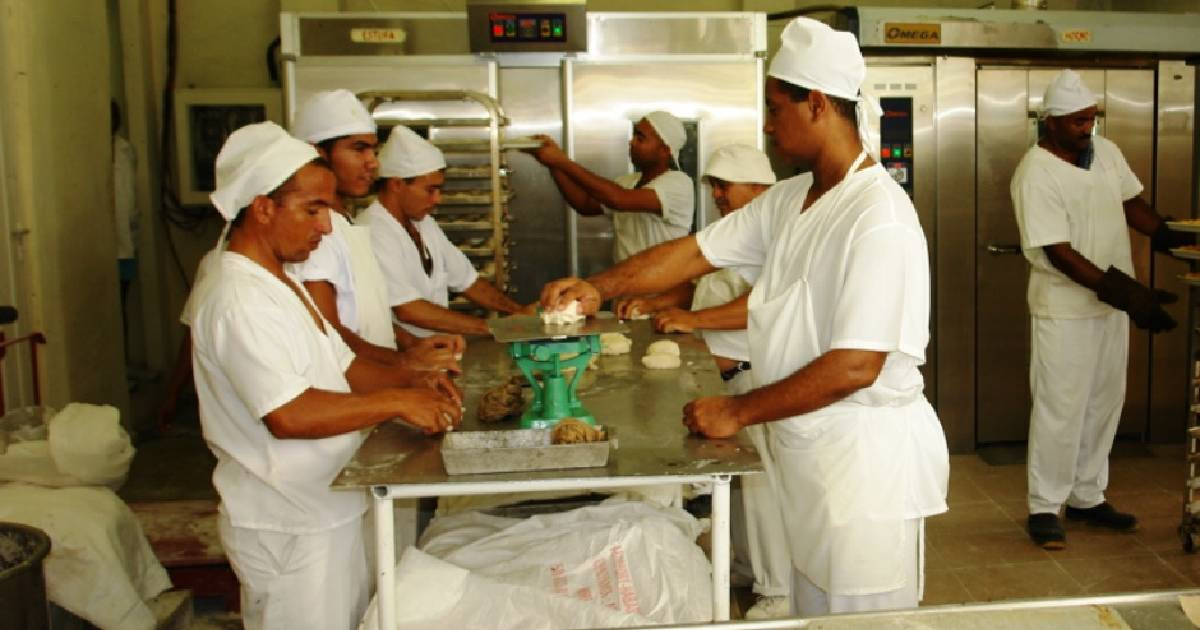
The governor of Guantánamo, Alis Azahares Torreblanca, acknowledged that the state-owned bakeries in the province use power outages as an excuse not to produce bread, and ordered the reorganization of production in various shifts and facilities to ensure that the food reaches the population.
"If the province has wheat flour for bread production, it is unjustifiable that this basic product stops being made and its sale to the population is affected, using blackouts as an excuse," emphasized Azahares during the meeting on the "Vitality of the operational, economic, and social situation of the territory" reported this Sunday by the official newspaper Venceremos.
The official instructed to "organize the production of bread in various bakeries and at different times, taking into account the electrical disruptions," an implicit admission that the state-run units have halted production without sufficient reason when the raw materials are available.
As part of the national energy crisis, the eastern province is experiencing prolonged blackouts, some of which can exceed 20 hours a day.
A few days ago, it was reported that the territory had gone days without receiving state fuel, which forced the government to propose buying diesel and gasoline from private players to maintain essential services.
The bread crisis in Guantánamo is not new. In August, Venceremos reported that bakeries in the city were selling loaves weighing only 30 and 50 grams, lacking salt, sugar, or fat, for 75 cents, while the informal market offered "pan de bola" for 40 pesos each. In July, residents reported bread with high acidity, dark spots, and a lack of basic ingredients.
Nationally, the situation regarding flour is precarious. Cuba requires about 20,000 tons of wheat flour monthly to ensure the regulated bread, but by June, only one of six contracted vessels for the year had arrived.
The only operational mill, located in Cienfuegos, produced 250 tons daily compared to the 700 required; the plant in Guantánamo remained out of service.
Since September 2024, the official weight of regulated bread has been reduced from 80 to 60 grams, with some provinces cutting it down to as low as 40 grams.
The shortage of flour has forced the mixing of wheat with cassava pulp, sweet potato, or corn, which impacts the texture, flavor, and shelf life of the product. In Villa Clara, regulated bread has been restricted since February only to children under 13 years old and individuals over 65.
On the other hand, in Havana, since July, the Cuban Bread Company has raised the price of a 400-gram loaf of bread from 240 to 500 pesos, an increase of 108%.
In the same meeting, the Government's Programs and Objectives Coordinator, Joennys Samón, reported that individuals in vulnerable situations will receive one pound of sugar, one pound of peas, five pounds of rice, and one kilogram of beans, the latter two provided free of charge.
The insufficient deposit of money in bank branches was also addressed, with more "complex" situations in Maisí, El Salvador, Manuel Tames, and Guantánamo; problems with foul odors in the water supply to the Caribbean neighborhood and thefts in unguarded state facilities.
Related videos:
Filed under: