Miguel Díaz-Canel responded this Wednesday to Donald Trump's speech before the UN General Assembly with a phrase that summarized his stance against the warnings from the American leader: "Cuba's freedom arrived on January 1, 1959, with that Revolution, and we will not lose that freedom; we will defend it."
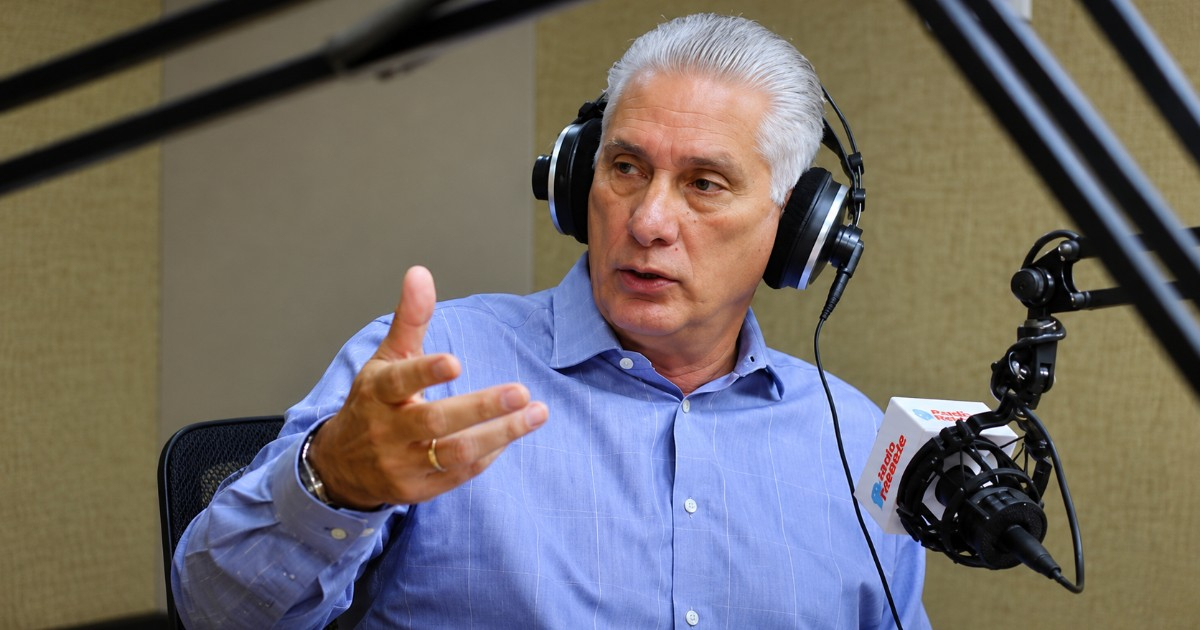
The statement was made at the end of the premiere of "Criterio Compartido", the new biweekly radio program hosted by the Cuban leader along with journalist Bárbara Betancourt on Radio Rebelde, aired at 7:15 in the morning.
On Tuesday, Trump stated before the 81st General Assembly of the UN that Cuba is "an absolutely failed state", predicted that it "will fall", and promised that "freedom will come to Cuba".
The President of the United States also revealed that Secretary of State Marco Rubio "is leading a negotiation and is deeply involved in the discussions with Cuba."
Díaz-Canel described Trump's intervention as "completely arrogant, overbearing, and Interventionist" and stated that it expresses "that genocidal, criminal, and contemptuous mindset towards Cuba, towards the Cuban people."
He also accused Washington of using the label "failed state" to evade responsibility: "There is always the attempt to label it a failed state to shift the blame away from the genocide they are committing with that intensified and prolonged blockade."
Beyond the response to Trump, the leader outlined the magnitude of the energy crisis in Cuba during the program. "In this country, no fuel ships have arrived in nine months. How can the economy be sustained?" Díaz-Canel asked.
In response to a direct question from a listener about whether Cuba could receive fuel from allied countries, the leader replied, "We have made all sorts of efforts for fuel, and no fuel is arriving from anywhere in the world."
He attributed the situation to the executive order of President Trump, signed on January 29, 2026, which extended restrictions on energy supply and discouraged shipping companies and third countries from supplying the island.
This crisis occurs in a year when Cuba has experienced at least eight nationwide blackouts, with generation deficits exceeding 2,000 MW and outages lasting more than twenty hours daily in some areas.
Listener calls during the program brought to light the daily reality of Cubans. Pedro Rodríguez Martínez, from Contramaestre, reported that the price of oil ranges between 3,600 and 5,000 pesos and summed up the situation with a straightforward phrase: "Salaries and paychecks aren't enough to live."
Juana Pérez, an 88-year-old retiree residing in Havana, reported that she tries to meet her needs with a pension of 2,000 pesos per month and requested that the new measures pay special attention to the elderly.
The other central axis of the space was the defense of the package of 176 economic transformations presented to the National Assembly in June 2026.
"These transformations are not a shift to capitalism, nor are they a process of capitalist restoration," said Díaz-Canel, summarizing the purpose of the new economic measures in three aspects: "More production, more employment, and higher wages."
"Criterio Compartido" will air on alternating Wednesdays. Díaz-Canel assured that all suggestions received, including those that did not make it to air, will be processed and addressed. He concluded the program with a phrase he defined as the principle of the space: "Every voice in Cuba matters."
Related videos:
Filed under: