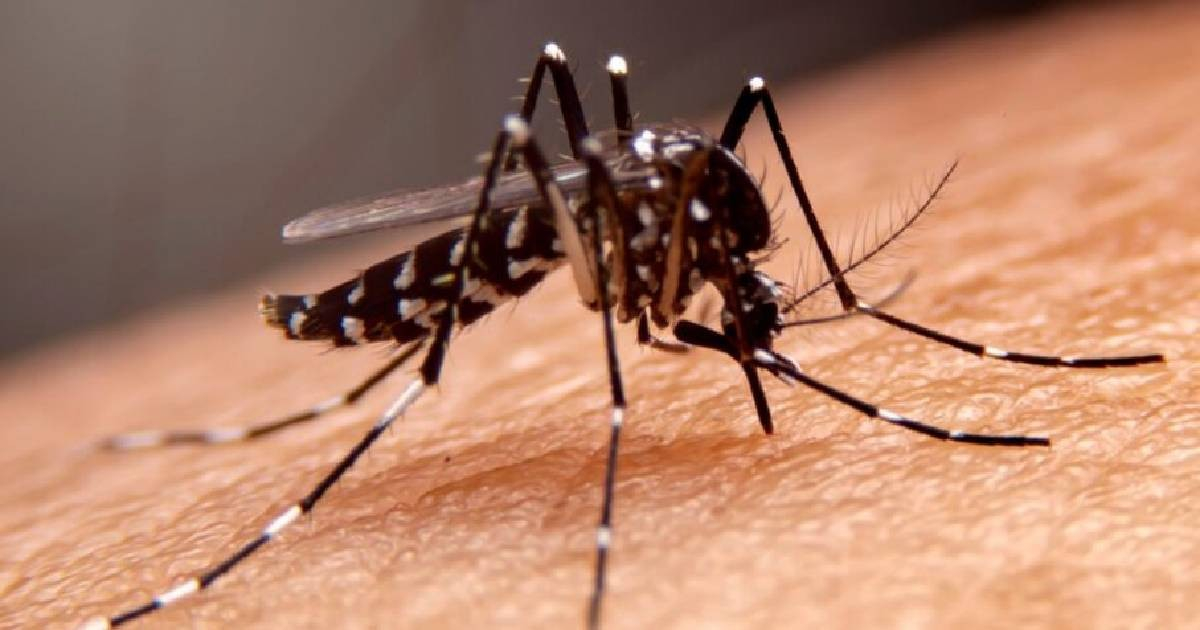
The city of Clearwater, Florida, began releasing thousands of small fish capable of consuming mosquito larvae as part of a strategy to reduce the insect population amid the significant
Clearwater released this Friday 10,000 eastern mosquitofish, also known as gambusias, in four lakes in the municipality, according to reported 10 Tampa Bay.
The measure comes after Pinellas County declared a dengue emergency.
These fish are native to Florida and feed on the larvae before the mosquitoes reach their adult stage.
According to the Institute of Food and Agricultural Sciences at the University of Florida (UF/IFAS), an adult specimen can consume up to 100 mosquito larvae per day.
"What they actually do is eat the larvae. This reduces the mosquito population, which helps significantly with the problems we're currently experiencing," explained Jarett Hood, head of the Clearwater Emergency Management Division, in statements reported by the local television station.
The first 10,000 fish were distributed at four locations: 2,000 in Prospect Lake, 4,000 in Glen Oaks, 2,000 in Moccasin Lake, and another 2,000 in Salls Lake.
The city has also acquired another 31,000 mosquitoes which will later be released in other areas of Clearwater, thus the program currently involves the use of at least 41,000 specimens.
The authorities also trust that the fish will continue to reproduce after being introduced into the ponds and lakes.
Cassie Cordova, the sustainability and environment manager at Clearwater, explained that an initial population of 2,000 fish could multiply significantly within a matter of months.
The release of gambusias will not replace other control measures. Clearwater maintains a strategy that includes aerial spraying against adult mosquitoes, ground fogging, and larvicide treatments in water accumulations.
Inspectors also use the so-called mosquito dunks, products in the form of small tablets or rings that slowly release a larvicide into stagnant water to eliminate the larvae.
The measure comes amid a rapid deterioration of the epidemiological situation. According to data cited by 10 Tampa Bay from the CDC and the Florida Department of Health, the state has recorded 392 cases of dengue in 2026, with the highest concentration in Hillsborough County.
The figure includes different types of cases and should not be confused with the count of infections acquired solely within Florida.
The most recent official report from the Florida Department of Health, for the week of September 13 to 19, increased the number of locally acquired dengue cases in the state to 190 for 2026. During that week alone, 38 new local infections were reported.
Hillsborough accounts for 170 of those cases, followed by Miami-Dade and Pinellas, with seven each; Orange, with three; Pasco, with two; and Palm Beach, with one.
The increase has been particularly rapid. At the beginning of September, Florida had accumulated 208 cases of dengue in total, while several counties in the central and southern parts of the state were strengthening their operations against mosquitoes.
Local transmission also reached South Florida this summer. In early August, the Department of Health confirmed a locally acquired case of dengue in Miami-Dade, prompting additional monitoring and vector control measures.
Related videos:
Filed under: