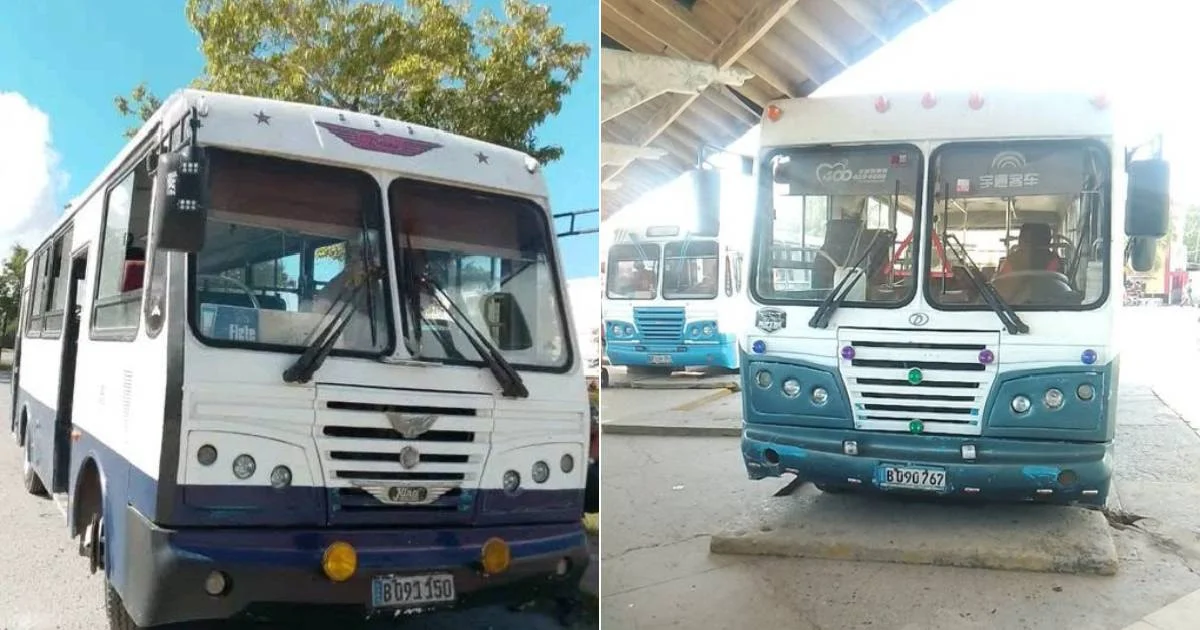
The mayor of the municipality of Colombia, in the province of Las Tunas, presented as a success of the government's economic reforms that state-run buses charge 800 pesos per ticket, a fare that is nearly a quarter of the Cuban monthly minimum wage of 3,210 pesos.
The official newspaper 26 reported on Saturday the statements of Héctor Ramón Pérez Zequeira, who characterized the assessment of his management as "very positive" and affirmed that "the impact of the transformations is present and real."
The official framed his narrative within the 176 economic and social transformations approved by the National Assembly in June.
According to Pérez, the state buses operate with fuel under a "cooperative co-production" scheme, and the fare of 800 pesos represents "400 pesos less than the ticket price" compared to what was charged before, something that, in his opinion, "has created real competition."
He noted that the rented buses -managed privately- charge "a little more than 1,000 pesos" to reach the city of Las Tunas, whereas before the trip cost over 3,000 pesos.
The mayor also highlighted the recovery of the route to Camagüey, although he acknowledged that the prices "are not what the population desires."
Colombia, the official stated, is the municipality with the lowest transportation rates in the entire province.
Beyond transportation, Pérez mentioned other commendable outcomes in Colombia: the local bakery, which "was practically completely stalled," has resumed production; the Las Delicias motel installed 32 kilowatts of solar panels that are already generating income; and a small and medium-sized enterprise will take on the installation of panels in commerce and gastronomy units in the municipality.
"The first thing we need to change is our minds, the way we think," argued the mayor.
What the official presents as an achievement contrasts with the reality that Cubans face in the rest of the country. A truck ride from Bayamo to Manzanillo costs 2,000 pesos, and a trip covering the approximately 900 kilometers that separate Santiago de Cuba from Havana can reach between 5,000 and 6,000 pesos.
"Believe it or not, the transportation has improved. The thing is, the population does not want to move, does not want to travel, does not want to go anywhere, because they don't have the money to afford transportation," commented the opposition figure José Daniel Ferrer García.
Last week, it was reported that in the capital of Tunas, the 20 electric tricycles that served as an alternative for urban mobility had been out of service for two weeks due to the lack of an electric suppressor that cannot be found anywhere in the country.
On the other hand, the reactivation of the Morón-Camagüey train has generated criticism due to its fare of 1,500 pesos, with users asking on social media: "Is this a ticket to Ciego or a flight to Paris?".
In Cienfuegos, the reactivation of five urban routes scheduled for October 1 depends on private individuals providing the fuel that the State cannot guarantee.
Related videos:
Filed under: