The president of Uruguay, Yamandú Orsi, responded to the criticism received for mentioning the "strict economic blockade" against Cuba at the United Nations without explicitly condemning the regime in Havana, and defended that his general reference to "tyrannies" made his position clear.
"I didn't really talk much about Cuba. I didn't talk about Cuba," Orsi stated on Saturday after returning from New York, where he participated in the 81st session of the UN General Assembly, according to Teledoce.
The official later clarified that he did use Cuba as an example when referring to economic blockades, but he avoided making a direct assessment of the island's political system.
"I referred to signs that are not so positive, such as terrorism, wars, extreme inequality, and strict economic blockades, like the example of Cuba, but I did not talk about the Cuban regime," he explained.
Orsi recalled, however, that during her speech she also talked about the "pain caused by tyrannies" and considered that formulation to be sufficiently clear.
"Sometimes, there's no need to be so explicit and say: I like this government, I don't like this one," he noted before concluding: "A word to the wise is enough."
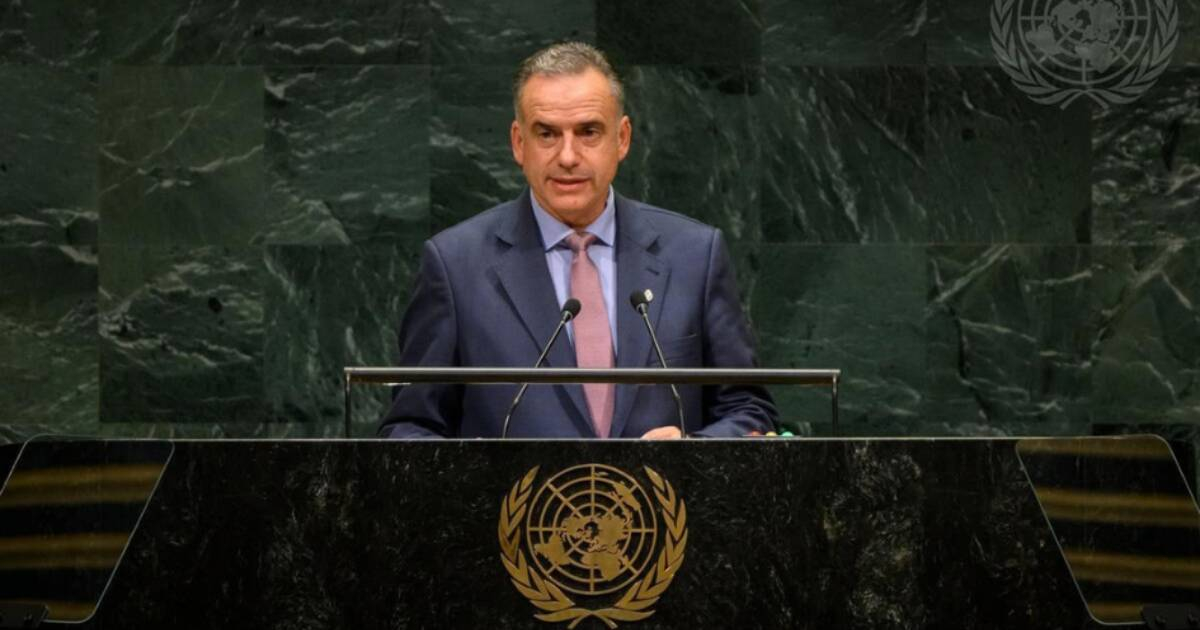
The controversy arose after the speech delivered by Orsi on Thursday before the United Nations, when he included Cuba in a list of international situations that, in his view, cause suffering.
"We cannot remain indifferent to the pain that comes with an endless state of war; the fear and suffering caused by organized crime; the constant threat of terrorism; the repression that arises from tyranny, or the suffering inflicted by a tight economic blockade like the one the Cuban people endure," he expressed then.
Although the references to "tyranny" and Cuba appear consecutively, Orsi did not explicitly classify the Cuban regime as a tyranny during his speech.
The words provoked criticism from the president of the National Party's board, Álvaro Delgado, who recalled that Orsi had previously consulted with Uruguayan parties regarding the content of his speech before the United Nations.
According to Delgado, the opposition had raised the need to "speak clearly about democracy and free elections in Cuba, Nicaragua, and Venezuela."
"Yesterday Nicaragua and Venezuela did not appear, and from Cuba he chose to talk about the blockade," questioned the opposition leader, who accused the president of having offered "a lot of messages for the domestic audience and very little state policy."
The discussion reflects the differences that exist in Uruguay regarding policy towards Havana and highlights a contrast with the stance taken by former President Luis Lacalle Pou (2020-2025).
Before handing over the presidency in 2025, Lacalle Pou blocked invitations to the governments of Cuba, Venezuela, and Nicaragua for Orsi's inauguration, despite the fact that the incoming government intended to invite all countries with which Uruguay maintained diplomatic relations.
Lacalle Pou had openly labeled Cuba as a "dictatorship" and was involved in a notable confrontation with Miguel Díaz-Canel during a CELAC summit in 2021, where he quoted verses from "Patria y Vida" and referred to Cubans who felt oppressed by the island's government.
Since Orsi came to power, the Frente Amplio has maintained a different stance. Last May, the ruling coalition issued a statement in defense of Cuban sovereignty in response to statements made by U.S. President Donald Trump. Months earlier, its 17 senators had supported a motion against U.S. restrictions on fuel supplies to Cuba.
This stance has also sparked criticism among members of the Cuban community in Uruguay. The doctor and activist Daycee Zamora publicly questioned the Frente Amplio in May for avoiding to label the Cuban regime as a dictatorship, while Leydis Aguilera, the first MP of Cuban descent in the Uruguayan Parliament and a member of the National Party, has urged the government to adopt a firmer stance regarding human rights on the island.
Orsi, for his part, insisted this Saturday that his policy does not involve publicly determining which governments he approves or rejects.
"I don't usually get involved in describing or analyzing how one government works compared to another," he stated, and assured that the defense of freedom was repeatedly present in his speech before the United Nations.
Related videos:
Filed under: