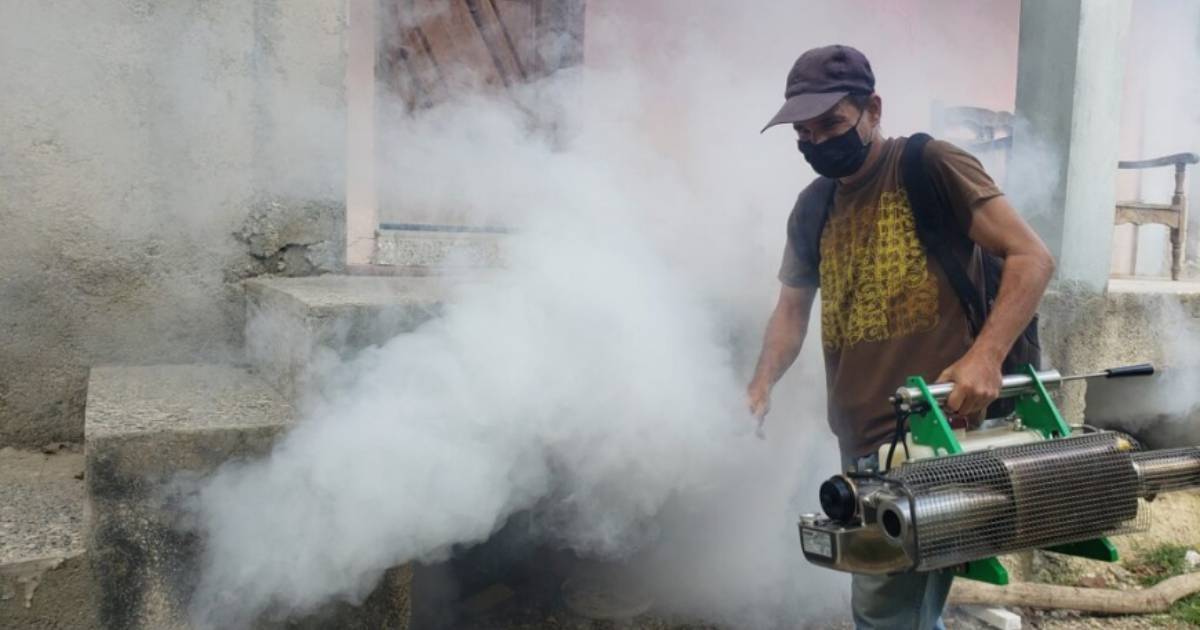
Santiago de Cuba continues to have high infestation rates of the Aedes aegypti mosquito and three municipalities with declared transmission, while the necessary fumigation efforts to combat the vector are limited by the availability of fuel.
Dr. Yaimara Gutiérrez de la Cruz, director of the Provincial Center for Hygiene, Epidemiology, and Microbiology, warned this Monday in the state newspaper Sierra Maestra that the province closed epidemiological week 38 while maintaining risk indicators for arboviral diseases.
«Three municipalities maintain declared transmission: Santiago de Cuba, Palma Soriano, and Contramaestre; although the risk of illness has decreased compared to the previous week, the infestation rate remains high,» he explained.
In Segundo Frente, there was also a slight increase in cases of nonspecific febrile syndrome, according to the official.
One of the main obstacles to tackling the proliferation of mosquitoes is the shortage of fuel. Gutiérrez acknowledged that adulticidal treatment—fumigation aimed at eliminating adult mosquitoes—must be increased due to the current levels of infestation.
However, he specified that these actions will be carried out "depending on the availability of fuel in the municipalities."
In April 2026, the provincial authorities themselves acknowledged a deterioration in the hygiene and epidemiological situation, with Aedes aegypti indices exceeding the average of the previous five years. They also admitted to challenges in carrying out pest control and eliminating breeding sites due to a lack of fuel.
The alert in Santiago de Cuba comes amid a complicated epidemiological situation in the country. Cuba has reported over 7,100 cases of dengue in 2026, according to data collected by the Global Dengue Observatory of the London School of Hygiene & Tropical Medicine, with levels significantly higher than expected for this time of year.
While Santiago faces limitations for fumigation, Holguín recently received 50 fumigation equipment donated by the Pan American Health Organization. These devices allow the use of water instead of oil to prepare the emulsion used in vector control.
In light of the high presence of mosquitoes, Gutiérrez asked residents to check containers that collect water and to keep yards, rooftops, and streets clean in order to reduce breeding sites.
The specialist also warned about the approaching period of increased incidence of respiratory illnesses and recommended reinstating practices used during the Covid-19 pandemic, such as wearing masks, frequent handwashing, and avoiding large gatherings.
Related videos:
Filed under: