About midnight on Saturday, September 26, when the plane I was on was about to land from Frankfurt, Germany, to Mexico City, I could see from the aircraft window a vast, well-lit city. My first thought was: “And my homeland, Cuba, almost completely dark.”
That extraordinary expanse of lights made me think about the differences between two neighboring and sister nations, united by history, culture, and deep human connections. Just eight days earlier, on September 18th, Cuba had experienced another national collapse of its electrical system. The image of illuminated Mexico painfully contrasted with the endless blackouts suffered by millions of Cubans.
In 1958, Cuba and Mexico were developing countries, albeit with significant differences. Mexico had around 32 million inhabitants, while Cuba had about 6.8 million. The Mexican economy was undergoing a phase of industrialization and growth, whereas Cuba stood out for its levels of urbanization, services, and private consumption. Both nations were experiencing economic and social transformations, but Cuba had achieved prominent positions in various indicators of development and well-being in Latin America. Seventy years ago, the largest of the Antilles was outperforming Mexico by twice the amount that Mexico currently surpasses Cuba in human development. In 2025, Mexico ranked 81st and Cuba 97th in the Human Development Index of the United Nations Development Programme.
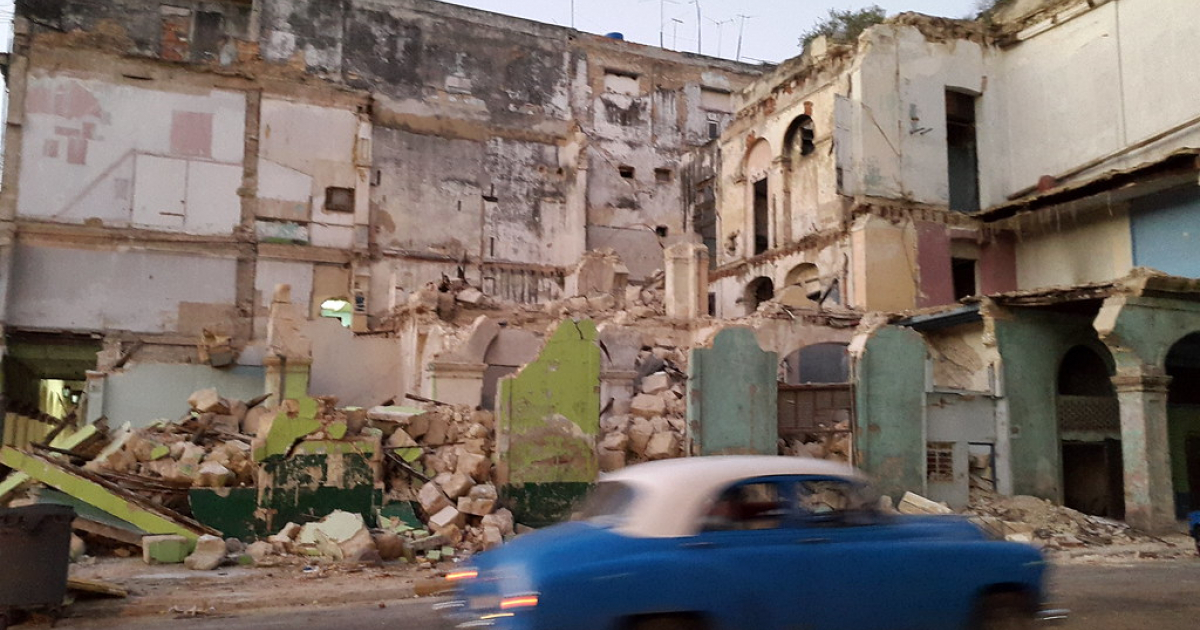
The comparison between the capitals of both nations is quite revealing. In 1958, the urban area of Mexico City had approximately five million inhabitants, while Havana and its surroundings gathered around one and a half million. By 2026, estimates place the Mexican metropolitan area at over 22 million inhabitants, compared to one million 700 thousand in the Cuban capital. Mexico has multiplied its urban population through an extraordinary process of expansion. Meanwhile, Havana shows profound housing deterioration and infrastructure issues and population decline.
Cars highlight another significant difference. In 1958, Mexico had 378,886 registered cars, approximately twelve for every thousand inhabitants. The historical statistics cited for Cuba mention around 140,000 private vehicles, equivalent to about twenty-one for every thousand inhabitants. At that time, Cuba had a relatively high motorization rate for its size. Today, Mexico has tens of millions of registered cars, about 444 vehicles for every thousand inhabitants in 2023, while Cuba has one of the lowest figures in all of Latin America and continues to have many vehicles manufactured before 1959 in circulation.
Television offers another perspective. Cuba was among the most advanced Latin American countries in television broadcasting during the 1950s. Some historical statistics attribute over 300,000 television sets to Cuba in 1958, although the estimates from that period show methodological differences. An academic study records around 184,000 receivers for Mexico that year.
Currently, nearly 90% of Mexican households have a television. For Cuba, I couldn't find a recent and reliable figure comparable to the number of devices per inhabitant; many homes have old televisions, and having a television doesn't guarantee that it can be used given the frequent power outages.
Electricity represents yet another contrast that we should mention. In 1958, electricity consumption per capita in Cuba was around 397 kWh, while in Mexico it was 268.
In 2024, Mexico recorded approximately 2,593 kilowatt-hours per person per year, compared to 1,435 in Cuba. The difference becomes even more serious when we consider that annual statistics do not fully reflect the deterioration of the Cuban electrical system and the suffering caused by prolonged blackouts.
In terms of food, housing, and public health, Mexico has undergone significant transformations in recent decades. Cuba, on the other hand, is experiencing a particularly serious emergency. The Pan American Health Organization has documented shortages of medications, difficulties in obtaining supplies, the emigration of healthcare personnel, and disruptions in essential services. In 2026, investigative reports have confirmed hospitals with broken equipment, shortages of anesthetics, and interrupted treatments. Power outages even jeopardize essential equipment needed to preserve lives.
Cuban housing also suffers the consequences of decades of insufficient maintenance and investment, exacerbated by natural disasters and a scarcity of materials. The difficulties in preserving food, pumping water, or getting to a hospital turn the electricity and fuel crisis into a daily threat for families.
Migration movements complete this story. Historical records from Mexico show 1,612 Cubans residing in Mexico in 1950 and 3,827 in 1960. In 2020, there were 25,976 individuals born in Cuba. A later figure from 2022 placed that population at 41,475. Meanwhile, Mexican consular records identified 1,058 Mexicans residing in Cuba in 2020. I did not find sufficiently reliable bilateral counts to establish the exact numbers for 1958 and 2026.
The political relations between Mexico and Cuba have also gone through different stages since 1959. During the governments of the Institutional Revolutionary Party, a policy of diplomatic rapprochement, non-intervention, and continuity of bilateral relations prevailed. Mexico was the only Latin American country that refused to sever diplomatic relations with Havana in 1964. Later, during the administrations of Carlos Salinas de Gortari and Ernesto Zedillo, issues related to democracy and human rights began to gain greater importance.
With Vicente Fox of the National Action Party, a significant change occurred. In 2002, Fox met with representatives of the Cuban democratic opposition, and his government supported an international resolution calling for improvements in human rights. This policy led to important diplomatic confrontations with Fidel Castro. His successor, Felipe Calderón, also from the PAN, maintained the concern for human rights, although he sought to reestablish bilateral relations.
Enrique Peña Nieto, from the PRI, fostered a new approach towards Havana. Subsequently, Andrés Manuel López Obrador deepened cooperation with the Cuban regime and awarded the dictator Miguel Díaz-Canel the Order of the Aztec Eagle. Claudia Sheinbaum has maintained the agreements for hiring Cuban doctors and economic aid to the communist regime, in addition to publicly defending the continuation of trade and diplomatic relations.
In Mexico, we have numerous friends who are supportive of human rights and the democratic aspirations of Cubans. This solidarity among citizens deserves to be distinguished from the decisions made by their governments. While Vicente Fox and Felipe Calderón maintained contacts with the Cuban dissidence, the governments of López Obrador and Sheinbaum have developed a close political and economic cooperation with the longest-running dictatorship the continent has ever known.
From Mexico and wherever I may be, my thoughts will continue to be with Cuba and the millions of fellow citizens who hope to enjoy those fundamental conditions of freedom, wellbeing, and dignity.
Related videos:
Filed under:
Opinion article: Las declaraciones y opiniones expresadas en este artículo son de exclusiva responsabilidad de su autor y no representan necesariamente el punto de vista de CiberCuba.