In July, the United States declared exports to Cuba of 3,222,000 barrels of petroleum products, the largest monthly volume recorded in the series from the U.S. Energy Information Administration (EIA) and more than four times the 778,000 barrels counted in June.
The data, published by the EIA on September 30, shows a jump of 2,444,000 barrels in just one month. The volume for July corresponds to an average of approximately 104,000 barrels per day.
The report specifies that it pertains to refined petroleum products, not crude oil. The breakdown for July indicates that most of it consisted of distillate fuel, with 2,654,000 barrels, followed by 554,000 barrels of finished gasoline, in addition to smaller volumes of lubricants and aviation fuel.
The magnitude of the July record is even more striking when observing the evolution of 2026. The year began with practically insignificant amounts: 1,000 barrels in January and 19,000 in February.
In March, the volume increased to 190,000 barrels, followed by 210,000 in April, 476,000 in May, and 778,000 in June, before jumping to 3,222,000 barrels in July.
Between January and July, the declared exports totaled 4,896,000 barrels of petroleum products.
The contrast with the previous two years is striking. According to the same historical series from the EIA, in 2024 and 2025, monthly records to Cuba were nearly nonexistent: in the months when exports were recorded, the volumes fluctuated between zero and just 17,000 barrels.
The growth began to become visible during the first quarter of 2026. In March, Reuters reported that U.S. suppliers had sent approximately 30,000 barrels of fuel to the Cuban private sector since early February, according to documents and shipping data reviewed by the agency.
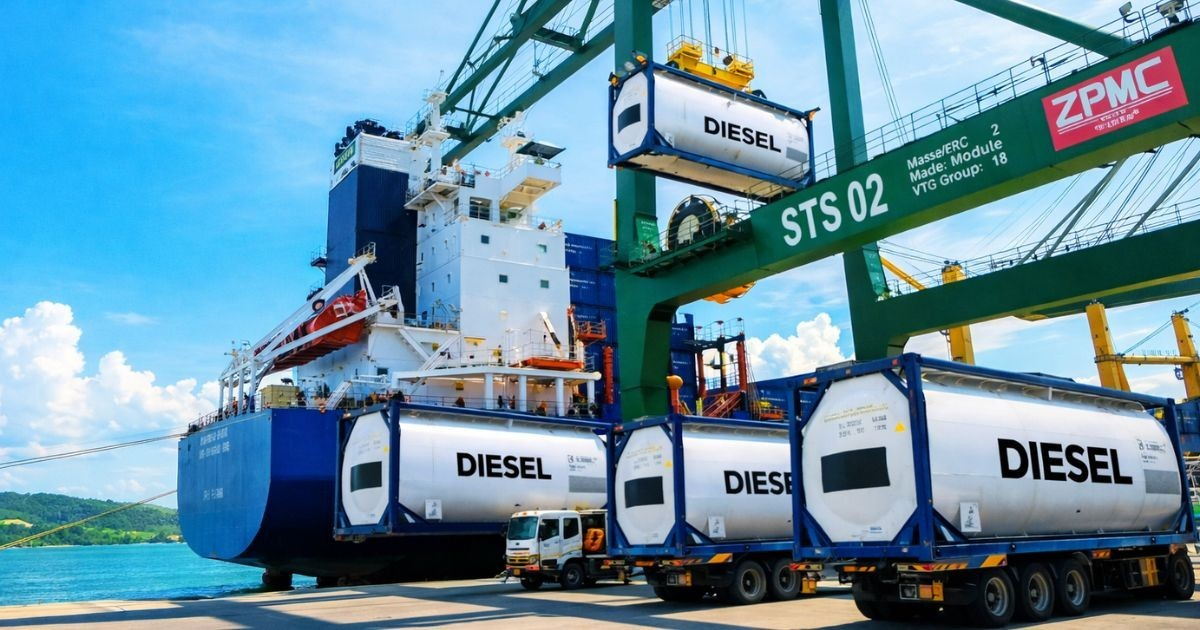
By then, dozens of shipments had been recorded, primarily of diesel transported in iso-tanks.
In monetary terms, the growth had also been reflected prior to the new EIA data. U.S. exports of fuels and other derivatives to Cuba reached a total value of 156.8 million dollars between January and July, of which about 61.1 million corresponded to the seventh month of the year.
The flow occurs within the framework of U.S. regulations that allow certain exports to the Cuban private sector despite the U.S. embargo.
In February, the Department of Commerce published guidelines under the "Support for the Cuban People" license exception, which includes certain operations involving petroleum products for private activities while maintaining restrictions on state and military entities.
As a scale reference, Venezuela supplied Cuba with an average of around 27,000 barrels per day in 2025, according to Reuters based on data from PDVSA.
The energy expert Jorge Piñón, from the Energy Institute at the University of Texas at Austin, estimated the flow at approximately 30,000 barrels per day.
This amounts to approximately between 821,000 and 913,000 barrels per month. Compared to those averages for 2025, the 3,222,000 barrels of petroleum products that the United States reported as exported to Cuba in July 2026 represent between 3.5 and 3.9 times that monthly volume.
Reuters also reported that in January 2026, there were no Venezuelan oil exports to Cuba.
For his part, Piñón pointed out that the Venezuelan supplies had typically ranged between 30,000 and 35,000 barrels per day that same month.
The EIA plans to publish the data for August on October 30, which will allow for determining whether the extraordinary jump recorded in July continued into the following month.
Related videos:
Filed under: