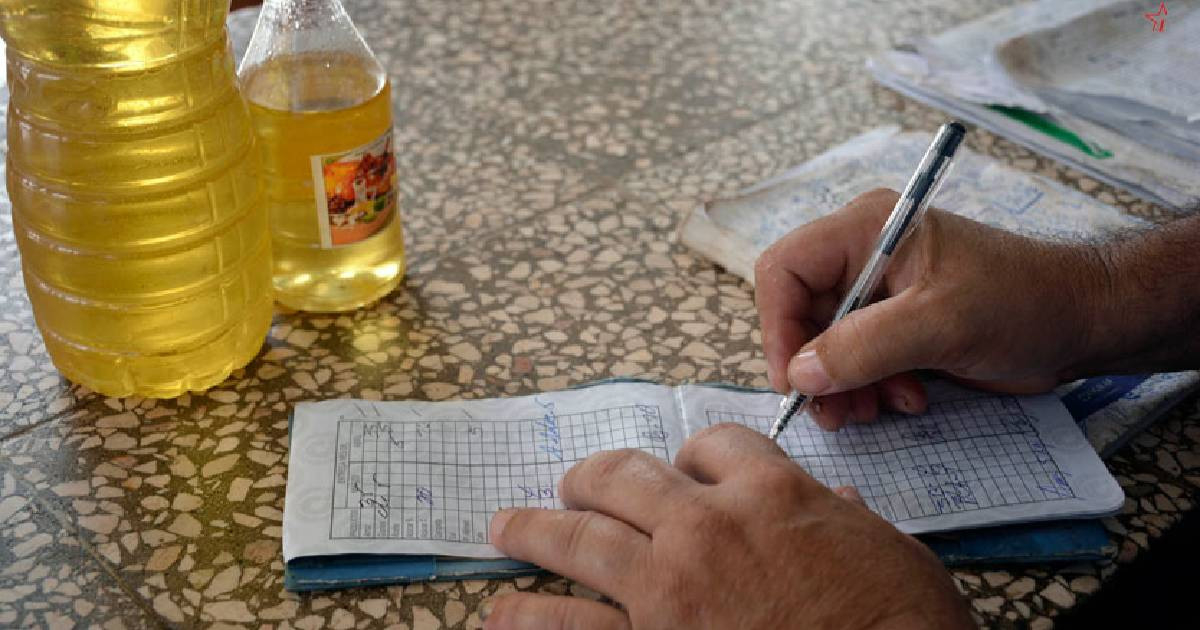
A grandfather has been excluded from the sale of cooking oil intended for vulnerable individuals because his record shows a grandson with relatives abroad, according to testimony shared this Saturday by journalist José L. Tan Estrada on his Facebook profile.
The family explained that this grandson does not contribute money to the elderly man, but the presence of their family connection abroad would have been enough to prevent him from accessing the product at the supermarket in Monte Carlo.
According to the testimony, the criterion applied by the establishment is that the person must appear alone in the document and must not have any relatives abroad registered in that document. However, this requirement is not stated in any officially published regulations, according to the information released.
The measure has also raised questions among others. "I didn't understand having relatives abroad listed in the registry," commented a citizen, who questioned why that condition should determine access to a product intended for vulnerable individuals.
The oil is sold at that price for 2,150 Cuban pesos. For a pensioner receiving 3,165 pesos monthly, that price represents a considerable portion of her income. "That price is outrageous; if I buy oil, what is left for the month?" she wrote.
The comments published alongside the complaint also point to other cases of elderly individuals who were left off the list. A 68-year-old woman living alone claimed she was not included among the beneficiaries, while another woman noted that she has a son registered in her household and fears being excluded for that reason.
There were also reports of individuals over 70 years old, with no family abroad, who were likewise not included in the distribution. These testimonies raise further questions about the criteria used to select those who are eligible to receive the product.
Estrada posed the question underlying the entire conflict: "Does having a family member outside of Cuba automatically render a person vulnerable ineligible for subsidized products or those intended for that sector?"
The situation is part of the new social protection model approved by the National Assembly in June, within a package of 176 economic measures, which replaced universal subsidies with targeted assistance for individuals classified monthly as "vulnerable" by popular councils.
In Santiago de Cuba, the authorities have already redefined the profiles that qualify for this assistance. The specialist Diamaris Perdomo Hechavarría warned that "not everyone is vulnerable" and that "families must also be reminded of their responsibilities."
The Cuban Observatory of Human Rights estimated that extreme poverty affects 94% of Cubans, nine points higher than the previous year.
The Prime Minister Manuel Marrero Cruz officially recognized 876,522 individuals in a state of higher vulnerability across the country, a figure that critics believe is far lower than the reality. In Holguín, the authorities admitted that one in every 10 inhabitants of the province is in that condition.
The historian Ivette García González stated bluntly in September: "The vulnerable in Cuba are no longer segments, they are not a minority. It is the majority of the people, the ordinary citizen."
Related videos:
Filed under: