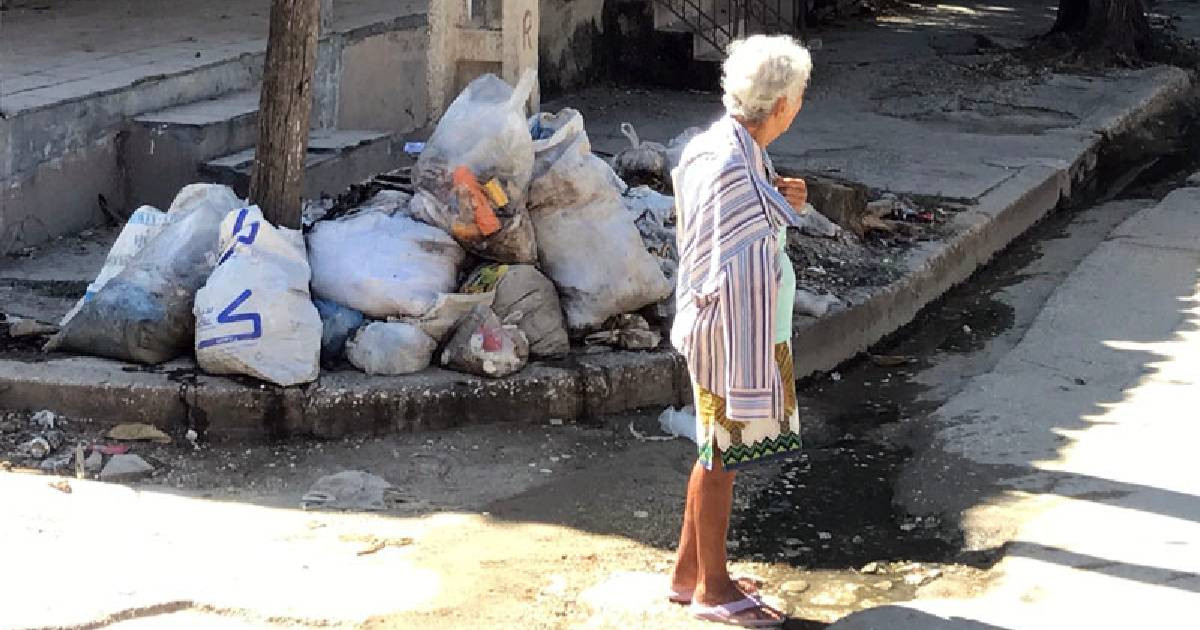
Holguín has 90,148 people in vulnerable situations, a figure equivalent to approximately one in every ten residents of the province, according to data presented during a meeting between authorities from the 14 municipalities and the presidents of three permanent commissions of the National Assembly of People's Power (ANPP).
The eastern territory concluded 2025 with a population of 888,187 residents, according to figures from the National Office of Statistics and Information (ONEI). In relation to that total, the 90,148 individuals in vulnerable situations represent approximately 10.1% of its inhabitants.
The meeting is the result of a national tour to follow up on the implementation of the package of 176 economic measures approved by the ANPP in June, which highlighted the situation of vulnerability as one of the main challenges that municipal governments will have to face, emphasized the official newspaper ¡Ahora! this Friday.
During the exchange, Félix Martínez Suárez, president of the Economic Affairs Commission of the legislative body, urged local governments to "learn to do business, but with the logic and principles of socialism, under criteria of social responsibility." He also connected the recovery of state enterprises with the ability to address the social issues of the country.
The government announced in July a redefinition of its social protection model to concentrate assistance on individuals "in vulnerable situations," after decades of presenting universal subsidies as one of the components of its social system.
Regarding this, the Deputy Minister of Labor and Social Security Ariel Fonseca Quezada emphasized at the end of July on official television that social protection "must reach those who truly need it" and argued that, in a context of limited resources, the State must focus its efforts on those with the greatest needs.
The announcement, however, came at a time when economic vulnerability is no longer a reality confined to certain sectors.
The accumulated inflation since the failed Tarea Ordenamiento, the loss of the real value of salaries and pensions, the partial dollarization of trade, the shortage of food and medicine, and the constant blackouts have worsened the living conditions of millions of Cubans.
In that scenario, the main question is how the Government will determine who deserves to receive assistance and who does not.
In July 2025, Prime Minister Manuel Marrero Cruz stated before the ANPP that 182,000 families and more than 310,000 people were living in poverty or social vulnerability in the country, although he admitted that this was not all that truly existed.
The economist Pedro Monreal warned last August that extending coverage to the entire officially recognized vulnerable population would require a 4.5-fold increase in current spending, amounting to around 24.3 billion pesos, a figure that, according to his analysis, the government is unable to finance.
For its part, the Cuban Observatory of Human Rights estimated that extreme poverty affected 94% of Cubans and noted that eight out of ten had skipped breakfast, lunch, or dinner at least once in the past six months due to lack of money or food.
Among the documented cases in Holguín of people living in poverty is that of a mother who in July was living with her three children in a cardboard house behind Loma de la Cruz, without electricity and not receiving any state assistance.
Weeks ago, the historian Ivette García González warned that the vulnerable in Cuba "are no longer segments", but rather, in her opinion, they constitute the majority of the population and include the average citizen.
Related videos:
Filed under: