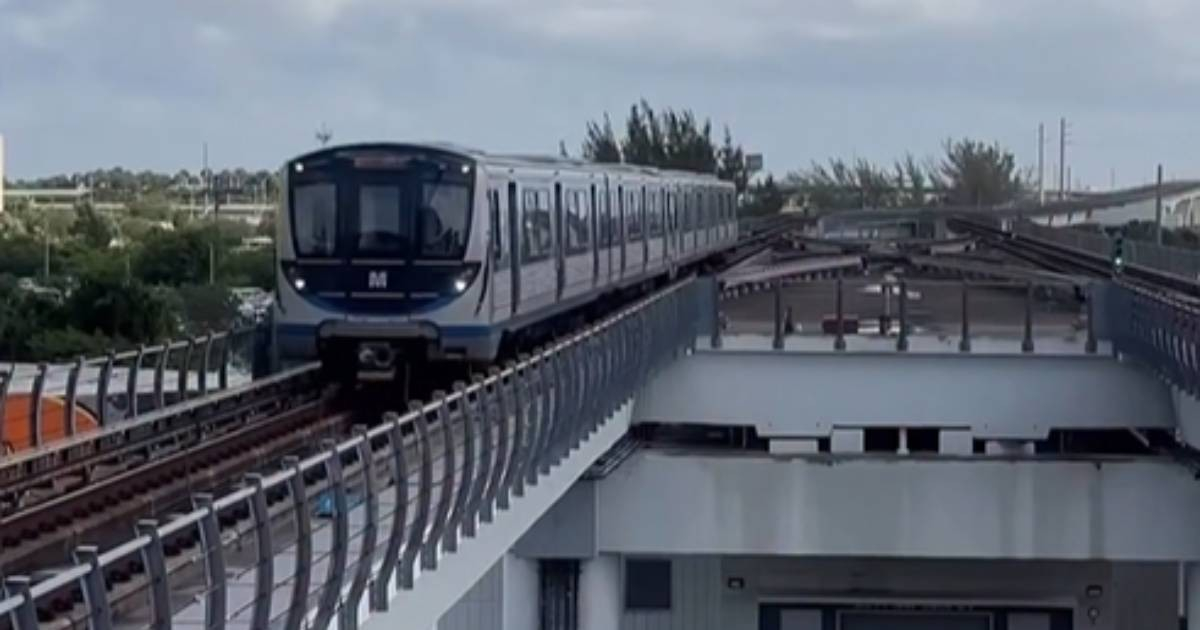
The Miami-Dade Commission approved a 50-cent increase in Metrobus and Metrorail fares on Tuesday, raising the cost from $2.25 to $2.75 per trip starting January 1, 2027.
The measure, approved by a vote of 9 to 4 and sponsored by Commissioner Oliver Gilbert, represents the first increase in these rates in 13 years and aims to generate funds to reduce the projected cuts in public transportation, according to a report by El Nuevo Herald.
"This is a lifeline," said Mayor Daniella Levine Cava after the vote.
The increase, along with a slight adjustment in the Metrorail’s midday frequency, will provide approximately $9.2 million to restore bus services, according to an official memo from Mayor Levine Cava accessed by the Miami Herald. Of this amount, about $8.41 million would come from the new fares and $740,000 from operational savings of the train.
The funding will allow for the maintenance of six routes that were slated for complete elimination —279, 42, 16, 70, 25, and 57— and will preserve nighttime services on another seven: 11, 79, 77, 3, 9, 27, and 36. Together, these services are used by 4,211 passengers on an average weekday.
Nevertheless, other cuts will continue and affect about 3,089 daily users, including residents of areas such as Hialeah and Little Havana, where many families rely on public transportation to get to work.
The Department of Transportation also identified very low-demand services whose elimination will proceed regardless of the fare increase, and which together carry about 252 passengers per weekday.
"If you're on the last bus or the first one, it's because you don't have another option," Gilbert stated while defending the need to preserve those routes.
The county budget for 2026-2027 had already allocated $12.5 million to restore bus services during early morning hours on 45 routes, while considering a possible fare increase as a source of revenue to also safeguard nighttime routes.
The accumulated impact can be significant for those who use transportation every day. During the public intervention period, one user estimated that taking Metrorail twice a day would result in an additional cost of about $240 per year with the new fare, reported WSVN.
The county clarified, however, that free or subsidized benefits for veterans, students, and seniors will remain unchanged in 2027. Levine Cava also announced a campaign to inform passengers about the free transportation programs for which they may be eligible.
And the Metromover?
The voting also sparked a discussion about the Metromover, which remains free despite the fare increases applied to Metrobus and Metrorail.
"We have increased the price by 50 cents for those traveling by bus, while those with higher incomes can travel for free on the Metromover," questioned Commissioner Kionne McGhee.
Commissioner Raquel Regalado successfully included a measure for the mayor to present a plan aimed at evaluating the fare collection for the Metromover. For now, the service will remain free until the Commission makes a specific decision.
The increase alone does not resolve the financial difficulties of the system. The fares paid by passengers cover less than 15% of its total costs, so Miami-Dade relies on other sources of income and reserves to finance public transportation.
For low-income households, there is an alternative: county residents with annual incomes below $35,910 can apply for the free EASY Card, which allows them to travel at no cost on Metrobus and Metrorail.
Related videos:
Filed under: