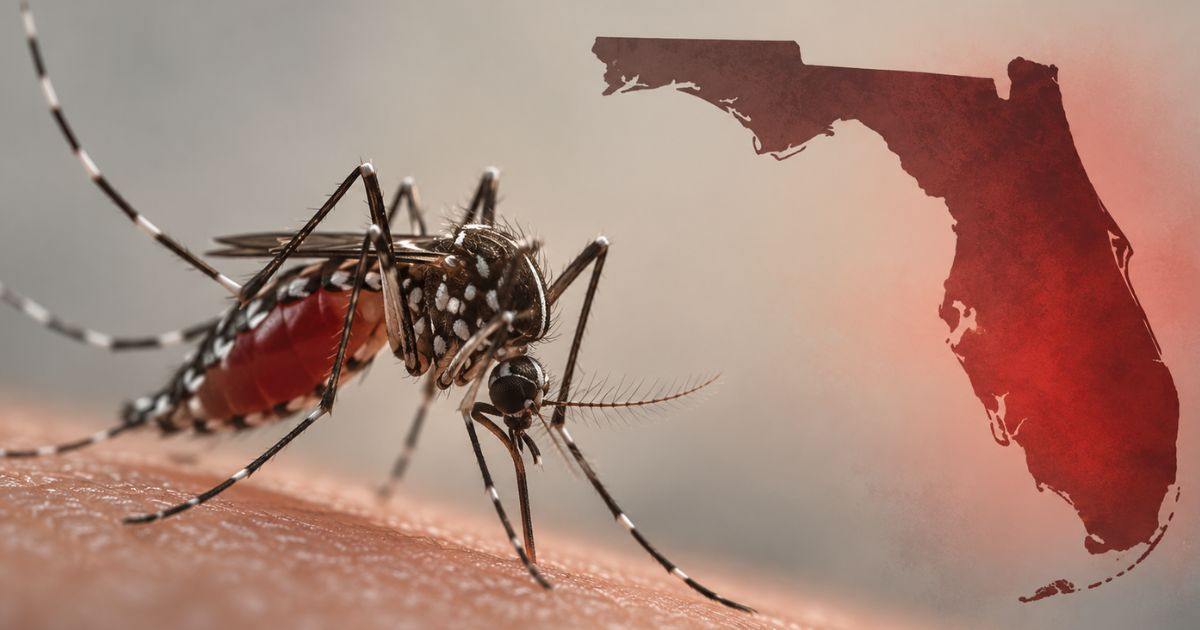
Florida is experiencing a dengue outbreak of a magnitude that the state has not seen since the 1930s, with hundreds of locally acquired infections and transmission already reaching several counties.
A report published by FOX 35 Orlando indicates that experts consider the current episode to be the largest dengue outbreak in Florida since the 1930s, when the state experienced a significant epidemic of the disease.
The surveillance report on arboviruses from the Florida Department of Health for the week of September 27 to October 3 records 296 cases of dengue acquired within the state so far in 2026.
During that same week, 44 new local infections were reported. Health authorities also recorded 262 cases associated with international travel, bringing the total of dengue infections reported among residents and other counted cases in Florida during 2026 to 558, although both categories should be differentiated because not all patients contracted the virus within the state.
The epicenter is located in Hillsborough County, where 259 of the 296 local infections have been reported. This is followed by Pinellas, with 20; Miami-Dade, with eight; Orange and Pasco, with three each; and Broward, Palm Beach, and Polk, with one case each.
The scale of the outbreak brings Florida back to a situation not seen in nearly nine decades. Historical public health documents indicate that 1934 and 1935 were the last major epidemic episodes of dengue in the state, when the disease widely affected areas such as Miami and Tampa.
Beth McGraw, a professor of Biology at Pennsylvania State University, assured FOX that Florida is experiencing "the largest outbreak since the 1930s."
The specialist linked the increase in infections to an extended and humid summer, which favored the reproduction of mosquitoes, as well as changes in the geographical distribution of these insects and increased resistance to some commonly used insecticides.
"We used to see them only in the tropics, but with climate change, we are seeing them more and more in the southern United States," McGraw explained.
Another particularly concerning element is that a significant portion of the current cases does not involve travelers who returned infected from countries where dengue is commonly transmitted, but rather individuals who were bitten by infected mosquitoes within Florida.
The state Department of Health confirmed that the 296 local cases recorded up to October 3 are spread across eight counties. In Hillsborough, 19 groups of Aedes aegypti mosquitoes positive for the dengue virus have also been identified.
The expansion has also reached southern Florida. The Department of Health in Broward recently confirmed the first locally acquired dengue case in that county during 2026 and issued a warning about mosquito-borne diseases.
Miami-Dade had previously confirmed local transmission of dengue in early August, which prompted health authorities and mosquito control to strengthen surveillance and preventive measures.
The outbreak has already caused at least one death in Florida during 2026. In September, authorities confirmed the first death of the year related to dengue, involving an 80-year-old woman from Tampa who passed away on September 4.
The transmission accelerated especially during August and September. The most recent state report counts 21 local cases with symptom onset in July, 154 in August, and 121 in September.
Dengue is a viral disease primarily transmitted through the bite of the mosquito Aedes aegypti. It is not spread directly from person to person under normal conditions; rather, a mosquito can acquire the virus by biting an infected person and later transmit it to others.
Among the most common symptoms are fever, headache, intense muscle and joint pain, discomfort behind the eyes, nausea, vomiting, and skin rashes. Although many people experience mild cases, dengue can progress to severe forms that can cause bleeding, shock, and even death.
The Florida Department of Health recommends removing containers and any standing water around homes and businesses, as they can become breeding grounds for mosquitoes. It also advises using repellent, covering the skin with appropriate clothing, and keeping doors and windows protected.
Local authorities have also intensified fumigation and other control strategies. In Pinellas, for instance, Clearwater has released 10,000 small fish that feed on mosquito larvae in several lakes as part of efforts to reduce the insect population.
The Centers for Disease Control and Prevention (CDC) remind us that, although most historically recorded cases in the continental United States are linked to international travel, the widespread presence of mosquitoes capable of transmitting dengue allows for local outbreaks to occur.
Related videos:
Filed under: