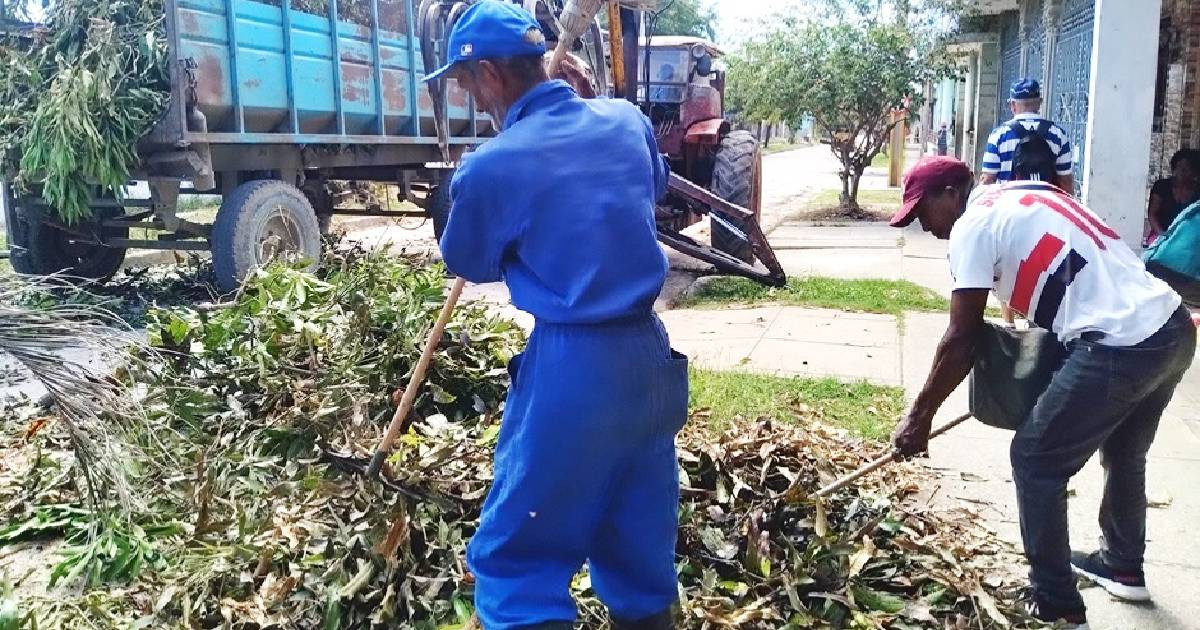
The governor of Guantánamo, Alis Azahares, required the mayor of the capital municipality and the Community Services Company to address the proliferation of dumpsites and the neglect of tree pruning and gardening along the main roads of the city, according to a report on Thursday from Radio Guantánamo.
The attention-grabbing event took place during the so-called Vitality Meeting, held at the headquarters of the Provincial Committee of the Communist Party, where Azahares met with executives, administrative officials, and political figures from the region.
According to the outlet, the governor warned that the accumulation of garbage and the neglect of urban aesthetics facilitate the spread of biological vectors, a concern that carries particular weight in a province that has been experiencing an unresolved sanitation crisis for months.
The call of Azahares reflects a crisis that the authorities themselves acknowledge but have not been able to reverse. At the end of August, the First Secretary of the Communist Party in the province, Yoel Pérez García, warned that "contributing to the collection of solid waste must be a task for all organizations, entities, mass organizations, community factors, and popular participation."
During 2026, the collection of solid waste in the eastern territory has worsened. Due to the lack of fuel to operate the specialized garbage collection equipment, the authorities have had to rely on the support of cart drivers and animal-drawn vehicles in various popular councils of the city.
This accumulation of garbage has been directly linked to the rise of dengue in the province. In September, three municipalities —Imías, Baracoa, and Guantánamo— remained in active transmission of the virus, with simultaneous circulation of serotypes two, three, and four.
In the same meeting, Azahares assessed the supply of drinking water in the municipalities of Manuel Tames, San Antonio del Sur, and Maisí, which had been experiencing disruptions in their water networks for over a week.
The Provincial Director of the Aqueduct and Sewage Company, Lexis Suárez, reported progress in the El Corojo and Ciro Frías areas, but acknowledged delays in El Maquey and Boquerón due to breakdowns in pipelines, valves, connections, and hydraulic pumps. Suárez also emphasized the availability of sodium hypochlorite in six municipalities, with coverage for more than 20 days.
Another agenda item was the payment to retirees and pensioners. The governor urged strengthening the collection mechanisms through non-state economic actors and popular councils.
It recently came to light that the provincial government signed 1,056 contracts with economic actors to pay cash pensions to 18,344 retirees, which represents 37% of the province's pensioners.
The Director General of Public Health, Rafael Wilson, warned at the same meeting about the increase in pregnancies at risk ages, the presence of chronic diseases in pregnant women, and the poor maternal nutrition as factors affecting the provincial infant mortality, which reached 14 per 1,000 live births by the end of August, above the national average of 9.9.
Related videos:
Filed under: