Cuban baseball lost one of its great hitters this Sunday: Héctor Olivera González, born in Cruces in 1953, passed away due to severe complications at the age of 73, as confirmed by his son Héctor Olivera Jr. to journalist Yasel Porto from Dporto Sports.
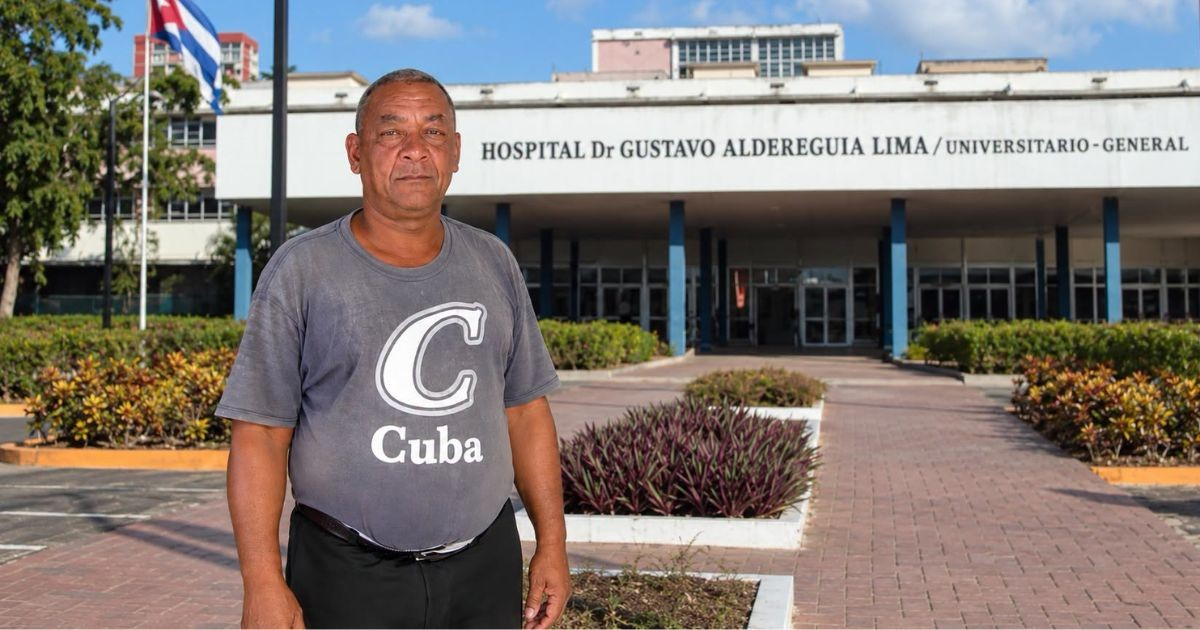
The news did not come as a surprise: Olivera had been admitted days earlier to the General University Hospital Gustavo Aldereguía Lima in Cienfuegos, suffering from chronic renal failure, among other complications.
On October 2, the date of his 73rd birthday, he was still hospitalized. Dporto Sports reported at that time that he was stable and that "many in the hospital recognized him and he has received the support of the people." Nine days later, the news that no one wanted to receive.
Born in Cruces, Olivera became one of the most feared hitters in the Cuban National Series. Over the course of 13 seasons, he represented the jerseys of Azucareros, Arroceros, and Cienfuegos, boasting a batting average of .313, 138 doubles, 14 triples, and 80 home runs.
His name became etched in the history of Cuban baseball in 1981, when he was crowned batting champion of the VI Selective Series with an average of .489, becoming the first batter to surpass the .400 barrier in that tournament. In that context, he was part of an offensive lineup from Las Villas that could intimidate any opponent, alongside figures such as Antonio Muñoz, Lourdes Gurriel, Pedro "Cheíto" Rodríguez, and Pedro Jova, among others.
In the international arena, his achievements were equally remarkable. At just 17 years old, he was part of the Cuban team that won the gold medal at the World Junior Baseball Championship held in Maracaibo, Venezuela, in 1970. A decade later, in 1980, he reached the pinnacle of amateur baseball by becoming the world champion in Tokyo, in a tournament where Cuba finished with a perfect record of 11-0. The following year, he added a silver medal at the Intercontinental Cup held in Edmonton, Canada.
After hanging up his glove at the end of the 1983-1984 season, Olivera did not distance himself from baseball: he remained connected to the sport as a batting coach for the Cienfuegos pre-selection, achieving provincial and national titles in lower categories. In 1999, he was welcomed at the Council of State during the second game between Cuba and the Baltimore Orioles—which ended 12-6 in favor of Cuba in front of nearly 48,000 spectators—a gesture of official recognition for his generation.
The passing of Olivera occurs in a year that is particularly painful for Cuban baseball, which had already bid farewell to Lázaro Junco in June and Elpidio Mancebo in August.
The crisis of the Cuban healthcare system—characterized by shortages of medications, equipment, and specialized medical personnel—serves as an inevitable backdrop when historical figures in need of specialized treatment, such as dialysis, confront their final battles.
Olivera was not the first of that generation from Las Villas to succumb to complications related to kidney failure: his teammate Pedro "Cheíto" Rodríguez passed away in February 2021 due to the same cause, at the age of 64. Sixto Hernández, another companion from that glorious era, died in February 2022, at the age of 71.
Journalist Fabio López Martínez summarized the feelings of many fans: "Héctor Olivera González was not just a champion: he was an example of humility and perseverance. His legacy will live on in every stadium, in every child who dreams of emulating his feats, and in the collective memory of a people who never forget their heroes."
At the close of this note, details of the funeral services had not been made public. Sincere condolences go out to their family, friends, and generations of admirers.
Related videos:
Filed under: