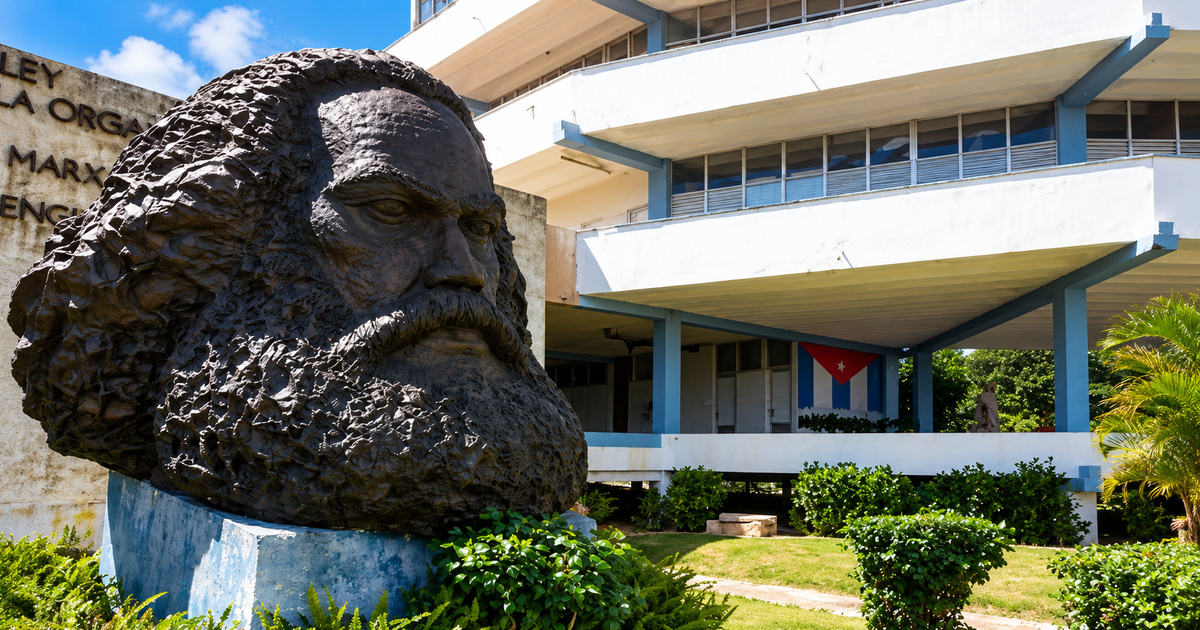
The history of communism is the story of one of the most influential, controversial, and tragic ideas in humanity. It arose from aspirations for equality and social justice, promising to end exploitation, social classes, and poverty. However, its main governance experiences ultimately led to the establishment of single-party systems, political repression, extraordinary concentration of power, and numerous crimes.
Its origins date back to Antiquity. Plato, in "The Republic," envisioned an ideal society that contained elements we might today consider precursors to communist thought. Centuries later, Thomas More described in "Utopia" (1516) a society without private property. Tommaso Campanella, in "The City of the Sun" (1602), advocated for a communal organization of existence. During the French Revolution, Graco Babeuf proposed a radical transformation of property relations. Later on, Saint-Simon, Charles Fourier, and Robert Owen developed various forms of utopian socialism.
However, modern communism was truly born with Karl Marx and Friedrich Engels, authors of the "Communist Manifesto," published in 1848. They argued that history is fundamentally a class struggle, that capitalism would be surpassed by a proletarian revolution, and that, after a transitional phase, a classless society without coercive state would emerge.
José Martí proved to be much more insightful than Marx when, in his article "The Future Slavery," he warned about the dangers of bureaucratic and authoritarian socialism, which is a result of the theses from the author of "Capital."
Marx envisioned a society governed by the principle: “From each according to his abilities, to each according to his needs.” His great mistake, according to his critics, was underestimating economic complexity, individual incentives, and the difficulty of centralizing productive decisions without destroying freedom. "From being a servant of himself, man would become a servant of the State," concluded the Apostle of our independence.
The first lasting experience of communist government began with the Bolshevik Revolution of October 1917. Vladimir Lenin transformed Marxism through the theory of the vanguard party: a disciplined organization that, claiming to represent the proletariat, would concentrate political power. Political police, censorship, the persecution of opponents, and the prohibition of political pluralism emerged.
With Iósif Stalin, that dictatorship reached terrifying dimensions. Forced collectivization, deportations, purges, executions, and the labor camps of the Gulag resulted in millions of victims. The famine of 1932-1933, particularly devastating in Ukraine, is listed among the great crimes and disasters of Stalinism.
After World War II, communism spread across Eastern Europe, where Moscow imposed or maintained regimes subordinate to its influence. East Germany, Poland, Hungary, Czechoslovakia, Romania, and Bulgaria experienced various forms of one-party systems, political surveillance, and restrictions on fundamental freedoms.
In China, Mao Zedong established another great communist dictatorship in 1949. His Maoist variant glorified the revolutionary peasantry, permanent mobilization, and ideological obedience. The Great Leap Forward, initiated in 1958, led to a famine that cost tens of millions of lives. The Cultural Revolution, starting in 1966, unleashed persecution, public humiliation, violence, cultural destruction, and over 30 million deaths.
Communism took on different variants: Soviet Marxism-Leninism, Stalinism, Maoism, Trotskyism, Yugoslav Titoism, Eurocommunism, libertarian communism, Cuban Castroism, and North Korean Juche. Some currents advocated for greater autonomy, pluralism, or democracy; others took the concentration of power to totalitarian extremes. None can be considered democratic.
In Cambodia, the Khmer Rouge under Pol Pot carried out one of the most criminal experiments of the 20th century between 1975 and 1979. The evacuation of cities, forced labor, executions, and famines resulted in approximately 1.5 to 2 million deaths.
In Cuba, Fidel Castro established a single-party communist system that suppressed political competition, subordinated the economy to the State, persecuted opponents and dissenters, and restricted basic freedoms. The Island has experienced and continues to suffer from foreign dependency, mass emigration, production crises, and profound deprivation. Currently, Cuba is undergoing the worst crisis in its history. Its defenders highlight initial advancements in education and healthcare, which are now a thing of the past; its critics point out the high human, political, and economic cost of the system.
Why did so many communist experiments fail? Ludwig von Mises identified the problem of economic calculation without market prices; Friedrich Hayek explained that no central organization could aggregate the dispersed knowledge among millions of people. Both warned against comprehensive planning. The communist regimes that have managed to advance economically (China, Vietnam) had to resort to market economy methods, which are completely contrary to the Marxist proposal.
Another issue lies in attempting to build a perfect society while ignoring persistent aspects of human behavior: the diversity of aspirations, ambition, personal interest, the need for autonomy, and the desire to improve one’s own and one’s family’s conditions. Cooperation is also deeply human, but imposing it universally through coercion can lead to demotivation, pretense, corruption, and bureaucratic privileges. “The autocratic official will abuse the weary and hardworking masses. It will be lamentable and widespread servitude,” asserted José Martí.
Furthermore, the proclaimed dictatorship of the proletariat ended up becoming a dictatorship over the proletariat. The promised disappearance of the State gave way to omnipresent States that flagrantly violated human rights. The claimed equality coexisted with new political, police, and military elites.
Among its most incisive critics are Mises, Hayek, Hannah Arendt, Raymond Aron, Aleksandr Solzhenitsyn, Václav Havel, Milovan Djilas, Leszek Kołakowski, and George Orwell. Their works denounced, from different perspectives, coercive planning, terror, institutionalized lies, and the creation of privileged classes.
Orwell masterfully condensed that contradiction in "Animal Farm": "All animals are equal, but some animals are more equal than others."
Hayek warned that the path presented as liberation could lead to servitude. Solzhenitsyn, a survivor of the Gulag, exposed the Soviet concentration camp universe. Havel explained how citizens were forced to live within a lie. Djilas described the emergence of a new dominant (and privileged) communist class.
Failure was symbolized by the fall of the Berlin Wall in November 1989 and the dissolution of the Soviet Union in December 1991.
In 2026, China, Vietnam, Laos, Cuba, and North Korea continue to be governed by communist parties or political systems derived from that tradition. China and Vietnam have incorporated extensive market mechanisms while maintaining the political monopoly of their respective parties.
Other communist movements exist in democracies, where they participate legally in political competition, but they still pose a threat to freedom.
Among the many jokes born from Soviet communism, one brilliantly captures the contradiction between propaganda and reality: "What is the difference between capitalism and communism? In capitalism, man exploits man. In communism, it happens exactly the opposite."
Behind that irony lies a historical lesson: no promise of equality justifies the abolition of fundamental human freedoms and rights, the persecution of dissenters, or the surrender of absolute power to an elite that seeks to rule eternally in the name of the people.
Cubans will not have a free and prosperous homeland until we eradicate the cancer of communism.
Related videos:
Filed under:
Opinion article: Las declaraciones y opiniones expresadas en este artículo son de exclusiva responsabilidad de su autor y no representan necesariamente el punto de vista de CiberCuba.