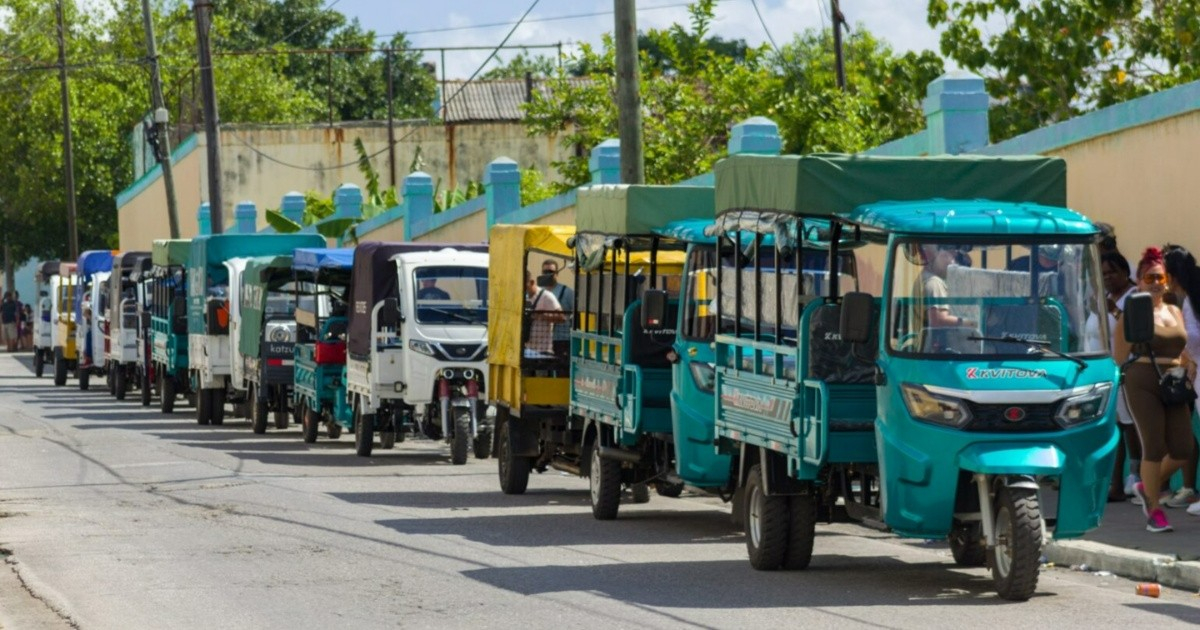
The government-aligned newspaper Girón acknowledged this Wednesday that transportation in Matanzas exists but is unattainable for the majority of the population, in an article that describes an unprecedented paradox in the Cuban mobility crisis: there are buses and tricycles on the streets, but the salaries are insufficient to afford the fare.
The text, signed by journalist Humberto Fuentes Rodríguez, depicts the intermunicipal terminal of the Viaducto as a symbol of that contradiction. For years, that spot was filled with people waiting for vehicles that never arrived. Now the scene has reversed: the buses are parked, while potential passengers remain on the ground.
"A bus that used to cost 10 pesos now charges 700. For someone earning a salary in Cuban pesos and having to divide it among food, medications, and everything else that makes life possible, the cost of a bus ride is no longer just a transportation expense. It becomes a decision," writes Fuentes Rodríguez.
The same logic applies to tricycles, which multiplied as an informal alternative when state transportation collapsed. In June, the electric tricycles in Matanzas doubled their rates, and after citizen complaints, the authorities agreed on regulated rates: 250 pesos between Preuniversitario and Peñas Altas, 150 pesos to Faustino Pérez Hospital, and 125 pesos to the Terminal or Versalles.
Those "regulated" figures remain prohibitive. The average daily salary of a worker in Matanzas is estimated at just 236 pesos, which means that a single trip by tricycle to Peñas Altas exceeds what many earn in an entire day.
The national outlook is not more encouraging. The average state salary in Cuba in August 2026 was 7,354 pesos per month, equivalent to about nine dollars at the informal exchange rate, according to the National Office of Statistics and Information. The national minimum wage has been 3,210 pesos per month since July 2026.
The collapse has structural roots. In September 2025, only 63 out of 129 provincial buses in Matanzas were operational, less than half of the fleet. By February 2026, urban and intermunicipal services were practically paralyzed due to a lack of fuel. In response, the State promoted the leasing of state vehicles to non-state actors, a model that put wheels back on the streets but at market prices that the salaried population cannot afford.
The very Girón acknowledges that basic economic logic has failed: "More vehicles have appeared, yet the fare remains too expensive for a considerable portion of those who need to use them."
On a national scale, state passenger transport fell by 93% between January and September 2025, dropping from 40.2 million to 900,000 users, according to data from ONEI. A private Matanzas–Havana route that started operating in July charges 3,000 pesos per journey, an amount that is unattainable for most people.
"The citizen of Matanzas has learned to live with the absence of transportation. Now, he must learn to live with its inaccessible presence," concludes the article from the state media, in an acknowledgment that accurately sums up the failure of a model that addressed the shortage of vehicles without solving the shortage of income.
Related videos:
Filed under: