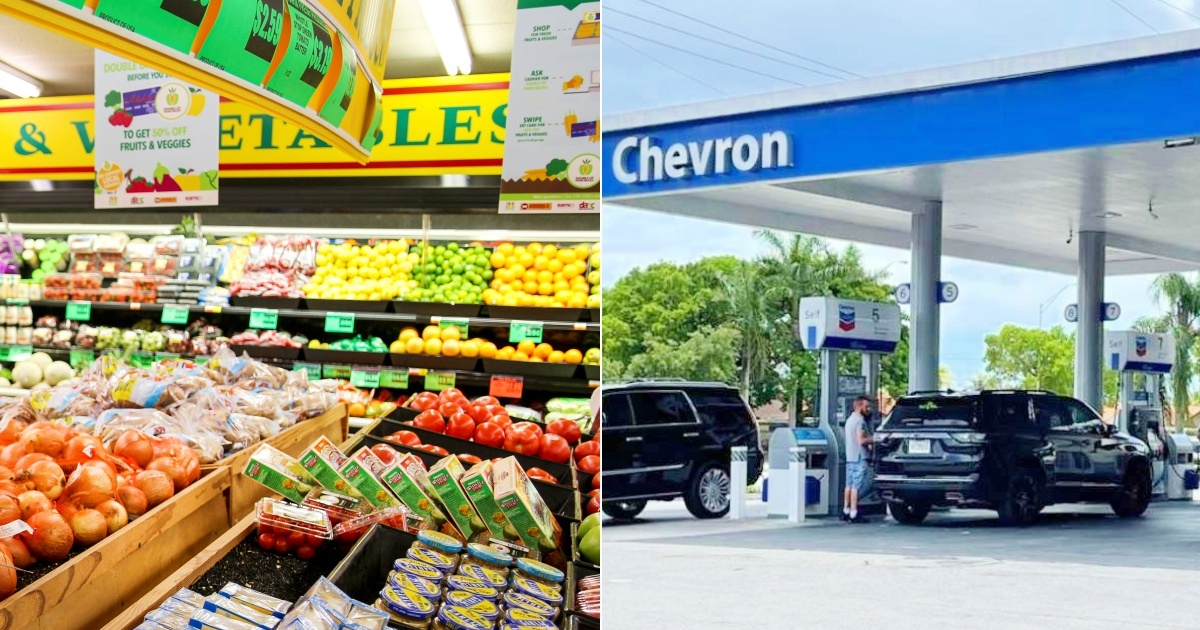
Americans continue to spend even though inflation accelerated again in September 2026, but experts warn that this resilience has its limits.
According to a report from The Associated Press, a range of economic data released on Thursday painted a contradictory picture: rising prices, consumers continuing to spend, but wallets getting slimmer month by month.
Inflation is accelerating again
The Consumer Price Index rose to 3.7% year-on-year in September, up from 3.4% in August, according to the Bureau of Labor Statistics.
The main culprit is energy: gasoline prices increased by 9.1% in just one month, accounting for more than half of the monthly rise in the Consumer Price Index (CPI), which overall rose by 0.6% from August to September, the largest monthly jump in five months.
Core inflation —which excludes food and energy— also rose, from 2.4% to 2.6% year-on-year, indicating that price pressures are spreading beyond the energy sector.
Diesel, the hidden engine of the crisis
Behind gasoline, diesel is the factor that most concerns economists due to its cascading effect on the entire economy.
Producer prices recorded their largest monthly increase since 2022: the Producer Price Index rose by 1.3% month-over-month and 6.3% year-over-year in September, with wholesale diesel skyrocketing by 21% in just one month.
The average retail price of diesel reached $6.32 per gallon by mid-October, according to the American Automobile Association (AAA), nearly double the $3.66 from a year earlier.
"The shake-up in transportation prices impacts all goods in the economy, as inputs for manufacturing are transported to factories and goods at all stages of production move from the producer to the wholesaler and to the retailer by truck, train, or rail," explained Carl Weinberg, chief economist at High Frequency Economics, in statements collected by AP.
"That's how energy price increases 'filter' into the prices of underlying goods," he added.
Wholesale food prices increased by 1.2% month-on-month in September, the largest rise since February, and farmers—who also rely on diesel for their machinery—are anticipating further increases in the coming months.
Consumers are spending, but they are not happy
Despite this outlook, retail sales grew a solid 0.8% in September compared to August, surpassing economists' forecasts. However, the breakdown reveals the catch: spending at gas stations surged by 6.4%, and excluding fuel, sales barely increased by 0.2%.
"Consumers may have gritted their teeth and overlooked the higher gasoline prices," noted Jim Baird, investment director at Plante Moran Financial Advisors, in comments to AP.
"They are not happy, but they keep spending," he added.
That resilience has an explanation: the labor market. Jobless claims remained below 200,000 last week, a historically low figure.
But there are warning signs: the economy created only 29,000 jobs in September, well below the expected 90,000, and the unemployment rate rose slightly to 4.2%.
Additionally, weekly inflation-adjusted paychecks fell in September compared to the previous year for the first time since May, indicating that workers are losing real purchasing power.
"If the unemployment rate remains low, meaning that consumers are employed, they will continue to spend, although with more caution and increasingly relying on savings and credit," warned Kathy Bostjancic, chief economist at Nationwide, in statements collected by AP.
The Federal Reserve tightens the screws
The Federal Reserve raised its benchmark rate in September for the first time since 2023, to a range of 3.75%–4.00%.
The minutes from that meeting revealed that 16 out of 18 officials anticipate at least one more rate hike before the end of the year, which would further increase the cost of mortgages, auto loans, and credit cards.
The 30-year mortgage rate reached 7.46% by mid-October, compared to 5.99% in February, making it more difficult to purchase a home for millions of families.
The next CPI report, for October, is scheduled for November 10 and will be a key indicator of whether the economy can bend the inflation curve or if consumers are finally starting to give in.
Related videos:
Filed under: