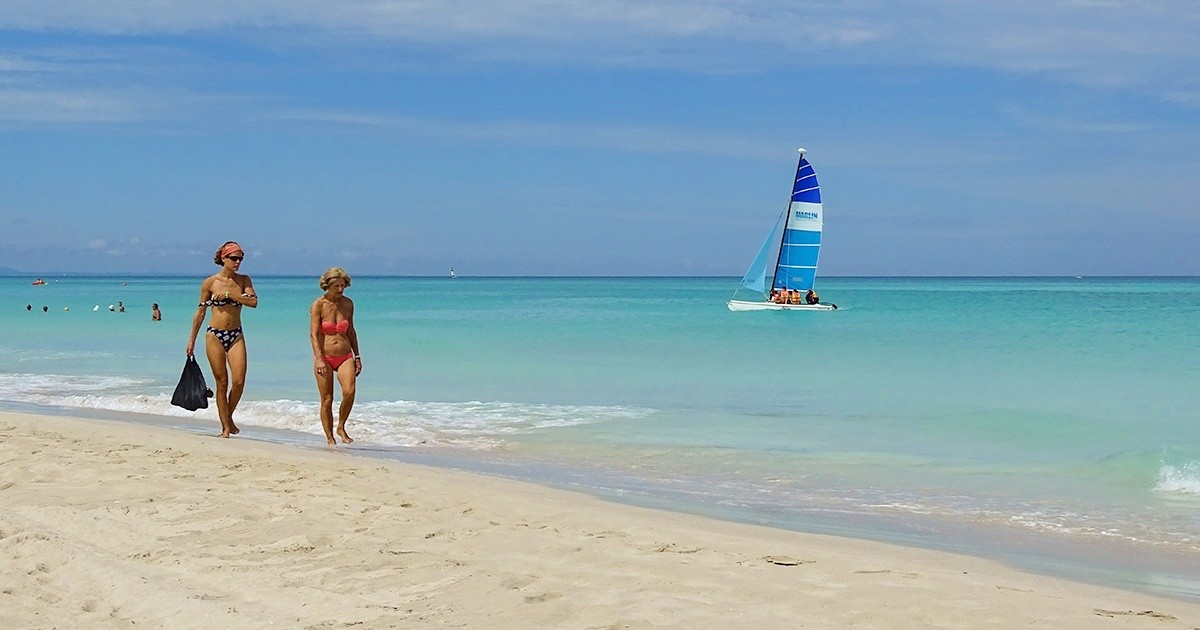
For the first time in decades, the winter high season begins without Canadian tourists in Cuba. With all airlines from the northern country indefinitely suspending flights to the Island, those seeking affordable sun and beach must come to terms with paying up to 400 dollars more per person to travel to alternative destinations such as Mexico, the Dominican Republic, or Jamaica, according to a report published by Yahoo News Canada.
The Government of Canada continues to advise against all non-essential travel to Cuba, citing shortages of fuel, electricity, food, water, and medicine that affect even resorts and land transportation. The warning also notes that the supply of fuel and options for commercial flights could be further reduced without prior notice.
"At this moment, since Cuba is no longer an option and most travelers are still looking for an alternative destination, the availability and prices we are seeing are unlike any other year," stated Ashley Harold, travel expert at Flight Centre Canada.
Harold explained to the Canadian media that Cuba's absence is driving up prices and exhausting inventory in alternative destinations. A holiday all-inclusive package that previously cost just under 1,400 Canadian dollars per person now hovers around 1,800 dollars in those markets: about 400 dollars more per traveler, or approximately 1,700 dollars additional for a family of four.
"The question is not simply where to go instead," Harold pointed out. "It's what it means to lose one of the most affordable options on the market in terms of price, choice, and how much flexibility will be needed."
Of the 10 most popular Christmas packages reviewed by Flight Centre, half are already sold out or have very limited availability. Thirty-two percent of Canadians are booking earlier than usual.
The impact on Cuba is devastating. Canada was the primary source market for the Island —over 41% of visitors in 2025, about 754,000 tourists— and arrivals from that country plummeted: from 526,239 visitors in the first eight months of 2025 to just 128,400 in the same period of 2026.
While Cuban hotels are facing empty rooms, competitors in the Caribbean are reaping the benefits. Hotel occupancy in the Dominican Republic averaged 81.5%, with Punta Cana reaching 88.2%. Canadian bookings to that destination during the March break increased by 142%.
The situation within Cuba could not be more contrasting. Prime Minister Manuel Marrero revealed before the National Assembly that 73% of the hotels in the country remained closed at the end of July, leaving about 25,000 workers in a state of job availability. In October, Gaviota, the tourism subsidiary of GAESA, only has 3,470 of its more than 30,000 declared rooms operational, representing just 11.6% of its capacity.
For the upcoming winter season, no Canadian airline plans to resume operations to Cuba, confirming the collapse in a Cuba that once was its main source of visitors during the season.
Related videos:
Filed under: