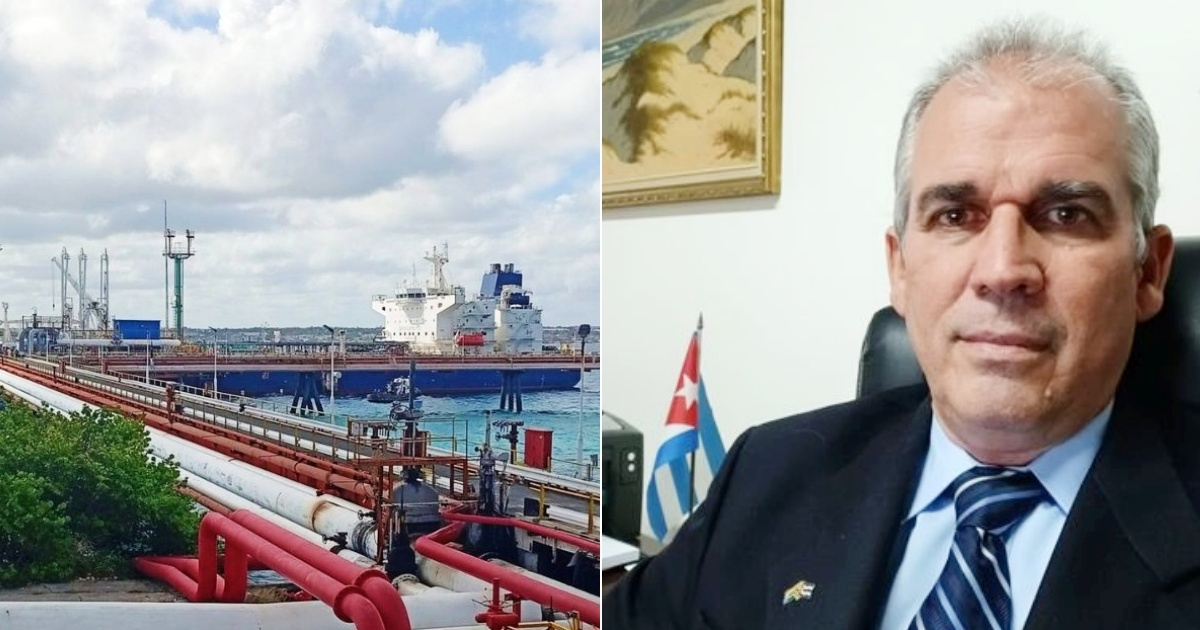
The Cuban ambassador in Moscow, Enrique Orta González, acknowledged to the Russian press that the tanker Anatoli Kolodkin has been the only Russian vessel with crude oil to arrive in Cuba so far in 2026, and that its cargo helped reduce power outages for approximately two weeks.
The statement, reported by the Russian state agency PRIME, part of the Rossiya Segodnya group, highlights the limited scope of Moscow's oil assistance, despite the repeated messages of solidarity and cooperation between both governments.
Only one Russian oil tanker in almost ten months
Orta González made these statements at a press conference held at the Cuban embassy in Moscow, on the eve of the annual vote by the UN General Assembly on the U.S. embargo against Cuba, scheduled for October 28.
The diplomat stated that the shipment provided significant relief for the Cuban population, as power outages decreased for approximately two weeks.
The ambassador emphasized that the Russian-flagged vessel was the only oil tanker with crude that arrived at the island in 2026, according to PRIME.
His statement confirms that, up to that point, Russia had not finalized a second oil supply, despite the announcements of energy cooperation with Havana.
The Anatoli Kolodkin, belonging to the Russian state shipping company Sovcomflot, sanctioned by the United States, the European Union, and the United Kingdom, arrived at the Matanzas Super Tanker Base at the end of March with 100,000 tons of crude oil, equivalent to about 730,000 barrels, presented by Moscow as humanitarian aid.
What the Cuban government had already acknowledged since April
The limitations of that shipment had been acknowledged months earlier by the Cuban authorities themselves.
In April, Miguel Díaz-Canel described the Russian shipment as "symbolic" and noted that it represented about one third of Cuba's monthly oil needs.
The Minister of Energy and Mines, Vicente de la O Levy, warned on April 22 that Russian fuel would only last until the end of that month.
On May 3rd, Díaz-Canel confirmed to international solidarity delegates that oil would run out "in the coming days" and that Cuba was unaware of when it would receive another shipment, amidst a severe fuel shortage.
Russia had also announced a second shipment of crude oil, but this did not materialize. The tanker Universal, initially linked to that supply, changed its course towards the South Atlantic in May, with its arrival in Cuba not being confirmed afterwards.
The gap between the announced cooperation and the actual supplies
The oil supply crisis worsened following the measures taken by Washington at the beginning of 2026. In January, President Donald Trump signed the Executive Order 14380, which established a mechanism to impose additional tariffs on U.S. imports from countries that supplied oil to Cuba.
Venezuela suspended its shipments following the capture of Nicolás Maduro by U.S. forces, while Mexico drastically reduced its supplies. Pemex had been among the top oil suppliers to Cuba during 2025.
In that scenario, Anatoli Kolodkin was able to enter Cuban waters after Washington allowed his arrival for humanitarian reasons. However, the shipment did not continue with new Russian cargoes.
Humanitarian cooperation from Moscow continued through other channels. On October 16, it was reported that 750 tons of sunflower oil were delivered, channeled through the United Nations World Food Program and intended for children, the elderly, and pregnant women. This is food assistance distinct from the energy supply the island needs.
Extended power outages while the ambassador speaks in Moscow
Orta González's statements coincide with an especially difficult electrical situation for the Cuban population, marked by persistent generation deficits and prolonged service interruptions.
This Tuesday, October 20, the Electric Union forecasted a availability of 920 MW against a peak demand of 2,820 MW, with an expected deficit of 1,850 MW and a maximum estimated impact of 1,880 MW during peak hours.
The official report also indicated that on October 19, the electric service was affected by a generation deficit throughout the 24 hours, with a maximum real impact of 2,007 MW. In Havana, reports from the provincial electric company reflected interruptions and restorations of service across various circuits in the capital.
The scale of Cuba's energy needs stands in stark contrast to the assistance received from Moscow. According to data released during the arrival of the Anatoli Kolodkin, Cuba requires around 100,000 barrels of oil per day, of which about 40,000 comes from domestic production. The only Russian shipment in 2026 amounted, in volume, to just over a week's worth of that total demand.
Related videos:
Filed under: