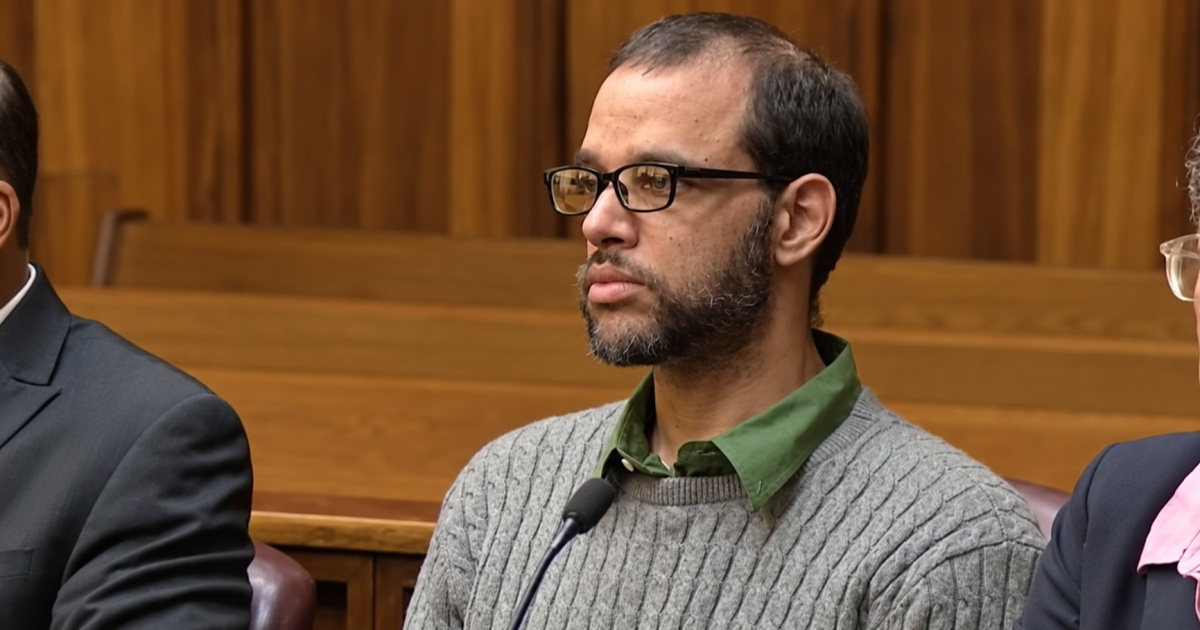
After about seven hours of deliberation and amid tremendous tension in the room, a jury from Miami-Dade recommended this Tuesday the death penalty for Alberto Sierra, the 42-year-old Cuban who confessed to murdering his wife, Gladys Machado, and her two young daughters, Julia and Daniela Padrino, in November 2012.
The decision came almost 14 years after the triple murder and was marked by the anguish of the victims' families. Michael Padrino Jr., the surviving son of Machado, trembled as he awaited the jury's recommendation, according to local press.
Before the reading, Judge Marisa Tinkler Mendez requested that everyone maintain their composure in the courtroom. The votes for each victim were then announced:
- Gladys Machado, 29 years old: 11 votes in favor of the death penalty and one against.
- Julia Padrino, six years old: unanimous decision from the 12 jurors in favor of the death penalty.
- Daniela Padrino, three years old: eight votes in favor and four against.
The three results met the minimum requirements set by Florida law to recommend the death penalty.
However, the recommendation does not yet constitute a final ruling. The final decision rests with the judge, who will hold a hearing on November 2nd.
Seven hours of waiting and a visibly distressed surviving child
The day this Tuesday was dedicated to the jury's deliberation, following several weeks of testimony and the final arguments presented on Monday by the prosecution and the defense.
According to Univision Miami, approximately seven hours elapsed before the jurors announced their decision. The moments leading up to the announcement were extremely tense.
Among those present was Michael Padrino Jr., who was only five years old when he lost his mother and two sisters. Now, at 19, he awaited to hear the sentence proposed by the jury members for the man who confessed to the murders.
The television report described the young man trembling, with evident distress, as he awaited the outcome. The judge requested that everyone maintain order and composure before proceeding with the reading.
The crime that shocked Miami-Dade
The events occurred on November 10, 2012 in the Flagami neighborhood. Sierra and Machado, in the process of separation, had taken the girls to the Mall of the Americas that day.
In the parking lot, a call from a man to Machado ignited Sierra's jealousy, who, under threat, took the family to the home they had shared.
There he tied Machado's hands with a nylon cord, tortured her to obtain the password to her phone, and suffocated her with a plastic bag from the Sedano's chain.
Then he killed Julia, who had witnessed her mother's death, and Daniela, who was asleep.
The prosecutor's office also claims that Sierra sexually assaulted the bodies of Machado and Julia.
The three bodies were found three days later inside a wardrobe in the master bedroom, after a neighbor alerted authorities due to the smell of decomposition.
Sierra was arrested on November 19, 2012, and confessed to the crimes before the detective when confronted with DNA evidence.
In his recording, he described how he killed Julia: "She saw that her mom was dead and began to cry and scream. I grabbed the Sedano's bag and put it over her face."
The development of the trial: testimonies and a sequestered jury
Almost 14 years after the crime, Sierra pleaded guilty in August to three counts of first-degree murder, three counts of kidnapping, two counts of abuse of a corpse, and armed burglary, without a plea agreement with the prosecution.
The most striking moment came when Michael Padrino Jr., the surviving son, now 19 years old, confronted the accused directly in the courtroom: "You! You took them away! You know you did it. You know what you did!"
Padrino was five years old in 2012 and was saved because that day he had stayed with his great-grandmother watching "Caso Cerrado."
Before the jury, they described the void left by the victims: "We were supposed to have more time together, more birthdays, more celebrations, more days when nothing important happened."
During the process, a juror was removed due to the emotional impact of the case: the man, a cancer survivor, reported that he couldn't sleep and that the proceedings were affecting both him and his spouse.
Related videos:
Filed under: