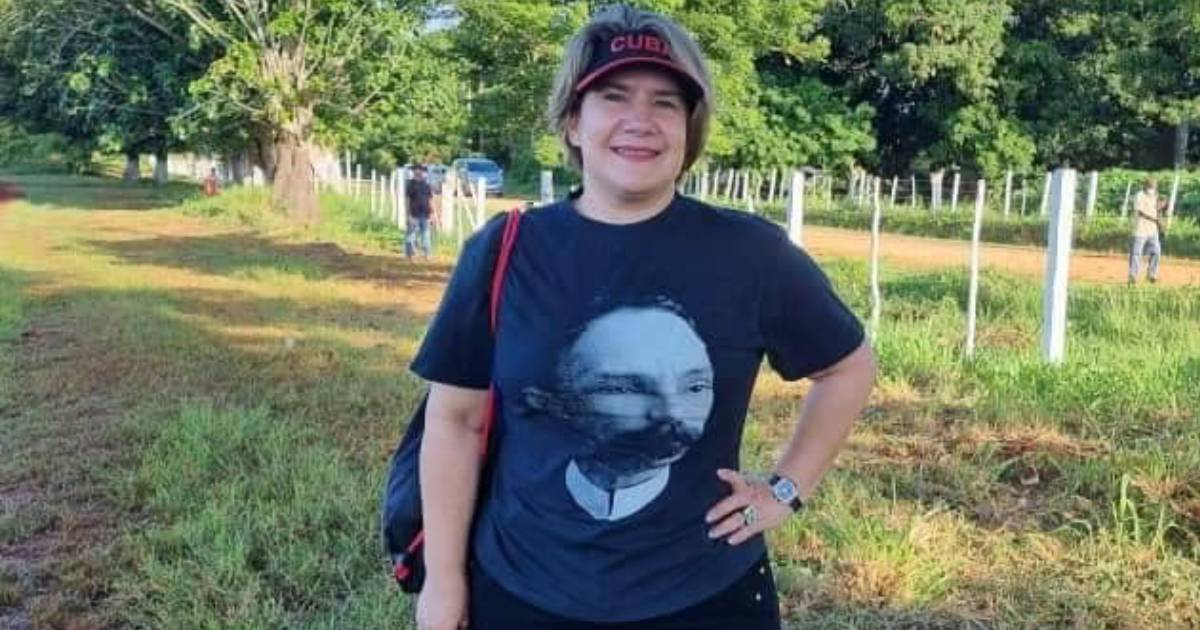
Lis Cuesta Peraza, wife of Cuban leader Miguel Díaz-Canel, published her own message on the social media platform X this Tuesday, October 20, in honor of Cuban Culture Day, in which she acknowledged the presence of a "corrosive everyday life" on the island but attributed it to the "imperialists."
"May the 'corrosive daily life' that the imperialists force us to endure not prevent us from celebrating our strong Culture, 'Shield and Sword of our Nation,'" Cuesta wrote on his official X account.
The message was accompanied by a video of approximately 35 seconds, marked with the Aguaje Films logo, which recreates scenes of the mambises during the Cuban wars of independence.
The expression used by Cuesta implies an indirect acknowledgment of the difficult living conditions in Cuba. However, by blaming "imperialists" for this reality, Díaz-Canel's wife omits any reference to the internal problems of the country, such as inflation, food shortages, and the deterioration of basic services.
His message appeared shortly after Cuban authorities acknowledged that around 2.5 million people have been affected either totally or partially by the drinking water supply. The National Institute of Hydraulic Resources attributed a significant portion of the interruptions to the energy crisis, which prevents the continuous operation of pumping stations.
Moreover, according to the daily tracking by CiberCuba on blackouts, during the peak demand hours this Tuesday, an available capacity of only 970 MW was estimated against a demand of 2,820 MW, resulting in a deficit of 1,850 MW and a projected impact of 1,880 MW.
The rising cost of food is one of the most serious issues facing families. According to the latest official data, prices have increased by 24.85% between January and September 2026, while the year-on-year inflation reached 28.44%. Food and non-alcoholic beverages accounted for 73.39% of the monthly increase recorded in September.
The health crisis is also offering no relief. Díaz-Canel himself admitted at the beginning of October the serious shortage of medications, while a report from CBS News from Havana gathered testimonies from doctors lacking essential drugs to treat their patients and from citizens who depend on donations to obtain their treatments.
The Ministry of Public Health acknowledged an increase in transmissible diseases linked to issues with water supply, sanitation, and waste accumulation. The circulation of dengue and chikungunya exacerbates a situation where neighborhoods in Havana have enormous trash piles that have gone uncollected for months.
From the "bad times" to the "corrosive everyday life"
This is not the first time that Lis Cuesta has publicly acknowledged the difficulties facing Cuba.
On March 8th, during her message for International Women's Day, she acknowledged that the country was going through challenging times.
"Times are tough, but without you they would be worse," he wrote in a message dedicated to Cuban women.
Those words sparked criticism from users who pointed out the disconnect between the official messages and the living conditions of the population.
In June, after the United States included Cuesta among those sanctioned by the Trump administration, Díaz-Canel's wife once again used X to respond in a defiant tone.
"Regarding the sanctions: it's almost an honor to be on that 'list,'" he stated.
Related videos:
Filed under: