The national president of the Institutional Revolutionary Party (PRI), Alejandro "Alito" Moreno, demanded that Claudia Sheinbaum's government cancel the agreements with Cuba for the hiring of doctors and warned that maintaining those agreements could jeopardize Mexico's trade relations with the United States.
The statement from the opposition leader was reported on Monday by the Mexican newspaper Publimetro, after Republican Congresswoman María Elvira Salazar requested an investigation into the working conditions of Cuban professionals during the review of the Treaty between Mexico, the United States, and Canada (T-MEC).
“The MORENA government must CANCEL those agreements with the Cuban dictatorship”, wrote Moreno, who supported Salazar's accusations regarding alleged forced labor practices in Havana's medical missions.
The PRI leader questioned why Mexico maintains these agreements while Mexican health professionals demand better working conditions, positions, and resources to care for patients.
It is a scandalous irresponsibility to jeopardize the T-MEC and the jobs of millions of Mexicans by funding the criminal Cuban dictatorship, he stated.
Moreno also held the ruling party responsible for any commercial consequences that might arise from the controversy.
"If this scheme has consequences for Mexico within the framework of the T-MEC, the responsibility will rest solely and exclusively with the cynical, corrupt, and unscrupulous members of MORENA, who prioritize their commitments to a dictatorship over the interests of our country," he stated.
The intervention of the president of the PRI adds internal political pressure to a controversy that had already reached Washington.
Last Thursday, Salazar sent a letter to the U.S. Trade Representative, Jamieson Greer, requesting that the hiring of Cuban doctors in Mexico be examined under the labor provisions of the USMCA.
The Cuban-American congresswoman called for explanations from the Mexican government and to dismantle the current contracting scheme, believing it allows Cuban authorities to financially benefit from the work of their healthcare professionals.
Salazar claims that doctors face mobility restrictions, separation from their families, and salary withholdings, practices that, according to his complaint, constitute forced labor.
The legislator proposed that Mexico pay Cuban professionals directly, without the intervention of the Havana government.
The Mexican newspaper El Financiero reported on the letter and its commercial implications, particularly regarding the provisions of Chapter 23 of the treaty, related to labor rights and the elimination of forced labor.
The program for hiring Cuban doctors was established during the administration of Andrés Manuel López Obrador, following an agreement signed on July 22, 2022.
According to official Mexican figures, the number of Cuban specialists increased from 869 to 3,101, distributed across the 23 states where the IMSS-Bienestar system operates.
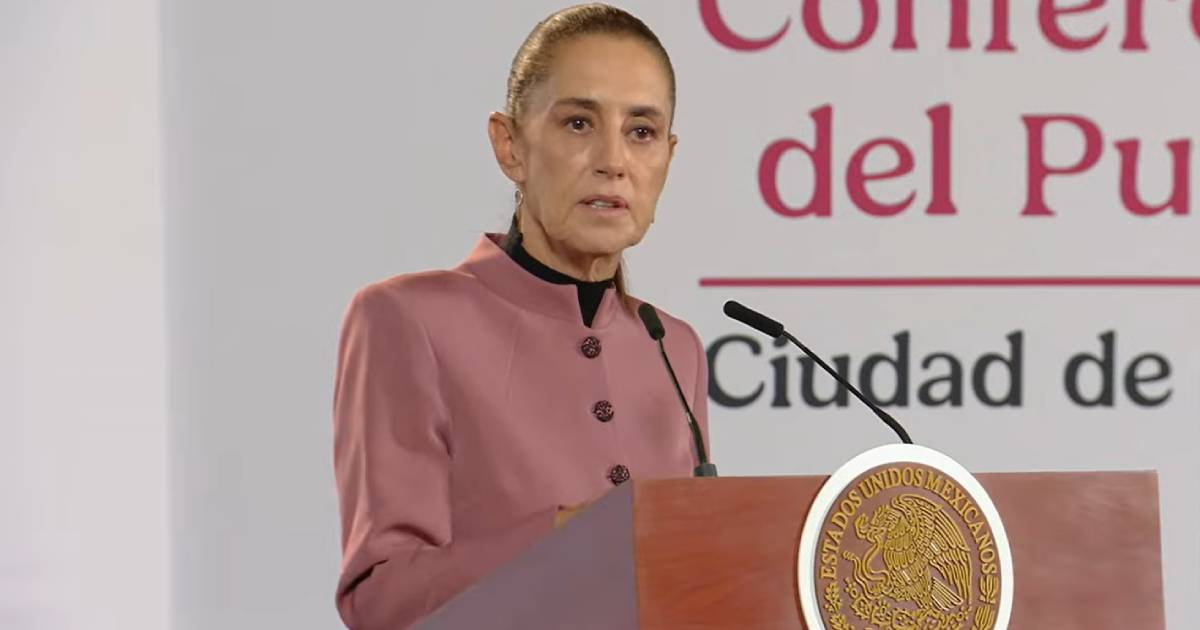
President Sheinbaum has repeatedly defended these agreements, arguing that they allow for the filling of medical positions in rural communities and areas where specialists are scarce.
The official asserted that Cuban doctors are hired directly and receive salaries equivalent to those of their Mexican counterparts, a claim she reiterated in October in response to the opposition's inquiries.
However, investigative journalism on the agreements has documented payments to Cuban entities and discrepancies between the resources allocated to the program and the amounts received by the professionals.
The employment situation of the members of the missions has also led to recent complaints.
On October 4th, Cuban doctors assigned to Mexico reported that they had not been paid for over two months and that the responsible authorities had not provided a specific date for regularizing the payments.
One of the professionals stated that the delays were affecting both the deposits managed by Banjército and those corresponding to the Banco del Bienestar.
The complaint was made by three members of the mission and does not indicate that all the Cuban doctors assigned to Mexico were in the same situation.
Criticism of the program is not new among Mexican opposition parties either.
On October 13, members of the National Action Party (PAN) questioned Sheinbaum about the support for Cuban doctors while Mexican workers in the health sector protested their working conditions.
Deputy Federico Döring then criticized the government's priorities and called for better conditions for Mexican professionals.
Related videos:
Filed under: