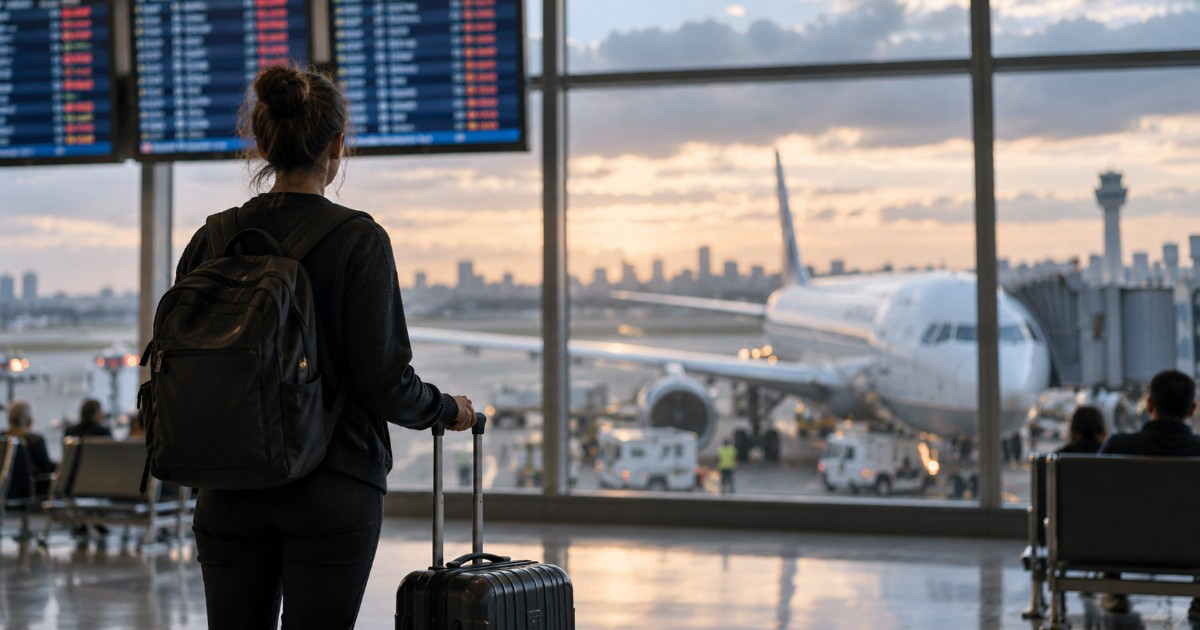
The Canadian Network on Cuba (CNC) demanded this Tuesday that the Canadian government authorize at least one direct flight per week to Cuba for humanitarian reasons, so that Cuban-Canadians can visit their relatives on the island without relying on expensive routes with layovers in third countries.
Julio Fonseca, co-chair of the CNC and member of the Cuban Residents Association Juan Gualberto Gómez in Toronto, made the request during a press conference in the Canadian Parliament in Ottawa, recorded by CPAC.
Since early 2026, all Canadian airlines have suspended their operations to Cuba indefinitely, as confirmed by the official travel advisory from the Government of Canada, updated on October 5, 2026.
Air Canada was the first to cancel its routes on February 9, 2026, due to the shortage of Jet A-1 fuel at nine international airports in Cuba.
Air Transat and WestJet took the same path in the following weeks, and by June, the three main airlines had discarded their tentative resumption dates and indefinitely suspended their operations.
The direct consequence for Cuban-Canadians is that they must travel to the island with a stopover in Mexico, Panama, the Bahamas, or the United States, which significantly increases both the cost and duration of the journey.
The suspension of flights to Cuba from Canada has also had a significant impact on tourism. According to data from the National Office of Statistics and Information (ONEI), between January and August 2026, 128,400 Canadian visitors arrived in Cuba, a 75.6% decrease compared to the 526,239 recorded during the same period in 2025.
The drop was particularly pronounced in March, when only 511 Canadians arrived, compared to 98,663 in the same month of the previous year, a decrease of 99.48%.
The request for humanitarian flight and its relation to the embargo on Cuba
The humanitarian flight request is part of a broader campaign by the CNC, a coalition of more than 26 member organizations.
The organization calls on the government of Prime Minister Mark Carney to enforce the Foreign Extraterritorial Measures Act to protect Canadian companies doing business in Cuba and to lift the official recommendation against non-essential travel to the island.
The press conference took place on Tuesday, October 27, during the first day of the debate in the UN General Assembly regarding the resolution calling for an end to the US embargo against Cuba. This is the 34th since 1992. The debate featured tense moments between the Cuban Foreign Minister and the US Ambassador this Tuesday. The vote will take place today, October 28.
The conference organized by the Canadian organization also took place following the presentation before the House of Commons of the parliamentary petition e-7649, sponsored by NDP Member of Parliament Leah Gazan (Winnipeg Centre), which gathered over 3,000 signatures and was the third on this topic submitted in 2026.
"Canada cannot credibly claim to pursue an independent foreign policy when it stands by as the United States escalates its economic war against Cuba. The time for statements of concern is over. Canada must take action," said Fonseca.
The leader also believes that "Canada should not allow Washington to dictate its foreign policy" and that "a vote in the United Nations should be accompanied by action."
The position of Canada in the vote this Wednesday generates uncertainty. The country maintained its favorable vote on UN resolutions against the embargo for 33 consecutive years. In July 2026, it abstained in a procedural vote on the same issue, and its Global Affairs spokesperson stated on October 25 that its position was still "under consideration."
Related videos:
Filed under: