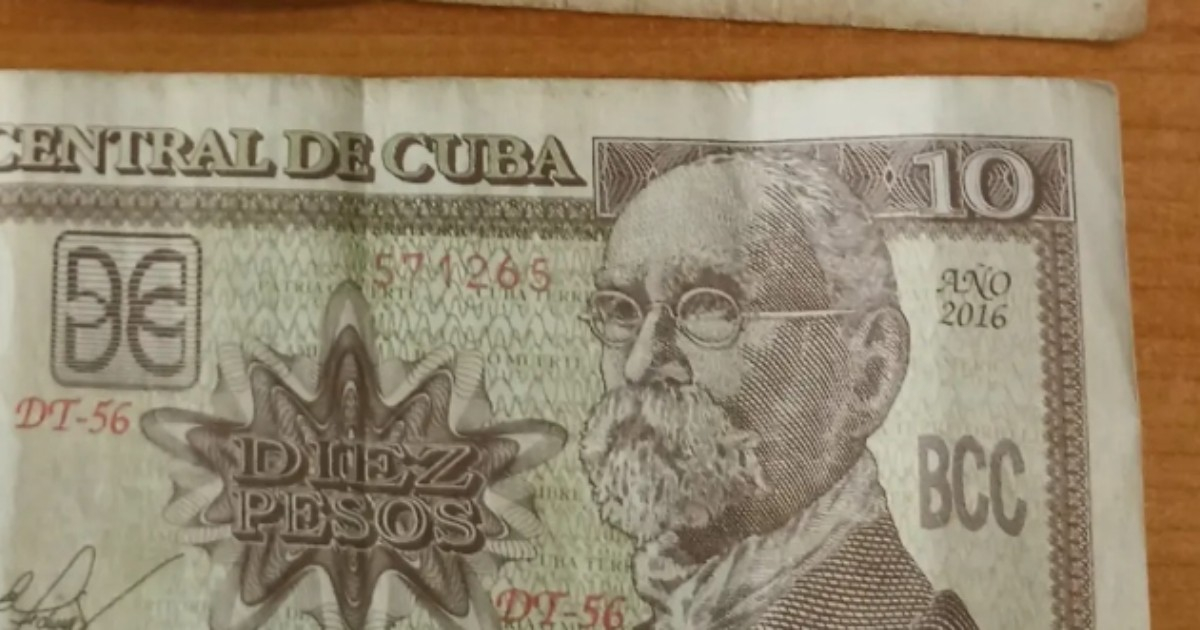
Yanisleidis Garrido did not hold back in a complaint on Facebook: several businesses in San Antonio de los Baños, Artemisa, refuse to accept 10 and 20 Cuban peso bills, the same denominations that many workers receive as their salaries or withdraw in cash from the bank.
"The lack of respect that exists in this municipality is beyond reason," wrote Garrido. "Anyone who comes to buy something and does not accept 10 and 20 dollar bills will be reported to the inspectors. This is not a warning, it's a fact."
What am I going to do with the salary? Not just me, everyone who's been paid like this. Where am I supposed to put the bills? she asked.
"O either they pay us with large bills or they close everything down and we all die of hunger, but it's unfair to have to plead and cry in your own country to buy food. Just because we have civic values, I’ve turned back home empty-handed more than once. That’s it, let all the businesses close; only those who have money survive here," he pointed out.
State workers said that the problem begins even before reaching the market: "The most affected are the state workers, who are paid with cards, and when you can withdraw something from the bank, it's in ten-peso bills." Another person summarized it bitterly: "If the bank itself pays you with those bills, there’s no worse burden than the one carried by the same stick."
The testimony that made the biggest impact was that of a Cuban woman who described what she witnessed in a private pharmacy: "I happened to be there with an elderly man, and the young woman told him that she couldn't accept more than two hundred pesos in twenty peso bills. I had to change a two-hundred peso note for him so he could buy the medication with the only money he had received from the bank." The elderly man would not have been able to purchase his medicines without the intervention of a stranger.
Other commentators have extended the complaint to the rejection of electronic transfers: "Just like with transfers, there’s no way to buy anything; if you have it on a card, you leave without purchasing anything. How we mistreat each other."
Since July 2026, private businesses started rejecting small bills claiming that their own wholesale suppliers also did not accept them, thus passing the problem on to the end consumer.
BANDEC intervened on two occasions to remind that all Cuban peso banknotes have full legal tender status and that no establishment can refuse denominations or unilaterally impose which currency they accept, labeling such practices as illegal and warning of potential administrative measures. However, the complaints did not cease.
In September, a customer in Holguín reported that a business refused 300 pesos in 20 peso bills as part of a larger payment. In October, a small business set a limit on payments made with 50 peso bills from a customer trying to buy rice. That same month, a case was documented involving a 74-year-old retiree who attempted to pay for bread with 100 five peso bills received as part of his monthly pension of 3,653 pesos, and the business declined the payment.
Related videos:
Filed under: