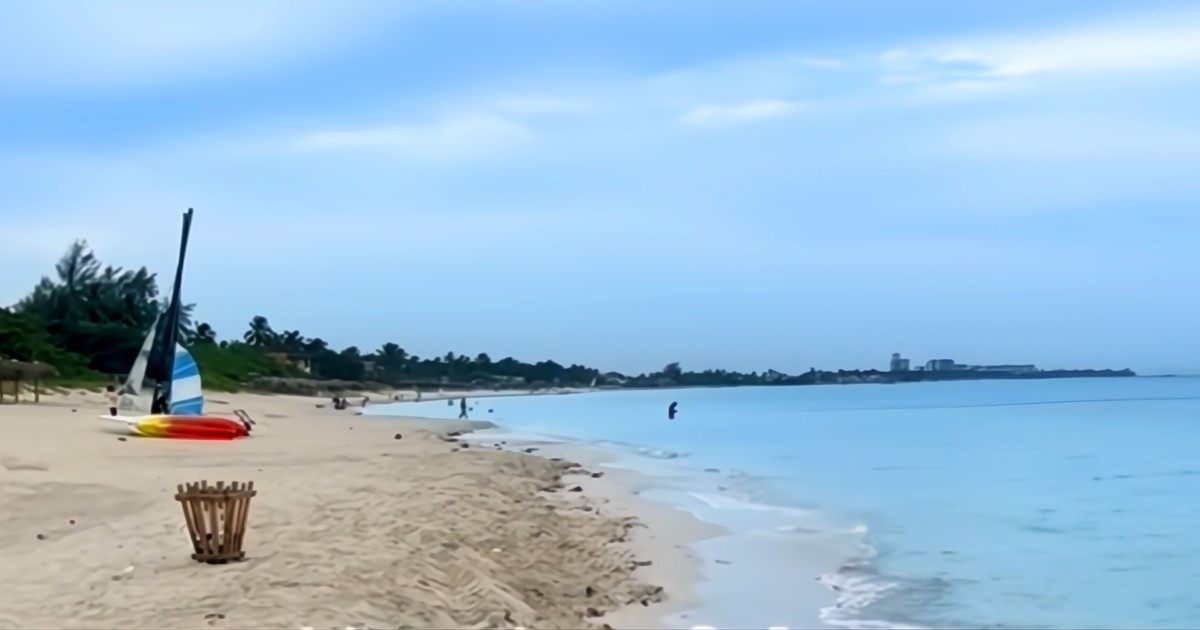
Cuban tourism is experiencing one of its most critical moments in decades: 73% of the country's hotel facilities are closed, around 25,000 workers are in a state of availability, and seven international chains have ceased operations on the island, according to figures acknowledged by the Cuban government itself.
The situation was once again presented this week by the state agency Prensa Latina, which dedicated two articles on August 27 and 28 to the crisis in the sector, attributing much of the deterioration to the sanctions and pressures from the Donald Trump administration on foreign companies doing business in Cuba.
The most striking figure comes from Prime Minister Manuel Marrero Cruz. During his address to the National Assembly on July 29, he acknowledged that 73% of hotel facilities remained closed and that seven international chains had ceased operations on the island, accounting for 46% of the rooms managed under that arrangement.
The crisis has also left around 25,000 hotel workers in a state of availability. The extent of the closures and their impact on employment had already been revealed at the end of July, when the figures presented by Marrero to the deputies were made public.
Among the major companies that have ceased operations are Meliá, Iberostar, and Barceló.
Meliá officially informed the National Securities Market Commission of Spain on July 21 that its full exit would take effect from July 24, 2026, when it would cease to provide management and marketing services in all its Cuban establishments. The company managed 34 hotels on the island.
Iberostar had ceased operations at 12 of its 18 hotels in Cuba since June 1 and subsequently halted activities at the remaining six as well.
Barceló, which managed two establishments in Varadero, also terminated its contracts and ceased operations on the island.
The Government did not publicly disclose the names of the seven chains when presenting the figure. EFE identified among the known exits Meliá, Iberostar, Barceló, the Canadian Blue Diamond, the Indonesian Archipelago International, and the Turkish ATG.
Minor Hotels, for its part, had already exited in February from the two NH brand hotels it managed in Havana.
Prensa Latina also included CEIBA Investments Limited among the groups affected by the business withdrawal, but at this point, it is important to clarify: CEIBA was not the chain managing those hotels.
The company itself announced on July 22 that it maintains a stake in five Cuban establishments that were managed by Meliá and, following the withdrawal of the Spanish hotelier, was assessing the consequences and the next steps to take.
The blow to the sector is not limited to the closure of hotels. Cuba received only 387,591 international visitors between January and June of 2026, compared to 985,606 in the same period of 2025.
The exact difference is 598,015 fewer visitors, which represents a year-over-year drop of 60.7%.
The National Office of Statistics and Information (ONEI) reported that the 387,591 visitors received this year account for only 39.3% of those registered during the same period in 2025.
That data requires correcting a figure included in the second report from Prensa Latina: the agency claimed that between January and June, tourism had fallen by 58%, but the official balance from ONEI for the first six months indicates a reduction of 60.7%.
58% aligns with figures previously released for a shorter period, up to May.
Canada, historically the main sending market to Cuba, experienced the largest absolute decline. It dropped from 428,118 visitors in the first half of 2025 to 126,937 in 2026, a loss of exactly 301,181 people and a decrease of 70.3%.
Hotel occupancy is also at exceptionally low levels. In the first quarter of 2026, it was only 12.9%, compared to 23.7% during the same period in 2025, according to data from ONEI collected by EFE.
The difficulties in attracting visitors are compounded by significant financial problems for foreign companies. Spanish hotel chains had between 80 and 100 million euros tied up in the Cuban banking system, funds that could not be repatriated and that their parent companies had already written off in their financial statements, according to an analysis released at the end of June.
This figure should not be confused with the total invested by Spanish companies in Cuba. The accumulated Spanish investment from 1993 to 2024 reached 465 million euros, according to data from ICEX reported by EFE. Accommodation services were the main sector of this investment.
The fuel crisis also had a direct impact on air connectivity. In February, Air Canada, WestJet, and Air Transat temporarily suspended their flights to Cuba due to a lack of aviation fuel at the island's airports.
The effect on the main issuing market was immediate: in March, only 511 visitors from Canada arrived in Cuba, compared to almost 99,000 in the same month of 2025.
In light of this scenario, the Ministry of Tourism has aimed to convey a message of continuity. José Antonio Aguilera, Cuba's Tourism Advisor for the Southern Cone, asserted that "the hotels on the island remain open and the destination continues to operate normally," a statement later reproduced by Prensa Latina.
«Cuba has acquired the necessary know-how to ensure the service standards and quality that characterize our destination. The hotels remain open and are operating under national brands, with no interruptions in service delivery,» stated Aguilera.
The same publication acknowledges, however, that 73% of hotel establishments remain closed and lists venues that are still providing services in destinations such as Havana, Varadero, Trinidad, Holguín, Viñales, and Santa Lucía.
The government is also trying to find new managers for part of the infrastructure. Prensa Latina highlighted the Italian chain Domina and noted that it manages or is planning establishments in Varadero and Havana.
The Domina Caribe site currently showcases Domina Marina Varadero and two projects in Havana, Domina Metropolis and Domina Real Aduana.
Despite the figures, the state agency maintains an optimistic discourse and claims that some tour operators and travel agents believe that the landscapes, the natural environment, and the hospitality of the Cuban people could contribute to a future recovery.
Their two articles suggest that the "U.S. offensive against Cuban tourism could fail".
Related videos:
Filed under: