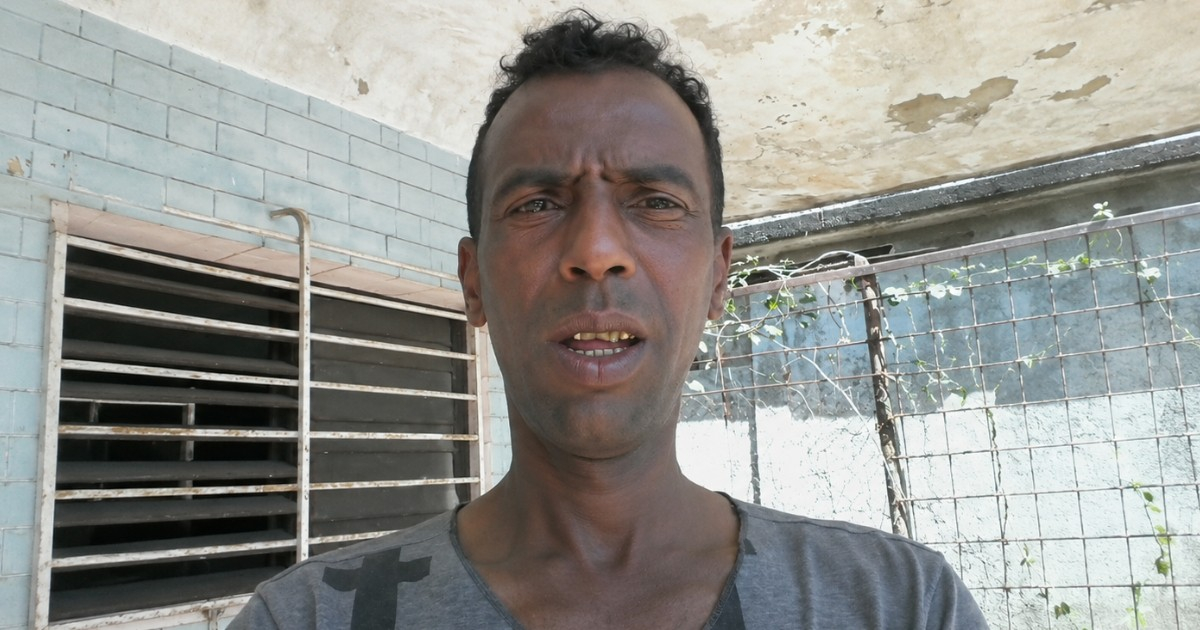
A Cuban identified as Gonzales Angel posted this week on Facebook a testimony that describes the physical and psychological deterioration caused by receiving electricity only in the early morning hours, a practice that the Cuban regime employs as part of its rolling blackout schemes.
"I don't know whose idea this is or which psychology manual they got it from, but this thing of turning on the lights early in the morning is affecting me neurologically. When my brain detects that the lights are on, I can't sleep anymore; it keeps me awake knowing there's light," the man wrote in his post.
In addition to insomnia, Gonzales Angel reports another direct consequence of prolonged outages: the inability to preserve food.
"Another thing that is driving me crazy is having to buy food on a daily basis because you never know when you’ll have three or four days of blackouts in a row, and I've had food spoil on me more than once. But that makes me a slave to food. Everything I have goes into food and charcoal," he recounted.
On Wednesday, Havana recorded 157 affected circuits and 389 MW of interrupted load at 9:13 PM, with some circuits accumulating over 52 consecutive hours without supply.
This Thursday, national availability was around 1,000 MW compared to a demand of 2,350 MW, with a maximum forecasted shortfall of 1,770 MW for peak hours, according to the daily report of the national electric system.
The nighttime supply pattern has been documented in all provinces throughout 2026. In August, power outages exceeded twenty hours a day, and the heat drove people to sleep on the Malecón in Havana, described as a collective insomnia episode.
A study published in 2026 and based on 415 adult Cubans, cited by the journal Social Science & Medicine, reported extremely severe depression in 55.4% of the respondents, severe anxiety in 66%, and extreme stress in 65.8%. The research identified the impact of power outages on sleep and nutrition as the strongest predictor of these symptoms, surpassing any sociodemographic variable.
The testimony also highlights the failure of the regime's economic promises. Gonzales Angel recalls that at the end of 2025, the government announced measures to boost the economy and the so-called floating rate of the Central Bank of Cuba, which was supposedly intended to reduce the price of the dollar and, consequently, the cost of food.
"I see that everything, especially food, costs more than double, some items even triple from one year to the next, and the dollar is almost at a thousand pesos," he wrote.
The data supports your perception. The floating rate started at 410 Cuban pesos per dollar in December 2025; by Wednesday, the informal dollar was around 915 pesos, more than double in less than a year. The official inflation rate for food exceeded 42% year-on-year in September 2026, while in informal markets, rice costs between 330 and 400 pesos per pound, chicken up to 920 pesos per pound, and four oranges reached a price of 10,000 pesos this Thursday.
Gonzales Angel ended his post with a phrase that encapsulates the mood of those surviving this triple crisis of electricity, food, and the economy: "Whoever gets through this ends up going crazy."
Related videos:
Filed under: