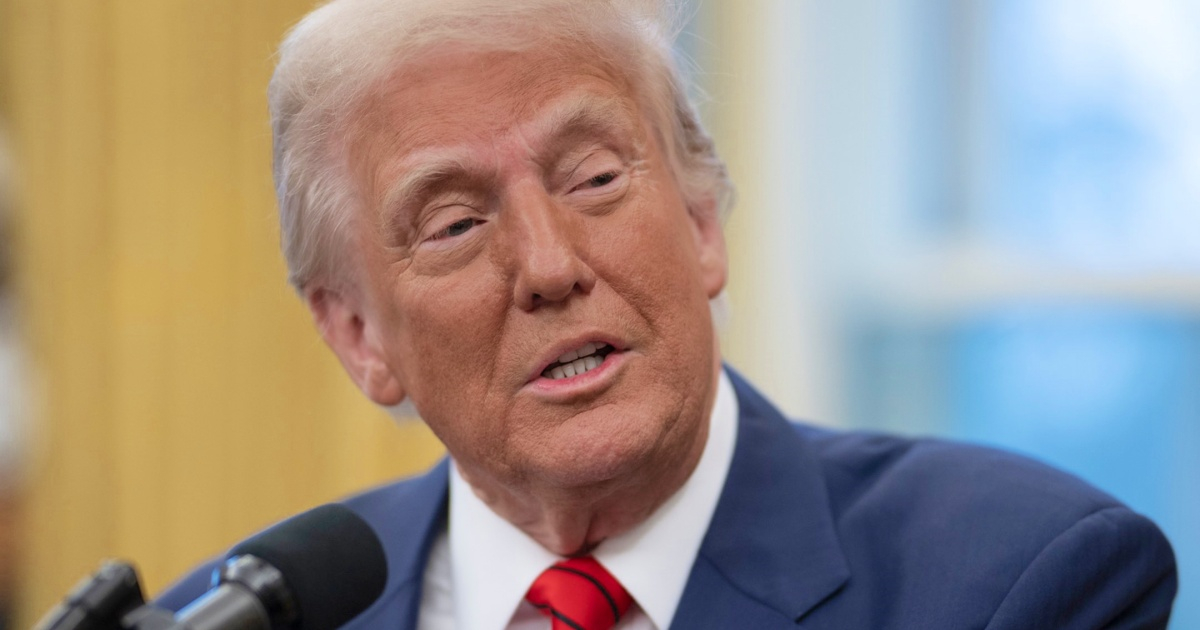
Donald Trump acknowledged this Sunday that his deportation policy was "too harsh," in the first television interview he granted after the midterm elections, according to the EFE agency.
The CBS 60 Minutes correspondent, Ross Douthat, asked the president if he thought his immigration policy had gone too far, and Trump replied frankly, "I think it was too harsh. I think it may have been too harsh, yes."
The interview was broadcast a few days after the Democrats regained control of both chambers of Congress in the elections held last Tuesday, with a projected majority of 244 seats in the House of Representatives and 54 senators compared to 44 Republicans.
Las declaraciones de Trump sobre sus propias políticas migratorias marcan un giro relevante para millones de personas. Sigue todos los detalles y novedades en nuestra sección de
It was the first time since 2006 that a party lost control of both chambers simultaneously in a midterm election.
The rejection of raids by Immigration and Customs Enforcement (ICE) was crucial to the outcome, especially among Latino voters.
A poll conducted at the polls, cited by CBS, indicated that 58% of voters believed that the administration's immigration measures had gone too far, and Republican support plummeted in South Texas and other areas with high Hispanic populations that had leaned toward the Republican Party in 2024.
Trump admitted in the interview that the immigration policy "helped and hurt" the Republicans, and expressed his desire to reach an agreement with the Democrats, who will take control of Congress on January 3, 2027.
However, the concrete signals point in the opposite direction of any real shift in immigration policy.
The Secretary of Homeland Security, Markwayne Mullin, posted on his social media that "deportations will continue" just one day after the electoral defeat, as reported by EFE.
Additionally, on Friday Trump appointed Stephen Miller as the new Chief of Staff of the White House, replacing Susie Wiles.
Miller, regarded as the chief architect of the administration's anti-immigrant policy, took office this Sunday.
The impact of deportations on the Cuban community has been particularly severe: arrests of Cubans by ICE increased by 463% between the end of 2024 and the beginning of 2026, and more than 42,000 Cubans had pending deportation orders, according to data published in October.
At least 85 Cubans were sent to the Central African Republic on a flight lasting nearly sixty hours during that same month.
Trump's approval among Hispanics was at just 32.9% at the end of October, according to a poll published at that time, significantly lower than the 42%-46% of the Latino vote he received in the 2024 presidential elections.
The new Congress with a Democratic majority will formally take office on January 3, 2027; until then, the Republicans maintain the majorities of the outgoing Congress, while Trump remains in the presidency until January 20, 2029.
Related videos:
Filed under: