The National Assembly of People's Power of Cuba approved the , the first Cuban regulation fully dedicated to this area, published this Tuesday in the and driven as part of the economic reforms that the regime is attempting to implement amidst a deep crisis.
The regulation, approved on December 18, 2025, during the VI Ordinary Period of Sessions of the X Legislature and enacted by the president of the National Assembly, Esteban Lazo Hernández, will come into effect 60 days after its publication, likely on January 8, 2027.
Its main novelty is the formal integration of the private sector into the National System of Science, Technology, and Innovation.
The law recognizes private companies, agricultural and non-agricultural cooperatives, local development projects, and self-employed workers as actors in the system, equating them in access to training and funding instruments alongside universities and state research centers.
It also authorizes public-private partnerships to create technology-based companies, allows contracts with royalties and payments for the transfer of technology packages between state and private entities, and enables the establishment of companies based on patents and trademarks to channel external or private investment.
The financing instruments planned include seed capital, non-repayable funds, soft microcredits, venture capital, and medium- to long-term investment funds.
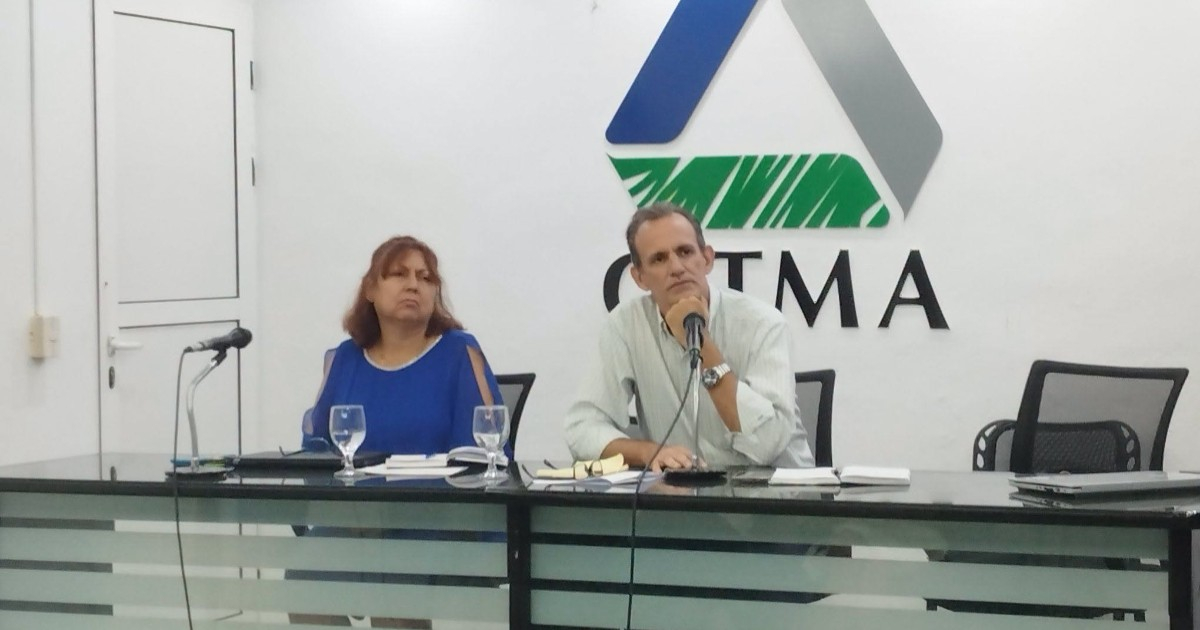
The Deputy Minister of the Ministry of Science, Technology and Environment (CITMA), Daimar Cánovas Casado, presented the regulation at a press conference in Havana and emphasized that "one of the objectives of the law is precisely to ensure that participation (in science projects) increases both in the state and non-state sectors, as well as in public and private realms."
Cánovas added that "as there is more innovation among all economic actors, we will be able to progress faster as a country."
The same Gaceta No. 94 includes three complementary regulations: the , which updates the legal framework of the Academy of Sciences of Cuba; the , which is the regulation for Law 182, establishing the National Registry of Science, Technology, and Innovation Entities; and , which regulates innovation and streamlining activities and establishes the Innovation and Streamlining Fund.
The Law 182 repeals the previous regulatory framework, which consisted of Decree-Law 323 "On Entities of Science, Technology, and Innovation" (2014) and Decree-Law 7 "On the System of Science, Technology, and Innovation" (2020), and is part of the package of 176 economic measures presented by Prime Minister Manuel Marrero Cruz in June 2026, which includes a specific focus on digitalization, artificial intelligence, and knowledge economy.
The publication of the regulation coincides with the entry into force of Law 186 "On the Organization of the Central State Administration," which dissolves CITMA itself and redistributes its functions between two new ministries.
Deputy Minister Cánovas assured that this restructuring "is not an obstacle to the implementation of the new law," as the dissolution of the agency will occur gradually over a period of six months to a year. However, this measure has already drawn criticism from experts who warned about the risks of dismantling the governing body of Cuban science.
According to official data cited by the EFE agency, more than 16,000 private companies are currently operating in Cuba, a sector that the new law aims to formally integrate into the island's scientific and technological ecosystem.
Related videos:
Filed under: