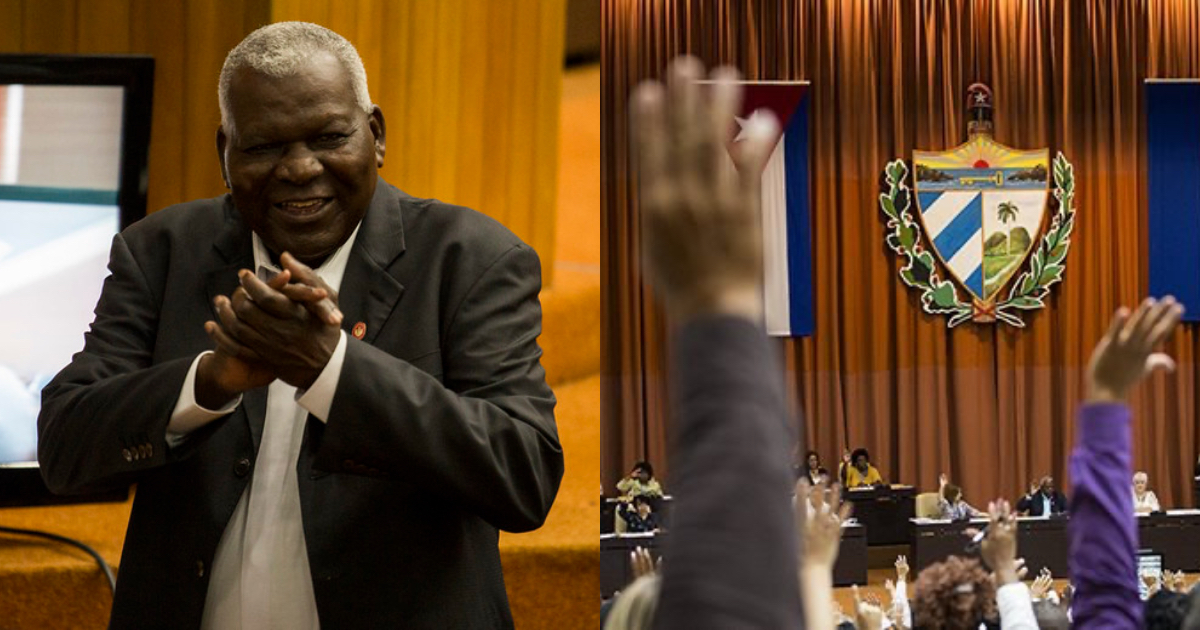
So what are they for? This is the question that the Cuban Elizabeth González Aznar posed this Tuesday to the deputies of the National Assembly of People's Power, in an open letter addressed to its president, Juan Esteban Lazo Hernández, in which she questioned the silence of the representatives in the face of hunger, unaffordable prices, and the lack of basic services that millions of citizens are enduring.
In a post made on Facebook, González Aznar, a resident of the La Lisa municipality in Havana, urged legislators to take on their responsibility of representing the people and to demand solutions from the Cuban government in light of the deteriorating living conditions.
The woman, who has previously directed numerous public criticisms at the authorities, began her message by describing a situation she deemed outrageous and inhumane, characterized by rising food prices and difficulties in obtaining water, electricity, gas, and medications.
“Access to food and water are not luxuries; they are basic necessities for life that are today at the brink of survival for Cubans,” he wrote, before questioning the consequences of the partial dollarization of the economy, a policy he attributed to the Government with the approval of the National Assembly.
González reported that the rise of the dollar continuously drives up the price of basic goods, while salaries and pensions lose purchasing power.
According to their assessment, access to food has become one of the greatest concerns for Cuban families.
"The USD is rising, and with it, the hunger and misery of the working active population increase, and it is even worse for retirees," he stated.
He also stated that a person needs at least 15,000 pesos per month to feed themselves, an estimate he used to illustrate the weight of products such as rice, oil, eggs, chicken, beans, and sugar in the family budget.
The citizen also criticized the so-called neighborhood markets, an initiative she hoped would offer more affordable prices, but which, as she reported, has ended up mirroring the high amounts charged by private vendors.
One of the most direct points made in his letter was regarding the role of the deputies. González noted that the establishes that the National Assembly is the supreme body of state power and represents all the people, questioning the lack of public responses to the daily hardships faced by the population.
«You are completely silent,» he reproached the legislators. In his opinion, the representatives should analyze the conditions in which the citizens live, hold the authorities accountable, and demand concrete measures in response to the rising cost of food and the deterioration of services.
The author also questioned whether parliamentary representation has a real effect on people's lives if the deputies remain detached from their problems.
He reminded them that their own families, neighbors, and friends face the same challenges as the rest of the population.
In another passage, he described the situation of those who go more than ten days without water, endure prolonged blackouts, and have to cook with charcoal due to the lack of gas, while basic necessities become increasingly difficult to afford.
González also rejected the idea that the authorities resort to the U.S. embargo as a response to all the economic difficulties.
"And please don’t come to me with the blockade," he stated, asserting that there are marked differences between the living conditions of certain sectors and the hardships faced by most citizens.
For women, the deputies have the responsibility to demand explanations from the Government and to call for changes that ensure the essential needs of the population are met.
His message concluded with a request to the representatives to take action and stop remaining silent in the face of citizens' suffering.
In recent years, through social media, González has directed public inquiries at the Cuban authorities.
In August, for example, she wrote an open letter to Miguel Díaz-Canel in which she criticized his statements to foreign media and demanded answers regarding the food crisis, blackouts, and rising prices.
At that moment, he questioned the leader for not acknowledging his responsibility in the decline of the population's living conditions.
A month later, she reported the waste of drinking water in the San Agustín neighborhood, in La Lisa, where she claimed there were leaks that had not been repaired for over two years, while many residents went entire days without receiving the service in their homes.
More recently, just a few days ago, she denounced the food conditions of Cuban retirees, using her father, Raúl González Hernández, an 81-year-old scientist and creator of the anti-anemic medication Trofin, as an example. He receives food through the Family Care System (SAF) in San Agustín.
Related videos:
Filed under: