A Cuban family that left the island in 2021 embarked on a tough migratory journey through seven European countries, marked by long walks, police detentions, and asylum applications.
Five years later, Antony, Odaymis, and Víctor have managed to settle in Spain, where a small Cuban sandwich business has become their livelihood.
The story was reconstructed by journalist Jenny Mirabal Gómez in a report published by elTOQUE, based on interviews with its protagonists, who recounted that the journey began in Havana and passed through Russia, Serbia, Croatia, Slovenia, Italy, and France, before ending in Salobreña, a coastal municipality in the Spanish province of Granada.
The decision to emigrate came amid the economic and health crisis that Cuba was experiencing in 2021. The couple sold their home in Marianao and used their savings to travel to Russia with Víctor, Odaymis's son, who was then 21 years old.
Russia was the first option because at that time Cubans could enter without a visa. However, the difficulties in communicating and adapting to a completely different culture made them reconsider their plans and seek a route to Spain.
This was not Antony's first migration experience. In 2010, he had attempted to reach Florida on a makeshift boat along with 28 other people. The U.S. Coast Guard intercepted them near the coast and returned them to Cuba.
Years later, he tried again, this time accompanied by his family and taking an entirely different route.
From Serbia to Croatia: walks and military checkpoints
The journey from Russia to Serbia was made possible thanks to the financial support of some acquaintances who paid for the three plane tickets. However, the greatest challenges began when they tried to cross into Croatia.
The family spent several days near the border, alongside other Cuban migrants. In a first attempt, they were intercepted by armed military personnel and returned to Serbia.
In the second attempt, they managed to enter Croatian territory after walking nearly 20 kilometers through uninhabited fields, carrying their belongings.
The next destination was Slovenia, but during a police check in Croatia, they were detained because they did not have the required European documentation. They spent several days in a migrant center and applied for asylum in order to continue with the procedures.
After regaining their freedom, they resumed their journey. However, the difficulties were far from over.
Another arrest in Slovenia and the fear of returning to Cuba
In Slovenia, they were detained again by immigration authorities. During a search, the agents found an old membership card of the Union of Young Communists of Cuba in Odaymis's wallet.
According to his testimony, one of the police officers reacted with anger upon discovering the document, while the family barely managed to understand what was happening due to the language barrier.
The three were transferred back to an immigration center, where they stayed for several days before being able to file for asylum.
Odaymis recalled the fear she felt during those moments, especially at the prospect of being deported along with her son. In her account, she explained that one of her main motivations to keep going was to provide Víctor with a life in freedom.
After leaving Slovenia, the family managed to reach Italy, where they sought financial help from a relative to buy food and bus tickets. From there, they traveled through France until finally entering Spain.
From the detentions to the Cuban sandwiches in Granada
Once in Spanish territory, they passed through Barcelona, Valencia, and Murcia before settling in Salobreña, on the Tropical Coast of Granada.
There, they began working in the culinary field, and over the years, they gathered the experience and support needed to launch their own project.
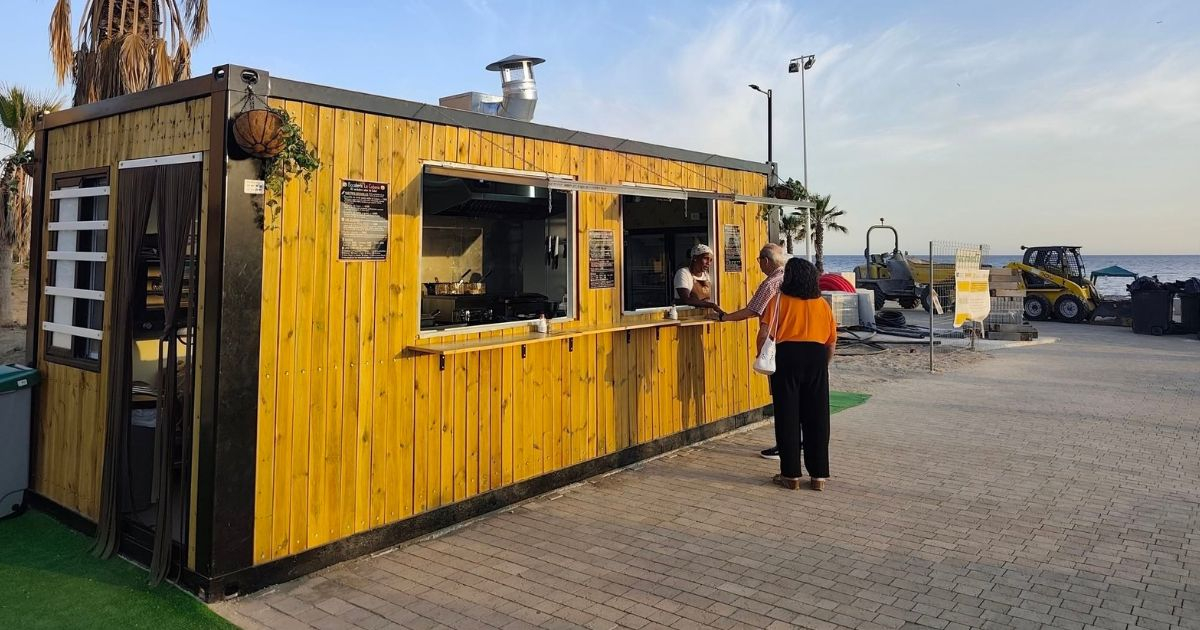
The business is called Bocatería La Cubana, a small takeaway food establishment located between Oleaje Street and the Salobreña Seafront.
The venue opened on July 4, 2026, and within a few weeks, its snacks began to attract the attention of locals and visitors.
According to the newspaper Granada Hoy reported in August, the establishment's specialty is a sandwich made with slow-cooked meat and traditional Cuban seasonings, accompanied by sweet potato chips.
The reception was so favorable during the summer that lines began to form in front of the establishment.
The business also sparked the interest of food content creators. One of them, known as @ninosafaera, posted a video trying their snacks and particularly highlighted the juiciness of the meat.
For Antony and Odaymis, entrepreneurship represents much more than a way to earn income. It is also the result of years of sacrifice, adaptation, and work away from Cuba.
A new life, but with the family still in Cuba
Odaymis claims to be satisfied with the life they have built. Her son Víctor, now 26 years old, has also started his own family in Spain, and she has become a grandmother.
Antony, however, cannot help but think of his parents and other relatives who remain on the island.
Although he has achieved stability in Spain, he remains concerned about the difficulties his loved ones face in Cuba and acknowledges that he will likely have to return one day to help them.
The story of this family reflects a reality shared by many Cuban emigrants: leaving their country behind, starting from scratch in an unfamiliar society, and working for years to build the stability they could not find on the island.
Today, far from the borders they crossed and the migration centers where they were detained, Antony and Odaymis are preparing Cuban snacks in a corner of Granada. There, they have found a way to make a living without parting from the flavors of their homeland.
The family is not the only one that has found in gastronomy an opportunity to start over after emigrating.
In May, a Cuban named Rosmery shared how she went from being an employee to taking over a bakery in Albacete, while in Alicante, Alejandro Ramírez Mustelier and his wife managed to establish a Cuban food business that has attracted Spanish customers with their tamales, tostones, ropa vieja, and sandwiches.
Also in Spain, two Cuban friends from Sancti Spíritus opened a deli in Tenerife, specializing in smoked products made with recipes from the island.
In Galicia, another Cuban family launched the restaurant Cubamar, offering a culinary proposal that blends Cuban and Galician flavors.
Related videos:
Filed under: