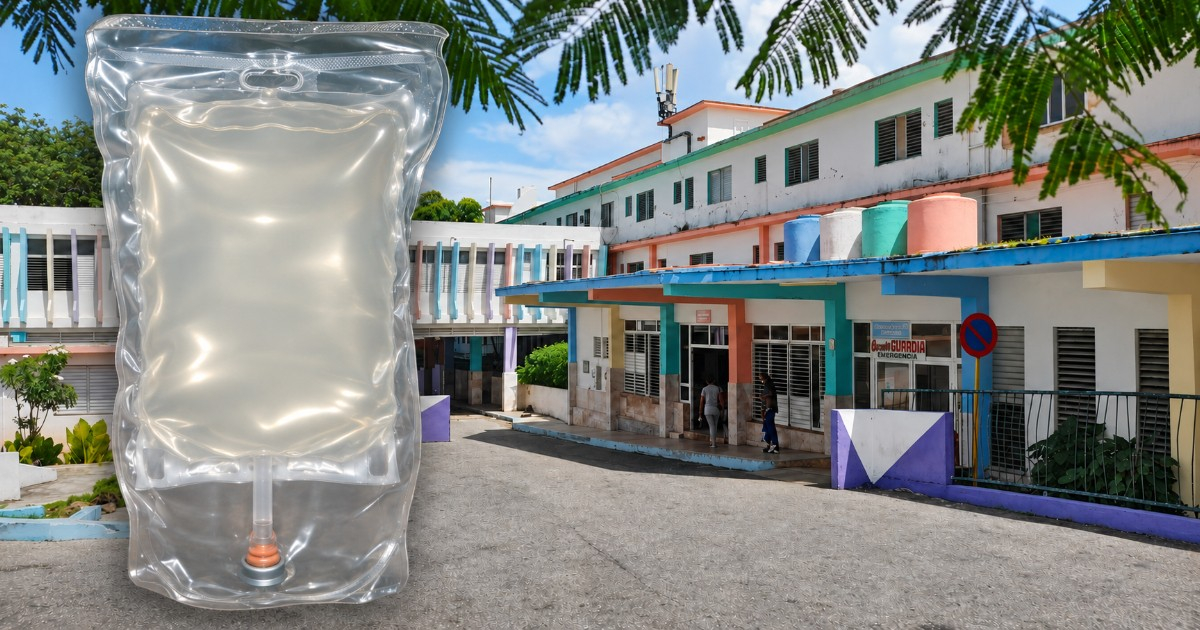
A woman identified as Lily La Fé turned to Facebook to urgently request a serum that the hospital could not provide for her underage nephew, who was admitted to the intensive care unit of the Eliseo Noel Caamaño Pediatric Hospital in Matanzas with hemorrhagic dengue. Solidarity on social media succeeded where the healthcare system failed: shortly after, the woman confirmed that they had managed to obtain the necessary supply.
In her original Facebook post, Lily La Fé wrote: "I urgently need a serum of this type; it’s for my little nephew who is in Intensive Care at the Pediatric Hospital in Matanzas, suffering from Dengue Hemorrhagic. If anyone knows or has it, please message me privately or on WhatsApp."
The serum I was looking for was GELAFUSAL® 4%, a colloidal solution of modified gelatin in Ringer Acetate manufactured by Serumwerk Bernburg AG in Germany, used as a plasma volume expander in cases of hypovolemia and circulatory shock, common complications in severe hemorrhagic dengue.
The post was shared dozens of times, which amplified the search among friends, acquaintances, and supportive strangers.
In a second thank you message, Lily La Fé confirmed the outcome: "We have already resolved part of the problem, and the child will be able to complete his treatment." She added: "I am very grateful to my friends, acquaintances, and supportive people who offered to help, as well as to my family."
The case occurs in a hospital that has accumulated complaints throughout 2026. In October, relatives reported that they waited over an hour for prescribed injections to be administered and pointed out a lack of acetaminophen. That same month, the management of the facility acknowledged that it is operating at 85% of its capacity due to electrical issues that forced the Gastroenterology service to be relocated to the Provincial Blood Bank. By mid-month, family members of another girl hospitalized in the same center reported bedbugs, cockroaches, and malfunctioning elevators.
The episode occurs within the context of an active dengue epidemic across the Island. The Ministry of Public Health (MINSAP) acknowledged simultaneous transmission of dengue and chikungunya in all 15 provinces at the close of statistical week 44. The Global Dengue Observatory estimated nearly 15,859 cumulative cases in Cuba as of October 2026, approximately 10.6 times above the expected level.
The shortage of supplies that forced Lily La Fé to seek help on social media is not an isolated case. In April 2026, there was a shortage of 461 out of 651 medications from the national essential drug list, a deficit exceeding 70%. BioCubaFarma could not guarantee nearly 300 of the 395 medications promised to the healthcare system, and Miguel Díaz-Canel admitted in August that approximately seven out of ten essential medications were lacking in the country.
Turning to Facebook and WhatsApp to obtain medications has become a common practice in Cuba. Documented cases in 2026 include a child with epilepsy in Artemisa who needed intravenous paracetamol and a baby with lamellar ichthyosis in Sancti Spíritus who required a specific cream. In all these instances, solidarity on social networks was the only effective channel in the absence of institutional response.
Related videos:
Filed under: