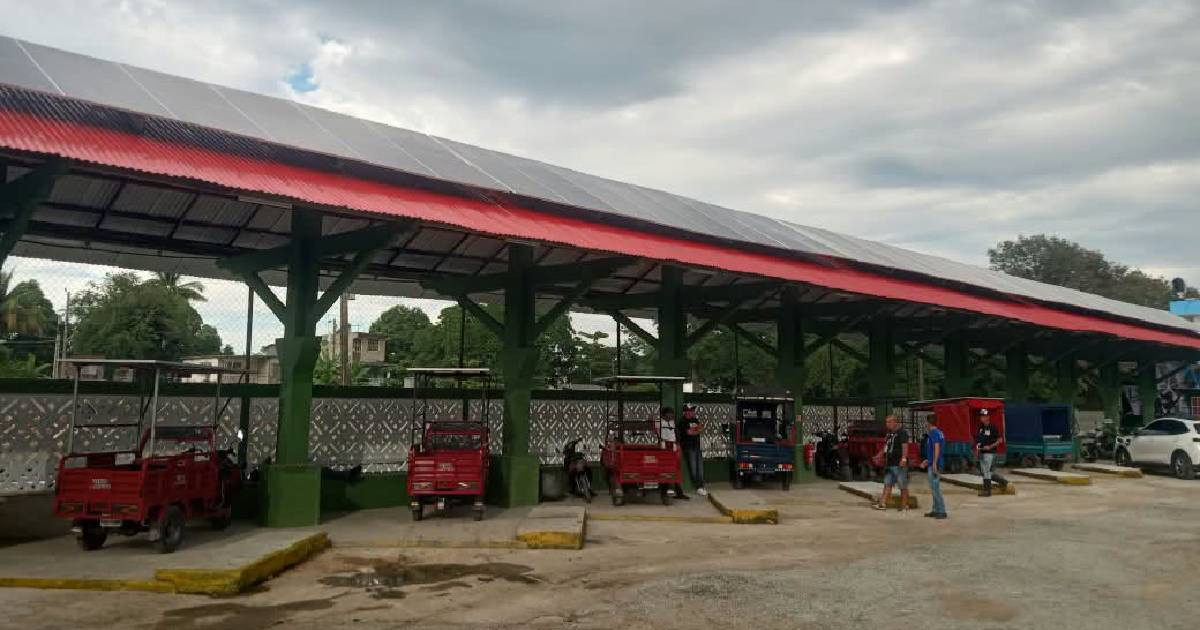
Authorities inaugurated the first "solinera" in Las Tunas, a second Neighborhood Market, and the pizzeria El Reymar, three initiatives introduced as part of economic transformations, despite the deterioration of services and the electrical crisis affecting the area.
The new charging station backed by solar panels operates at the intermunicipal Ferro-Ómnibus terminal, with a power output of 80 kW and an investment of 80 million pesos. The project is the result of a partnership between the state-run Passenger and General Cargo Transport company Cardinal and the private micro, small and medium-sized enterprise Vitalcoms, a report from the Tiempo 21 portal of the provincial broadcaster Radio Victoria specified this Saturday.
The first stage includes a store for automotive parts and rechargeable appliances, eight stations for simultaneously charging electric vehicles, and a space where the community can charge cell phones and other low-consumption devices for free.
The inauguration contrasts with the prolonged state of neglect of the terminal, which was severely impacted by Hurricane Ike in September 2008 and has not experienced a comprehensive recovery since then.
The second Neighborhood Market in the capital municipality also opened its doors, located in the El Volcán unit, in the Primero neighborhood, with administration handled by the private mipyme Wuisa. The first one began operations this month in the Buena Vista community.
The program, regulated by Resolution 16/2026 of the Ministry of Internal Trade (Mincin), allows micro, small, and medium-sized enterprises (mipymes) and cooperatives to manage state network establishments through bidding, without transferring ownership. By the end of October, there were 62 markets of this type across 12 provinces.
However, the model has faced criticism from citizens who question that its prices are not always lower than those of other businesses. The complaints prompted Mincin to call for an urgent meeting in November to analyze the discrepancies detected in its implementation.
The third inauguration was for the pizzeria El Reymar, an emblematic dining establishment in the historic center of Las Tunas. Its renovation required more than 60 million pesos, including over 11 million in bank credit to install technology aimed at ensuring its energy self-sufficiency, the source indicated.
The unit is in the process of becoming a state-run micro, small, and medium enterprise (mipyme) and plans to recover, once the investment is completed, other facilities that have been inactive for several years.
The inaugurations coincide with a particularly critical situation for the Cuban electrical system. Although the territory has eight photovoltaic solar parks with a theoretical capacity of 64.8 MW, the provincial Electric Company acknowledged that this infrastructure barely allows for an average of 2.5 hours of electricity per day per municipality.
The proliferation of "solineras," a Cuban neologism that combines "solar" and "gas station," is part of the official priorities aimed at transforming the island's energy matrix through the use of clean sources.
They are also a decentralized response to the worst energy crisis in Cuba in decades, worsened since January by the suspension of Venezuelan oil shipments and the cut in Mexican oil exports under pressure from sanctions imposed by the Trump administration.
Villa Clara has 50 operational facilities that serve over 5,000 families and plans to expand the network to nearly 60 before the end of the year. Guantánamo, for its part, expects to reach 30.
Related videos:
Filed under: