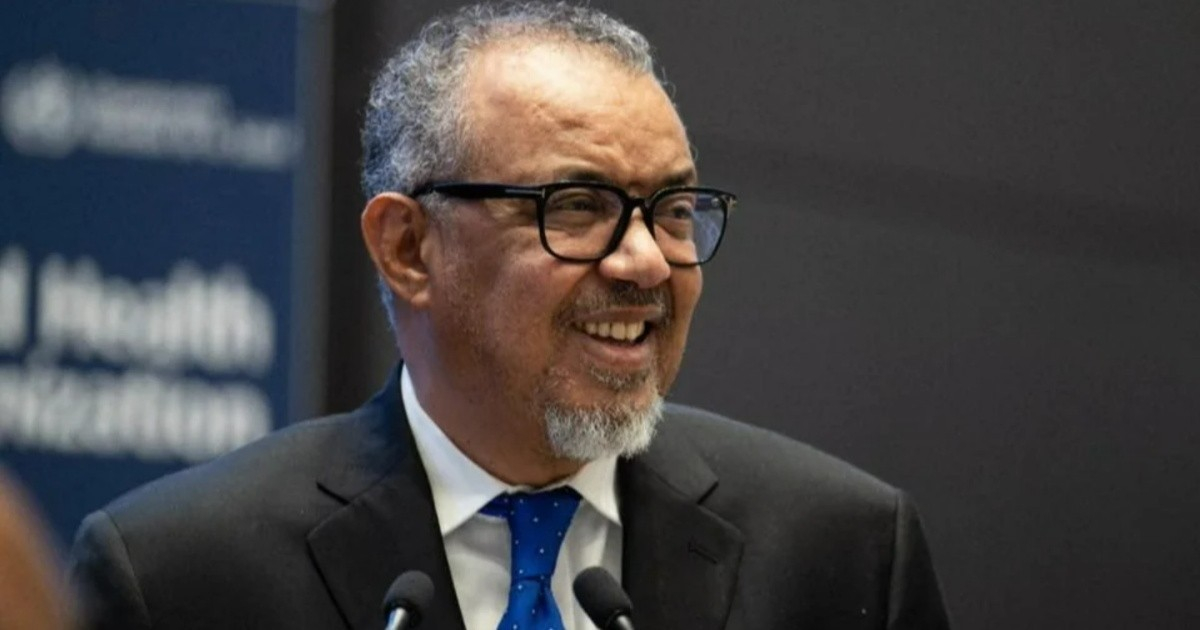
Tedros Adhanom Ghebreyesus, Director-General of the World Health Organization, arrived in Cuba this Sunday for an official three-day visit that includes tours of healthcare facilities and biotechnology research centers in Havana, as well as meetings with officials from the Ministry of Public Health (MINSAP), official sources reported.
The visit does not have a public itinerary with names of specific hospitals or laboratories. The centers will be selected by MINSAP itself, turning the tour into a showcase that the dictatorship wishes to present to the United Nations official.
This is the second time Tedros has visited the island in his role; the first was in 2018, when he participated in the III International Cuba Health Convention. His term at the helm of the multilateral organization concludes in 2027.
The contrast between the official visit and the documented reality could not be more striking. In the days leading up to Tedros's arrival, only 19 out of the 26 dialysis machines at the Institute of Nephrology in Havana were operational due to a lack of parts, and power outages forced shifts to extend into the early morning. The Milanés Polyclinic in Matanzas had been without electricity for weeks—disconnected from the grid after installing a photovoltaic system that was not functioning—and was unable to conduct urgent tests.
At the beginning of November, part of the front structure of the Banes Teaching Hospital in Holguín collapsed; the area had been closed three months earlier due to the risk of collapse. On November 16, a fire in the electrical room of the perinatal unit at the Provincial Hospital of Cienfuegos forced the evacuation of pregnant women and new mothers.
The Minister of Public Health, José Ángel Portal Miranda, acknowledged at the beginning of November that there were malfunctioning generators, broken elevators, boilers, laundries, and non-functional water systems in hospitals, and recognized the "justified dissatisfaction" of the population.
A doctor who worked at the Arnaldo Milián Castro Hospital in Santa Clara revealed on Saturday that she was prohibited from diagnosing hepatitis, leptospirosis, or dengue, and that she was working shifts of more than thirty consecutive hours. The Saturnino Lora Hospital in Santiago de Cuba published a call for 401 vacant positions, a symptom of an unprecedented staff drain: Cuba went from more than 106,000 doctors in 2021 to just over 75,000 in 2024, a loss of nearly 30,800 professionals in three years due to emigration and the abandonment of state medicine.
Tedros is not unfamiliar with this reality. In March, he described the Cuban health situation as "deeply concerning" and warned that "people's health cannot be left at the mercy of an unstable power supply and geopolitics." However, in that statement, he attributed the blame to external factors without ever mentioning the regime's responsibility: the massive export of doctors as a source of foreign currency — estimated between $6 billion and $8 billion annually according to the State Department — the management of the military conglomerate GAESA, or the repression of critical voices within the health sector itself.
The regime will use the visit as a propaganda tool at a time of intense pressure from Washington.
Related videos:
Filed under: