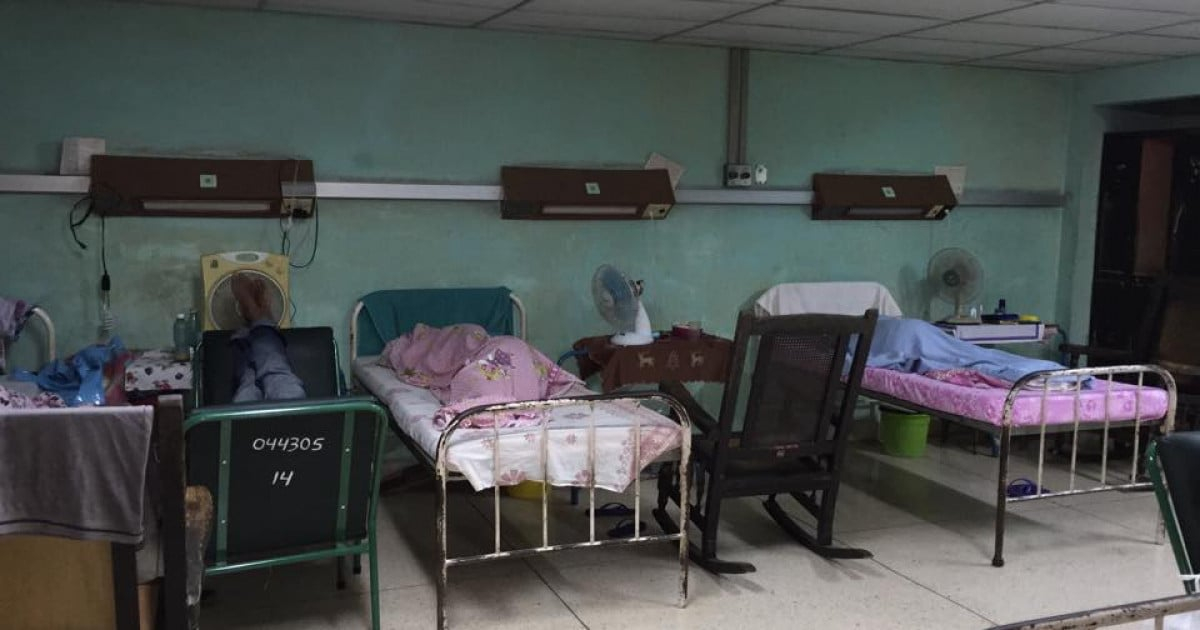
The Cuban doctor Alberto Tejeda Illas, a specialist from Santiago de Cuba, directed an open letter to the Director-General of the World Health Organization (WHO), Tedros Adhanom Ghebreyesus, in which he denounced the conditions under which patients and healthcare workers survive on the island and warned that authorities would prevent him from fully understanding this reality during his visit to the country.
In the letter, posted this Tuesday on Facebook, the doctor questioned the conditions under which the international official's visit is taking place and stated that his itinerary will be closely monitored by the Cuban authorities.
«The news is spreading that you are visiting Cuba. It's a pity you won't have the chance to truly experience Cuban healthcare», Tejeda began.
You will receive a strictly controlled guided tour: they will show you well-stocked institutions, without blackouts, where there is no shortage of staff, and you will be allowed to speak only with those who repeat scripts of compliance," he stated.
The doctor listed the issues that will be excluded from the OMS director's visit: micro-dumping sites, garbage accumulated for weeks, leaking water sources turned into breeding grounds for infections, hunger, long queues at pharmacies, and healthcare facilities in a state of advanced deterioration.
It was also reported that patients are forced to buy medications on the black market at prices that rise with inflation, while the salaries of healthcare workers lose purchasing power.
Tejeda described the conditions of professionals who finish their shifts after dealing with the deterioration of the hospitalization wards and the emergency rooms, and even with the presence of bedbugs in their dormitories, only to return home not knowing what they will eat.
The Santiago doctor also reported the immigration restrictions imposed on health professionals, a situation he has personally experienced and publicly denounced repeatedly.
He questioned why emigration or even traveling abroad for vacation is prohibited for professionals deemed so essential to the healthcare system that, in his words, "they need to be kept captive."
Tejeda stated that during the visit, previously prepared opinions will be presented to the international official, attributing the internal problems of the country to the U.S. embargo.
The physician also warned that professionals will hardly be able to express their opinions freely in front of the head of the WHO, due to the fear of the consequences that may arise from speaking critically.
“Even fear is greater than hunger, and it will continue to be so until diplomacy can be synonymous with democracy,” he concluded.
Alberto Tejeda's allegations regarding immigration restrictions
This is not the first time that the doctor from Santiago has directed an open letter to a health authority.
On June 12, Tejeda published a letter addressed to the Minister of Public Health, José Ángel Portal Miranda, in which he reported that he had been receiving refusals for three years to obtain a passport, despite having processed his work leave over a year and a half earlier and not having any contractual ties with the Ministry of Public Health (MINSAP).
His complaint triggered a wave of outrage among regulated doctors in Cuba, many of whom shared similar experiences and denounced the restrictions on their freedom of movement.
Days later, Tejeda documented that the authorities had removed from the government platform Soberanía the explicit explanation of why passport applications from specialist doctors were denied, replacing it with a generic message that directed applicants to the offices of the Ministry of the Interior (MININT).
The restrictions are based on Decree 306 of 2012, which conditions the departure from the country of certain professionals deemed vital on the corresponding authorization.
In January 2024, the organization Prisoners Defenders had documented 1,402 cases of Cuban healthcare professionals affected by migration restrictions.
The visit of the WHO director to Cuba
Tedros Adhanom Ghebreyesus arrived in Havana on Sunday for an official three-day visit, which includes tours of health institutions and biotechnology research centers, as well as meetings with Cuban authorities.
The international official assured on Monday that the organization is exploring ways to strengthen its support for the Cuban healthcare system in light of the difficulties arising from U.S. sanctions and the shortage of fuel and electricity.
The visit takes place amid a deep health crisis. Last August, Miguel Díaz-Canel himself acknowledged that only 30% of the essential medicines on the national basic list were available and that over 98,500 people were waiting for a surgical intervention, including about 12,000 children.
This Monday, the head of the WHO visited the Pediatric Hospital and the William Soler Cardiovascular Center in Havana, where he met with Díaz-Canel, expressing his willingness to seek international resources to support the island’s healthcare system.
Related videos:
Filed under: