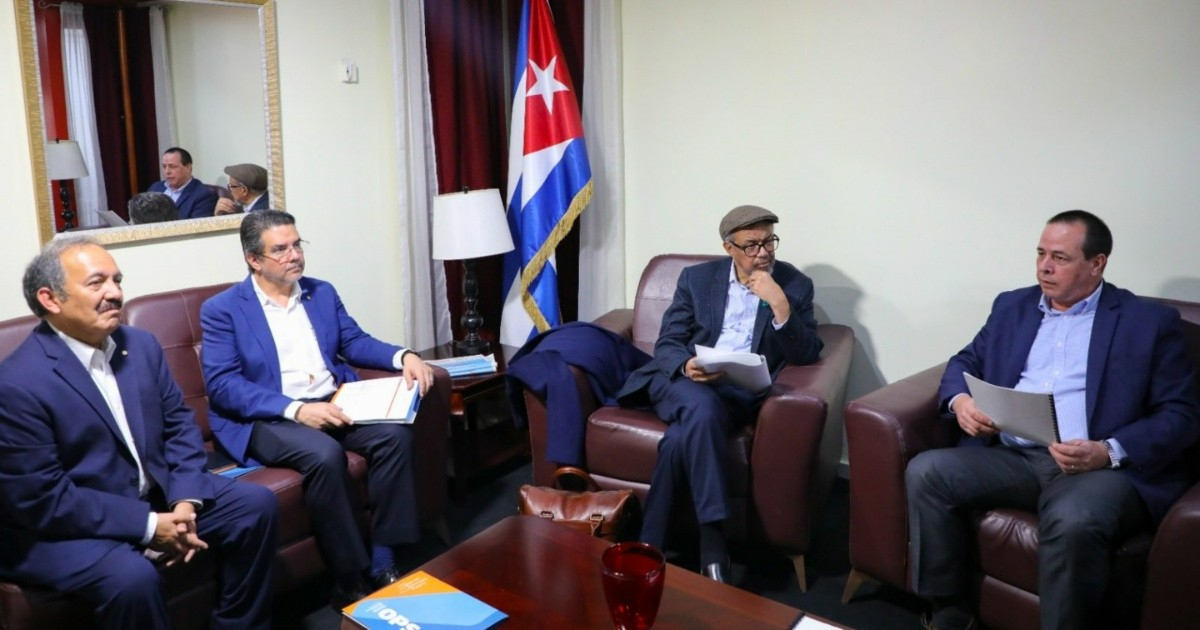
The Director-General of the World Health Organization (WHO), Tedros Adhanom Ghebreyesus, arrived in Cuba this weekend for an official three-day visit during which, he stated, he is exploring how the WHO can enhance its support for the island amid a deep health crisis.
The official was welcomed on Sunday at the José Martí International Airport in Havana by the Minister of Public Health, José Ángel Portal Miranda, and by Mario Cruz, representative of PAHO/WHO in the country.
This Monday, Tedros summarized the purpose of his visit in a message on social media platform X: "I am visiting to assess the health situation in Cuba, which is facing challenges due to sanctions and shortages of fuel and electricity."
The director of the WHO also expressed to the Cuban state press his intention to "use this visit to better understand the challenges" facing the island and "to mobilize the international community to support them."
Portal Miranda, for its part, assessed Tedros's "visit and willingness" to "strengthen cooperation with Cuba" at X and emphasized that "dialogue, solidarity, and international collaboration are essential to protect the health and well-being of our people."
The three-day agenda includes tours of healthcare centers and biotechnology research institutions, as well as meetings with health sector authorities. This is Tedros's second visit to Cuba as the Director-General of the WHO; the first took place in April 2018.
The Cuban healthcare system is experiencing one of its worst moments in decades in 2026. In August, President Miguel Díaz-Canel acknowledged that only 30% of essential medications from the national basic list were available, and that more than 98,500 people were waiting for a surgical intervention, including around 12,000 children.
At the beginning of November, Portal Miranda admitted to serious failures in hospitals across the country: issues with generators, elevators, boilers, and water systems, along with shortages of medications, equipment, and basic supplies. Power outages, which have lasted up to 20 hours daily, have impacted incubators, ventilators, and other critical hospital equipment.
In July, the U.S. Department of State sanctioned Minister Portal Miranda along with entities associated with Cuban medical missions abroad, a measure that the Cuban regime framed as a direct attack on the healthcare system.
Independent economists attribute the health deterioration to both US sanctions and years of failed economic policies by the Cuban government, which for decades has presented its healthcare system as one of its main achievements to the international community.
In March of this year, Tedros had already described the health situation in Cuba as "deeply concerning" and warned that the health of the population should not be subjected to blackouts, the energy crisis, and geopolitics. This week's visit will test whether that concern translates into concrete actions from the international community.
Related videos:
Filed under: