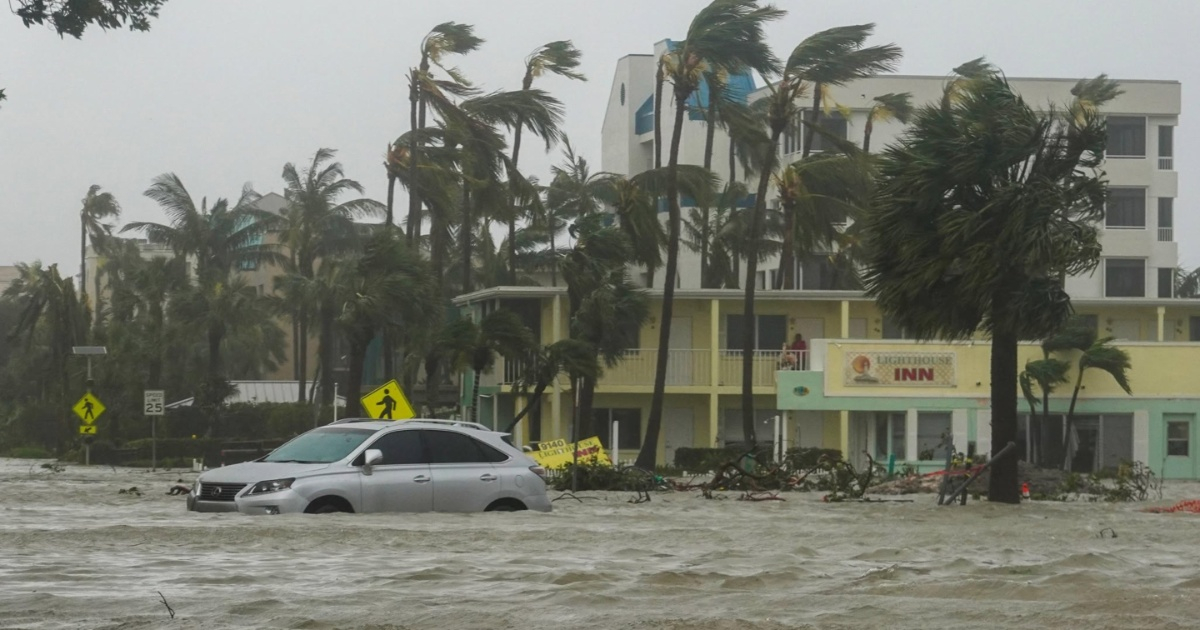
The Federal Emergency Management Agency (FEMA) announced the allocation of nearly 400 million dollars to Florida to fund recovery and disaster prevention projects, although it is still unclear whether part of these resources will reach the communities devastated by the recent flooding.
The federal agency announced on Monday that the funds will finance 144 projects throughout the state, according to the report by WESH 2, which asked the agency to clarify whether any of the allocations will be designated to address the damages caused by this month's rainfall.
The announcement is part of a package of more than $1.4 billion in federal funds approved by FEMA for projects and assistance programs in 48 states, two territories, Washington D.C., and two tribal nations.
According to the statement from FEMA, released by local media such as WGCU, Florida will receive more than 212.2 million dollars through the Public Assistance Program and an additional 185.4 million through the Hazard Mitigation Grant Program.
More than 147.3 million dollars will be used to reimburse expenses related to various natural disaster response efforts incurred by state agencies.
Among the main allocations are more than $87.1 million for the Florida Division of Emergency Management, over $49.6 million for the Department of Transportation, and $5.5 million for the Department of Environmental Protection.
Part of the funds will be allocated to repair the damages left by Hurricane Ian in September 2022, including those recorded in Sanibel Causeway Island Park in Lee County and in the water distribution system of Fort Myers Beach.
Regarding the prevention of future disasters, the network WFTV reported that over $19.3 million will fund infrastructure improvements in Lee County, while Cape Coral will receive more than $13.6 million to install 48 backup generators at wastewater pumping stations.
Another 10.1 million dollars will be allocated to protect 31 residential properties through projects that include elevation, acquisition, demolition, and reconstruction of buildings exposed to natural hazards.
However, the FEMA announcement does not confirm the approval of the federal assistance requested by Florida for the victims of the November floods.
The nearly 400 million dollars announced by FEMA are designated for public assistance and risk mitigation programs, so their approval does not mean that those affected by the recent floods can immediately apply for individual economic assistance.
In order for families to access this type of resources, Individual Assistance from FEMA must be authorized for the affected counties.
If this option is approved, residents who meet the requirements could apply for funds for temporary housing, essential repairs to their homes, replacement of certain personal belongings, and other needs arising from the disaster.
Meanwhile, state authorities have activated the portal FloridaDisaster.org/Updates, where residents can find information about recovery operations and available resources.
This Monday, Governor Ron DeSantis announced that his administration will submit an additional request for a major disaster declaration to secure federal resources aimed at communities affected by the second wave of rain and flooding.
According to an official statement from the governor's office, some areas of the state, including West Melbourne, received between 15 and 20 inches of rain (38 and 51 centimeters) during the last week.
State agencies have carried out nearly 500 rescues in flooded areas, while more than 250 properties have received assistance to remove damaged materials and begin their recovery.
Additionally, more than 1,600 residents have sought assistance at multi-agency centers set up by the authorities to obtain information and access recovery resources.
On November 2, DeSantis had declared a state of emergency in seven counties in Florida: Brevard, DeSoto, Hardee, Highlands, Indian River, Martin, and St. Lucie.
In that initial wave of rainfall, some towns in Brevard County received in just 48 hours an amount of rain equivalent to nearly half a year's typical precipitation, with totals exceeding 600 millimeters.
On November 9, state authorities submitted a preliminary request for a major disaster declaration to acquire additional resources aimed at recovery.
However, new rainfall worsened the situation last week when the St. Johns River surpassed a record set in 1953 and authorities ordered mandatory evacuations in a residential area of Palm Bay.
Related videos:
Filed under: