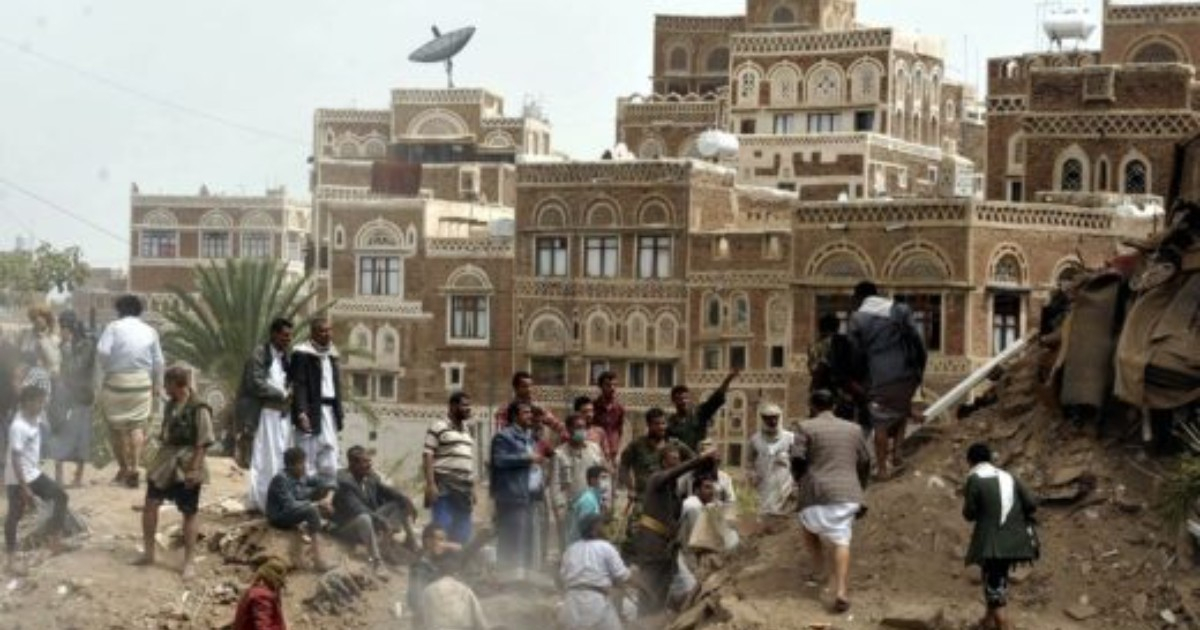
A Hispanic-Cuban surgeon aged 57 has been working since August in one of the most dangerous environments on the planet: the General Hospital of Marib, located in the Yemeni province of the same name, where fighting between government forces and the Houthis shows no signs of letting up.
His name is Eduardo Toro and he is part of the mobile surgical team of the International Committee of the Red Cross (ICRC) in Yemen, where he warns of a dire situation.
“Medical supplies, oxygen, anesthetic materials, surgical materials, blood for transfusions, and operational operating rooms are needed,” declared Toro in a video interview broadcast by the EFE agency from Cairo.
With over 30 years of medical experience and 12 in humanitarian missions —seven of which were with the ICRC—, Toro is one of the most seasoned war surgeons in the organization.
The doctor described the daily pressure the team endures: the operating rooms receive a constant flow of patients with "complex" and unstable traumas, mostly victims of gunshot wounds or major explosions, but also serious traffic accidents.
In addition to that workload, there is also the care of patients with chronic illnesses, children, and pregnant women. "They have to continue dealing with patients suffering from non-communicable chronic diseases, both adults and children, as well as pregnant women, which significantly increases the workload," he noted.
The situation worsens because many injured individuals are transported to the hospital from remote areas in private vehicles and without medical equipment, which drastically reduces their chances of surviving upon arrival in the operating room.
Toro had already warned about the deterioration of the healthcare system in October when the ICRC issued a statement indicating that the additional pressure on hospitals could result in fewer beds, less supplies, and a reduced capacity to treat non-conflict-related illnesses.
In that week, some frontline centers in Marib, Taiz, and the Red Sea coast reported more than 700 admissions due to war injuries.
The escalating conflict in Yemen since late summer 2026, driven by the advance of the Houthis—backed by Iran—on several key fronts, has left a devastating trail.
Between November 1 and 8 alone, Marib recorded 737 casualties, including 163 deaths. More than 360,000 people have been displaced since August, in addition to the 5.2 million internally displaced persons already existing in the country, according to the UN.
What makes Toro's case especially significant is the context in which he carries out his work. Unlike the doctors that the Cuban regime sends abroad under its controversial official missions—where the State retains between 60% and 97.5% of the salary paid by the host country—Toro works directly for the ICRC, an independent international humanitarian organization.
The Inter-American Commission on Human Rights (IACHR) published a report on forced labor in Cuban medical missions in April 2026, based on testimonies from 71 professionals in 109 countries, with serious indications of human trafficking and modern slavery.
This contrast becomes more significant in light of the healthcare system crisis in Cuba, where the number of registered doctors fell from 75,364 in 2024 to 71,635 in 2025, a loss of nearly 3,730 professionals in just one year.
From the front in Marib, Toro emphasized that the humanitarian response is not limited to the delivery of supplies: it also requires improving evacuations and training Yemeni medical staff, whose "dedication and professionalism" he praised despite the extreme conditions.
"The surgeon must always maintain calm, certainty, and quick action, which does not mean that we become accustomed to human suffering," he concluded, reminding us that behind every emergency intervention "there is a family waiting for an answer."
Related videos:
Filed under: