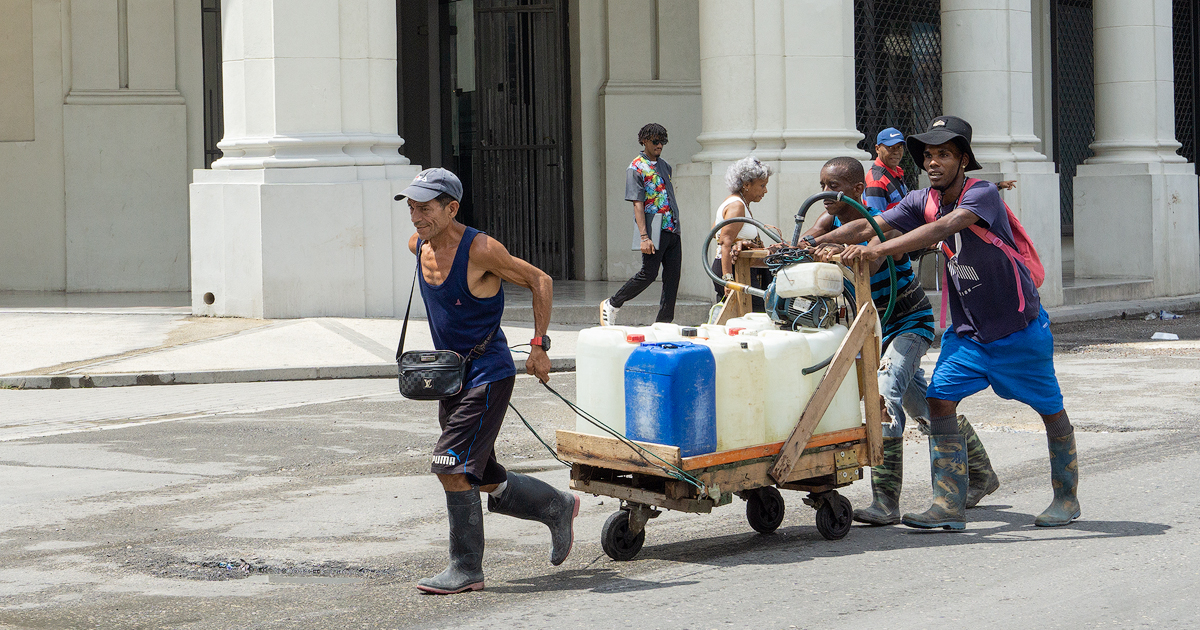
UNICEF warns that 3.4 million Cubans are experiencing problems accessing water, according to statements from Sunny Guidotti, the interim representative of the organization in Cuba.
His statements were reported by the Italian agency ANSA in a feature published on Tuesday, November 24. The figure represents a significant increase compared to August 2025, when the number of affected individuals was 2.5 million.
In just over a year, nearly a million additional people have experienced water access issues on the island. Guidotti explained that this is primarily due to the reliance on electric supply.
"About 80% of the systems that store water rely on electricity," he said.
The collapse of the National Electroenergetic System paralyzes the pumping systems and interrupts the water supply.
The structural dependence between electricity and water is documented by the National Institute of Hydraulic Resources itself: nearly 87% of the Cuban population relies on the electrical grid for their water supply, and the agency attributes approximately two-thirds of water-related issues to electrical problems.
Out of the 480 priority pumping stations in the country, only 135 were connected to circuits protected against blackouts in March 2026.
The situation is particularly grave in the south of the island, where half a million people rely on tanker trucks that come every 15 days, facing issues related to both the quantity and quality of water, according to Guidotti.
In Santiago de Cuba, residents from several communities report that they have been without a regular supply of drinking water for over six months, while around 200,000 people in the province are experiencing issues with water supply.
Guidotti emphasized that the water crisis has direct consequences on children's nutrition, hygiene, and education.
The ruler Miguel Díaz-Canel acknowledged in September that the regime cannot guarantee the necessary electricity to keep the pumping systems stable, in a context marked by aging infrastructure, lack of maintenance, and fuel shortages.
The report from ANSA features information about an Italian "solidarity caravan" that visited Cuba in September, composed of organizations such as ARCI, CGIL, and the Italy-Cuba Friendship Association, which delivered 500 kg of medicines and medical supplies, in addition to school materials. The initiative included participation from Laura Boldrini, a deputy of the Italian Democratic Party.
UNICEF will implement a project worth 500,000 Swiss francs between July 2026 and March 2027, funded by the Swiss Agency for Development and Cooperation, aimed at operationalizing at least 20 rehabilitated or newly constructed water systems in Granma and Santiago de Cuba, and improving access to drinking water for 175,000 people.
Related videos:
Filed under: