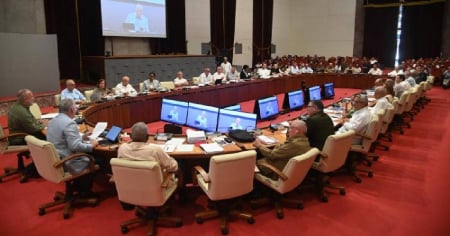
While millions of Cubans face prolonged blackouts and a shortage of basic services every day, Cuba's Minister of Tourism, Juan Carlos García Granda, publicly justified the protection of the hotel sector in light of the energy crisis affecting the island.
In an interview granted to El País, the official stated that power outages do not affect tourism because hotels have their own generators, a result of significant state investment.
In 2024 alone, nearly 12% of public investments in Cuba were allocated to activities related to hospitality and dining, according to data from the National Office of Statistics and Information (ONEI).
"Everyone in the town knows that the economic benefits of the sector are for prosperity and to cushion the effects of these very difficult times," declared García Granda, thus putting an end to any questioning regarding the contrast between the comfort guaranteed to tourists and the widespread precariousness experienced by Cubans.
Furthermore, the official resorted to the clichéd official speech that investments in tourism "benefit the people," a manipulative narrative that everyday reality repeatedly contradicts.
According to the minister, the criticisms highlighting that inequality are driven by "the counter-revolution and slanderous campaigns."
He assured that the state is working to ensure that the electricity consumption of the tourism sector "is not necessarily the same as that of the population," a statement that clearly highlights
In the same interview, García discussed the challenges of Cuban tourism, which went from welcoming 4.7 million visitors in 2017 to just 2.2 million in 2024.
He attributed the decline to the pandemic and Cuba's inclusion on the list of state sponsors of terrorism by the Trump administration, which has even limited European tourists who fear subsequent restrictions for entering the U.S.
The official fails to mention that the economic crisis caused by the regime has severely deteriorated the living conditions and infrastructure of the country, which are also essential for attracting tourism, as not all visitors stay in the "paradise" of sun and beach.
With the U.S. market virtually paralyzed, the regime is now seeking to attract tourists from countries such as Turkey, Russia, and especially China.
"Attracting Chinese visitors is a benefit for the entire region," he stated, while detailing a strategy that includes direct flights between Havana and Beijing, the elimination of visas for Chinese citizens, and a regional proposal for common visas inspired by the Schengen model.
During his visit to Colombia, as part of a promotional tour, the minister announced a new air route between Barranquilla and Santiago de Cuba, which will begin operations on July 3, coinciding with the Caribbean Festival.
"Connecting a city like Santiago de Cuba directly... can convey value and knowledge to the Colombians themselves," he stated.
Regarding the tension with Washington, García stated that Cuba is willing to maintain relations with the American people, but he held the U.S. government responsible for the obstacles to tourism.
"Governments do wrong by prohibiting what citizens should freely choose to do," he criticized, labeling the restrictions as "irrational."
In contrast to cities around the world that debate the limits of their tourism models—such as Venice, New York, or the Canary Islands—the minister stated that in Cuba, the development of the sector "is based on science" and cited the conservation of beaches as an example, thanks to regulations on construction near the dunes.
However, while the minister presents tourism as an economic lifeline, Cubans continue to live amid blackouts, long queues, and shortages, watching as the state's priorities focus on hotels with electricity, while the country remains in the dark.
Despite the downturn in the sector, at the closing of the recent International Tourism Fair (FITCuba), García expressed his optimism regarding the recovery of the tourism sector during the winter season of 2025-2026, despite the significant drop of 29.7% in the arrival of international visitors recorded in the first quarter of the year.
This statement is part of the regime's effort to present tourism as a national lifeline.
Frequently Asked Questions about the Energy Crisis and Tourism in Cuba
Why does the hotel sector in Cuba have priority for energy over the rest of the country?
The Cuban government prioritizes the hotel sector due to its reliance on tourism as the main source of foreign currency income. This policy is reflected in the investment in power generators for hotels, while the rest of the country suffers from prolonged blackouts. This approach has been criticized for increasing the inequality between the comfort assured to tourists and the precariousness experienced by most Cubans.
What are the government's justifications for the decline in tourism in Cuba?
The Cuban government attributes the decline in tourism to external factors such as the pandemic and Cuba's inclusion on the list of state sponsors of terrorism by the U.S. However, the internal economic crisis and the deterioration of living conditions have also negatively impacted Cuba's image as a tourist destination. Despite these justifications, the lack of modern infrastructure and basic services remains a critical issue.
How does the energy crisis in Cuba affect the population?
The energy crisis in Cuba is causing prolonged blackouts that affect the quality of life of the population, limiting access to basic services such as food preservation, health, and education. Meanwhile, the government prioritizes electricity supply to tourist facilities, exacerbating social discontent and the perception of inequality between citizens and tourists.
What strategies is Cuba implementing to attract more tourists?
To attract more tourists, Cuba is trying to attract visitors from emerging markets such as Turkey, Russia, and China by eliminating visas and establishing direct flights. Additionally, the government plans to renovate luxury hotels and enhance international promotion. However, these actions occur in the context of an economic and energy crisis, which complicates the recovery of the tourism sector.
Filed under: