
Related videos:
The growing social unrest in Cuba was once again expressed this Wednesday through new anti-government posters in public spaces in Santiago de Cuba, specifically in the crowded neighborhood of Abel Santamaría.
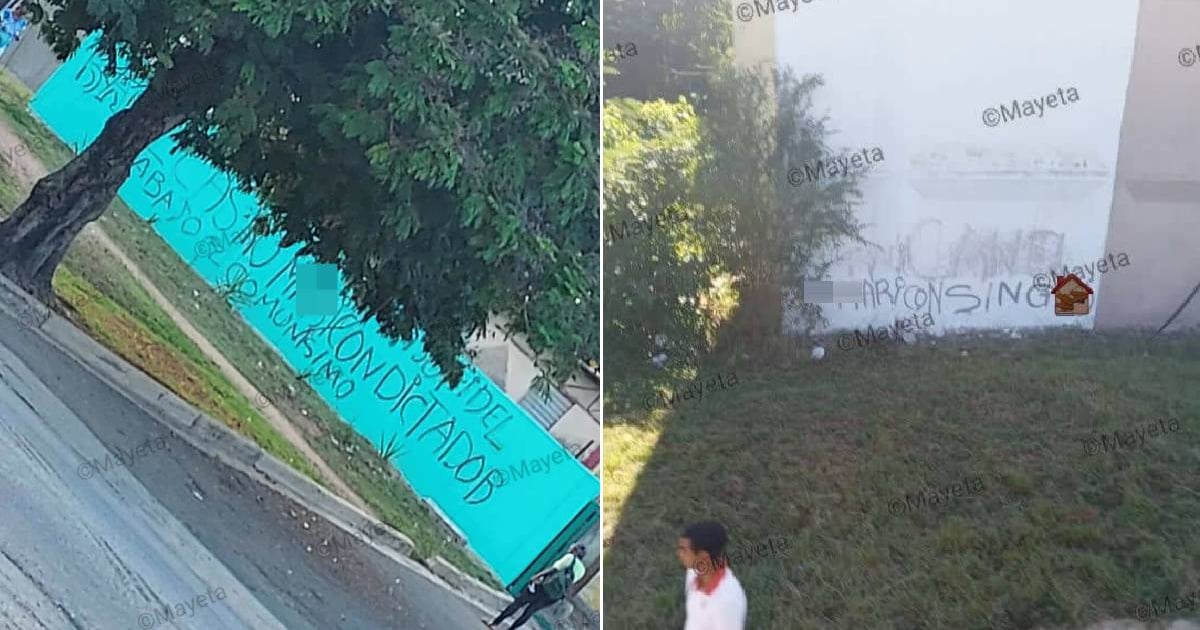
On one of the walls in the area known as Micro 2, the offensive phrase was painted in large, visible letters: "Díaz-Canel, maric... sin...g", reported local journalist Yosmany Mayeta on Facebook.
The message caused a stir among the neighbors from early in the morning. Some whispered comments while others hurried to take photos before the authorities removed it, he explained.
Although the presence of the police has not been officially confirmed, local testimonies indicate that forces from the Ministry of the Interior mobilized swiftly, as has happened in similar incidents in other provinces of the country.
In the parking area of Salao’, right in front of the Micro 3 Polyclinic, another graffiti appeared that said “Down with Fidel and Raúl Castro. F... Dictator. Down with communism”.
This painting, visible from various points, prompted several agents from the Technical Investigations Department (DTI), along with senior officials, to deploy to the site and strengthen surveillance in the area.
These acts, although regarded as minor by the authorities, are seen by many as a barometer of the growing social discontent in one of the most controlled cities in the country.
"The walls speak, and they do so with the voice of those who can no longer find another channel to express what they feel," the publication comments.
Since the social uprising of July 11, 2021, and more recently with the blackouts, inflation, and the collapse of transportation, Cuba is experiencing a situation of extreme social fragility, exacerbated by economic deterioration and a lack of political freedoms.
In that context, it is common to see these posters painted in the darkness of the night during blackouts.
Frequently Asked Questions about Social Discontent in Cuba and the Posters Against Díaz-Canel
Why have posters against Díaz-Canel appeared in Santiago de Cuba?
The posters against Díaz-Canel in Santiago de Cuba reflect the growing social discontent that exists in the country due to the economic crisis, the lack of political freedoms, and everyday issues such as blackouts and inflation. These acts are seen as a form of protest against government repression.
What impact do these anti-government posters have in Cuba?
The anti-government posters in Cuba are a barometer of social discontent and symbolize the citizens' resistance in a context of repression. Although they are often swiftly removed by the authorities, their continual emergence demonstrates that discontent remains present and is increasingly visible in different regions of the country.
How does the Cuban regime respond to the emergence of these posters?
The Cuban regime tends to respond quickly and repressively to the emergence of anti-government posters. The forces of the Ministry of the Interior often deploy operations to erase the graffiti and reinforce surveillance in the affected areas, seeking to identify and arrest those responsible.
What does the phrase “Díaz-Canel singao” symbolize in the protest signs?
The phrase “Díaz-Canel singao” is a popular slogan of rejection towards the Cuban ruler that has spread since the protests of July 11, 2021. Originating from a song by the rapper Aldo el Aldeano, this expression has become a symbol of social discontent against the regime.
Filed under: