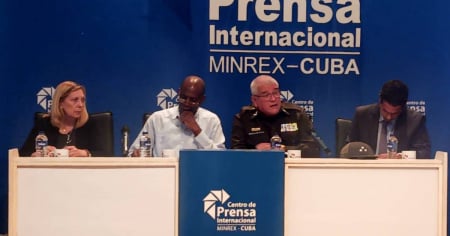
The Cuban influencer Eliecer Ávila expressed his outrage over the voluntary deportation of the Cuban Deivy Alemán Oropesa, who left the United States after receiving an order from Immigration and Customs Enforcement (ICE).
Alemán had been living in the United States for over seven years, is married to a U.S. citizen, and has a seriously ill daughter, but immigration authorities threatened to imprison and forcibly deport him if he did not leave the country before September 14th.
"Is there really no one in the United States who can analyze a case?" Ávila questioned in a video shared on social media. "Is there not a judge, an immigration official who can say, 'Let's resolve this'? (...) What harm has been done? None."
Ávila, known for his republican stance and support for Donald Trump, surprised everyone with a speech full of criticisms of the U.S. immigration system. "With so many criminals, informants, and oppressors roaming free in this country, why is Deivy the target? Why does he have to be the objective?" he added.
Why is the deportation case of the Cuban Deivy Alemán controversial?
Deivy Alemán Oropesa, a resident of Orlando, Florida, decided to voluntarily leave the country on Sunday, September 14, to avoid immigration detention at an ICE facility and forced deportation.
He is married to the Cuban-American Yisel Miguel Sarduy, and they have a two-year-old daughter who needs a heart transplant.
The journalist Javier Díaz documented the case from the beginning and described the images of the self-deportation of Alemán Oropesa as "very sad."
Since his return to Palmira, Cienfuegos, the Cuban has shared his pain and despair. “It’s been three days since I last saw my daughter. We used to go everywhere together, to the stores, to medical appointments. I can’t help from here. There’s no work, no way to send money,” he explained in statements to the press.
The Cuban had entered the country through the border in 2017, worked as an Uber driver, paid taxes, and had no criminal record. His only "failure" was having entered irregularly, which resulted in a deportation order that ICE ultimately carried out.
A family on the brink of collapse
The wife stopped working to take care of the little girl, who has undergone three open-heart surgeries. Deivy was the only breadwinner of the household.
“Almost see myself living on the streets. How do I take care of the girl and pay the rent?,” Yisel confessed, visibly affected.
Despite the couple having a family reunification petition (form I-130) in process, the estimated waiting time is uncertain. The only hope is that public pressure and legal support will expedite the process.
Criticism of the immigration system
The case has generated a wave of outrage on social media. Users and activists are denouncing the "inhumanity" of the process. Lawyer Rosaly Chaviano explained that Alemán was under immigration supervision (form I-220B) and that humanitarian factors are not being taken into account in the current policy.
Eliecer Ávila concluded his speech with a bitter reflection: "If there are no criminals, no repressors, no gang members in the United States, then I accept that they go after those without documents. But that’s not the case. They are expelling the good ones."
Frequently asked questions about the deportation of Deivy Alemán Oropesa and the immigration system in the U.S.
Why did Deivy Alemán Oropesa decide to self-deport?
Deivy Alemán Oropesa decided to self-deport to avoid prolonged detention and forced deportation by the Immigration and Customs Enforcement (ICE). Despite having lived in the United States for seven years, being married to a U.S. citizen, and having a seriously ill daughter, Alemán faced a deportation order due to his irregular entry into the country.
What impact does Deivy's deportation have on his family?
The deportation of Deivy Alemán Oropesa leaves his family in a critical economic and emotional situation. His wife had to leave her job to take care of their daughter, who needs a heart transplant, and now they face the uncertainty of how to support themselves without the main breadwinner of the household. Moreover, the forced separation has caused a profound emotional impact on the family, especially on their young daughter.
What criticisms has the U.S. immigration system received in relation to this case?
The U.S. immigration system has been criticized for its lack of sensitivity and humanity in the case of Deivy Alemán Oropesa. Despite being an exemplary migrant with no criminal record and significant humanitarian reasons, current policies did not take these factors into account when carrying out his deportation. Activists and social media users have expressed their outrage and have called for a review of these policies.
How does the tightening of immigration policies affect Cuban migrants in the U.S.?
The tightening of immigration policies in the U.S. has led to an increase in the arrests and deportations of Cuban migrants, including those without criminal records and with active legal proceedings. This has generated fear and uncertainty within the migrant community, as many face detentions during routine immigration appointments and are forced to make drastic decisions to avoid worse scenarios.
Filed under: