
Related videos:
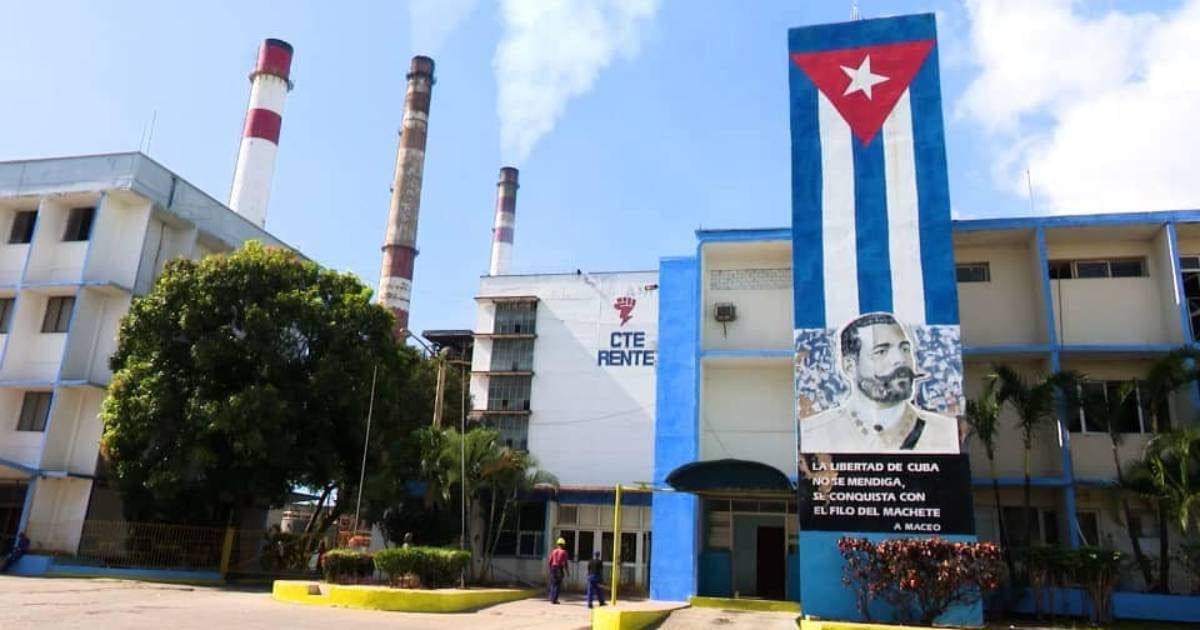
The Antonio Maceo Thermoelectric Power Plant, known as Renté, remains largely incapacitated following the impact of Hurricane Imelda in the eastern part of the country.
The general director of the plant, Jesús Aguilar Hernández, confirmed to the official press that units three, five, and six remain out of operation due to adverse weather conditions, while teams of technicians are attempting to restart unit six to reintegrate about 50 megawatts into the National Electric System (SEN).
One of the main obstacles identified by the management of the thermoelectric plant is the seawater system. The bay of Santiago de Cuba, being a closed body of water, accumulates waste that clogs the filters, disrupting the necessary flow for electricity generation. Furthermore, damage persists in the wells that supply the units, further limiting production processes.
A plant in chronic crisis
The current situation of Renté cannot be understood without the history of failures it carries. Just days before, units 3 and 5 had gone out of service during a period of heavy rains, leaving thousands of families in the east without prolonged power. The leader Miguel Díaz-Canel himself had promised just days earlier that the plant would achieve "stability" before the end of the year, during a visit aimed at instilling confidence in a sector increasingly under scrutiny.
But the reality has been different, with recurring breakdowns, fires, fatal workplace accidents, and maintenance efforts that fail to sustain the plant's operation. Renté has become a symbol of the deterioration of the national electric system, which Imelda only struck harder on an already open wound.
The direct impact is felt by the residents of Santiago and other provinces in eastern Cuba, where power outages lasting more than 20 hours have become a part of daily life. Entire families cook with charcoal, if they can find it; hospitals face emergencies without stable support, and dark neighborhoods become the backdrop for spontaneous protests that end under heavy police surveillance.
Although Renté's management asserts that recovery efforts are making progress as a priority, uncertainty remains. September closes as the most critical month of the year, with deficits of up to 1,840 MW and a SEN on the brink of technical and social collapse.
The promises of stability clash with the everyday experience of Cubans, characterized by endless nights without electricity and a growing distrust of official announcements.
Filed under: