
Related videos:
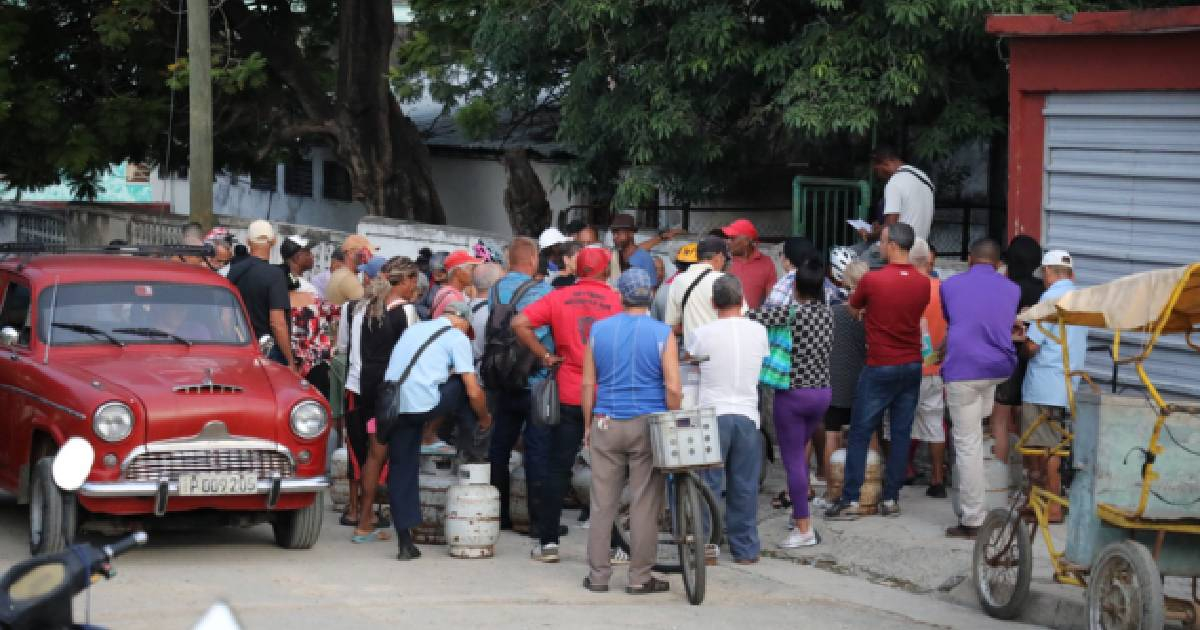
The MiTurno app, presented as a solution for managing the purchase of liquefied petroleum gas (LPG) in the province of Cienfuegos, has sparked widespread complaints about irregularities, favoritism, and technical failures that directly impact the population, already suffering from power outages and chronic shortages.
Before its announcement, MiTurno generated uncertainty and distrust. Local authorities promised that the app on Transfermóvil would eliminate physical lists and ensure greater transparency in the distribution of LPG, but the experience has been quite the opposite, revealed a report from the official newspaper 5 de Septiembre.
Users are reporting that the appointments do not respect the order of purchase, allowing customers from June to be served before those from May.
This inconsistency in the algorithm, according to testimonies such as that of Osvaldo Velázquez Ruiz, has turned the digital system into a greater chaos than the previous scheme.
The outrage grew when individuals who made their purchases in August saw prioritized numbers from September, which fueled suspicions of favoritism.
Furthermore, the company prevents the reimbursement of the 10 pesos for canceled appointments, which reinforces citizens' frustration.
In addition to the technical problems, there are external conditions: power outages of up to 24 hours, lack of mobile connectivity, and delays in the confirmation messages sent by Transfermóvil.
The result is a collapsed process that leaves thousands of people in Cienfuegos with no alternatives for cooking.
Far from eradicating the illegal trade, the measure coexists with the black market, where the cartridges reach prices between 30,000 and 50,000 pesos.
Without clarity about the destination of the gas that is not sold due to "errors" during the shift, doubts persist regarding possible diversions.
Another critical factor is the aging population. Many elderly individuals lack the technological means to access MiTurno, which leaves them excluded from a basic service. The requirement to use the application, in a country with significant technological limitations, has been rejected by a large portion of the population.
What was theoretically intended to bring order and transparency ended up creating frustration, inequality, and further obstacles in obtaining a vital resource.
In light of this situation, there are growing calls to rethink the measure and seek fairer and more realistic alternatives to guarantee a fundamental right: to cook.
A few days ago, the state-owned company Cupet in Cienfuegos announced that the purchase of liquefied gas will be restricted only to customers with assigned appointments through the application Mi Turno dated prior to June 30, 2025.
This restriction only confirmed the harsh reality that fuel distribution on the island is a constant struggle filled with schedules and endless waits, leaving customers with later dates in limbo and uncertain about when they will be able to restock.
To add to the confusion, it was clarified that only from September 8 could those entitled to buy between July 1 and July 15, 2025, start requesting their appointment, while those with a later date still cannot manage anything.
Another example of how access to an essential resource is trapped in a bureaucratic maze without certainties.
An example of this is the case of an elderly person with severe asthma, Chronic Obstructive Pulmonary Disease (COPD), allergies, and physical limitations, residing in Matanzas, who was denied access to LPG because, according to the state-owned company, they do not meet the "priority" criteria.
What is happening in Cienfuegos is not an isolated incident, but rather part of a national crisis. For months and even years, Cuba has been facing periodic interruptions in the distribution of domestic gas, relying almost exclusively on the arrival of ships and the government's ability to make timely payments.
In August, the Liquefied Gas Company resumed distribution in Havana, Artemisa, and Mayabeque after weeks of suspension, but the service was dependent on the timely arrival of a ship at the Ñico López refinery port.
In Santiago de Cuba, the situation is even more dramatic, as Cupet suspended sales just 12 days after restarting them at the end of August, due to running out of inventory.
Thousands of families have been left without their main source of fuel amidst blackouts, with no alternatives beyond firewood or kerosene, both of which are harmful and dangerous to health.
In Villa Clara, the company has reorganized the sale with a schedule that excludes those who have already purchased three times this year. The supposed "equity" translates into new restrictions for households that must adapt to a rigid system and inventories that in many locations do not exceed 200 cylinders per day.
Every time the supplies run out, the population is left facing long waits and uncertainty about when they will be able to cook with gas again.
The government attributes these limitations to a lack of funding and the economic sanctions imposed by the United States, which it describes as part of a "multidimensional blockade."
At the moment, there is no indication of a solution that would allow overcoming the extreme dependence on specific imports to ensure a basic service such as LPG.
While the official reports reflect a critical situation in technical terms, on the streets of Cuba, the citizens' perception goes beyond the numbers: hopelessness has become a widespread sentiment in light of the deteriorating living conditions.
Frequently Asked Questions about the Liquefied Gas Crisis in Cienfuegos
What is the main problem with the MiTurno app in Cienfuegos?
The MiTurno application has created chaos and mistrust due to irregularities in the order of the turns, favoritism, and technical failures that hinder a fair distribution of liquefied gas. Although it was presented as a solution to enhance transparency in the distribution of LPG, it has led to more problems for the population.
Why are the gas distribution problems so severe in Cuba?
The gas crisis in Cuba is part of a national issue that includes a lack of funding, economic sanctions, and an extreme dependence on specific imports for the supply of liquefied petroleum gas. These challenges are reflected in irregular distribution and the absence of viable alternatives for the population.
How does the shortage of liquefied gas affect the population of Cienfuegos?
The scarcity of liquefied gas leaves thousands of residents in Cienfuegos with no alternatives for cooking, amidst a context of blackouts and precarious living conditions. The situation is exacerbated by the presence of a black market where prices are exorbitant, and an application that does not ensure equitable access to the resource.
What alternatives do elderly people without access to technology have to obtain liquefied gas?
Older adults in Cuba face a technological exclusion that leaves them without access to liquefied gas due to the requirement to use mobile applications like MiTurno. This has led to widespread rejection, as many of these individuals lack the necessary technological means to manage their appointments.
Filed under: